





 Portuguese
  English
  Spanish
  3 min of reading
  1 comment


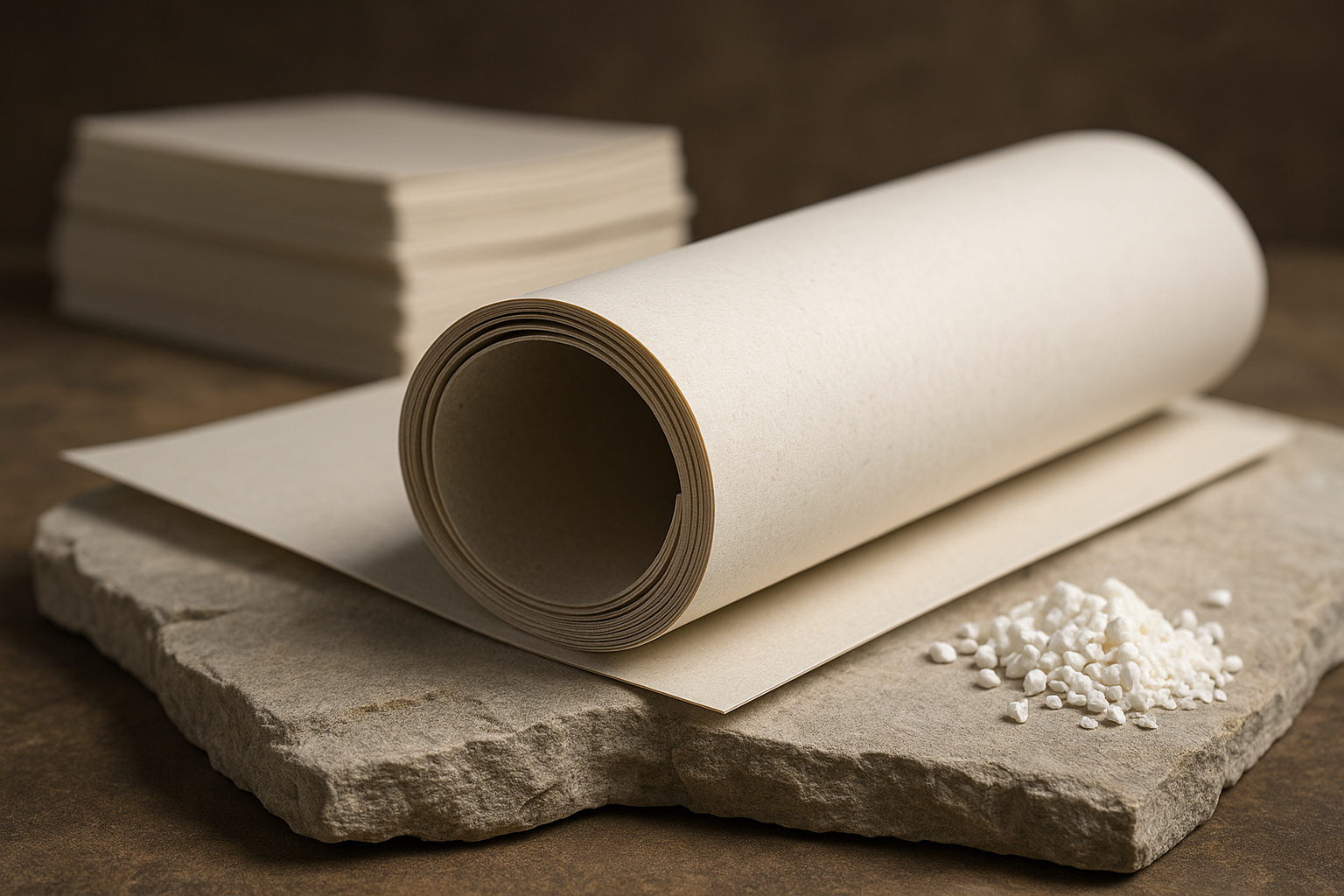


Chinese Innovation Utilizes Minerals Instead of Cellulose, Reorganizes Industrial Processes, and Presents a Less Aggressive Alternative to the Environment
A major industrial initiative of significant environmental relevance has recently gained attention in China, attracting international focus.
The country has decided to replace trees with “stone” in paper manufacturing, adopting a process that utilizes calcium carbonate as the main raw material.
This approach creates a material that distinguishes itself by reducing water consumption and eliminating the need for tree cutting.
Thus, the innovation emerges as a direct alternative to regular paper produced from cellulose.
This movement indicates that China is seeking to balance technical performance and reduction of environmental impacts.
The new model reorganizes perceptions about the future of paper production and strengthens debates about more sustainable methods.
Mineral-Based Production Alters Industrial Dynamics
The change results from replacing cellulose with calcium carbonate powder, an element obtained from sand.
This substance acts as a binder when combined with plastic resin, creating a solid and durable structure.
Additionally, the process proposes to reduce emissions associated with traditional paper production, highlighting relevant environmental advantages.
However, despite the advances, the technology is still in development and requires ongoing evaluations of the resin used.
-
Surprising task force with artisanal fishermen removes more than 160 tons of trash from the coast of São Paulo and transforms waste into a source of income, combining environmental preservation and circular economy in a model that gains national prominence.

-
Amazon records lowest level of deforestation in eight years and preserves an area equivalent to 7,000 football fields, but progress in Roraima and isolated increase in March raise an alert
-
Emirates transforms 88 tons of discarded plastic into new onboard items and accelerates its global sustainability strategy, reducing waste on a large scale while reinforcing a circular economy that already impacts millions of passengers per year.

-
What was once waste now generates millions: startup converts waste into R$ 10 million in income for waste pickers, boosts corporate recycling, and creates a technological network that strengthens social inclusion and sustainability throughout Brazil — discover the initiative by SOLOS.


This experimental stage demonstrates that the innovation follows technical criteria and, therefore, evolves gradually.
Nevertheless, interest grows because the material offers immediate benefits for industrial sectors seeking less polluting alternatives.
Environmental and Functional Impacts of Stone Paper
The paper made from minerals offers a range of important advantages and consequently attracts growing attention.
Among these advantages, the reduction in tree cutting, low water consumption, and water resistance after production stand out.
Furthermore, durability reinforces the potential of this material for everyday use and specific applications.
Although it presents immediate benefits, the final performance depends on the exact composition of the resin.
This variable can alter the physical characteristics of the product and, therefore, requires continuous technical analysis.
Still, the material progresses as an alternative to traditional paper and integrates discussions about environmentally responsible production methods.
Limitations and Expectations in Adopting the New Technology
The innovation offers advantages; however, it remains in an early stage and therefore still faces natural limits of the experimental process.
The final behavior of the paper depends precisely on the resin used, which can lead to varied results.
Nevertheless, the alternative remains relevant because it reduces environmental impacts associated with the traditional model.
The trend is for mineral paper to gain more adoption as industrial technologies evolve.
This advancement accompanies the global search for sustainable methods and reinforces discussions about productive efficiency and environmental preservation.
The Transformation in the Broader Context of Paper Production
The use of stone in manufacturing redefines perspectives and fuels debates about less aggressive industrial processes.
Thus, the innovation integrates into efforts to reduce pollutants, conserve natural resources, and restructure practices in the paper industry.
This movement creates expectations about how alternative materials can influence the future of the sector.
The proposal demonstrates that sustainable alternatives can arise from simple changes in the productive matrix.
For this reason, mineral paper sparks interest and strengthens discussions about environmental balance and technical efficiency.
The Future of Sustainable Production
The adoption of alternative materials represents both a challenge and an opportunity for the industry.
The replacement of cellulose with stone may alter productive dynamics but requires technical monitoring and continuous adjustments.
Still, the initiative reinforces the need to rethink traditional models and evaluate solutions that reduce environmental impacts.
What do you believe is more important: expanding the use of sustainable alternatives like mineral paper or maintaining traditional methods to preserve costs and industrial processes?





Quais as fontes bibliograficas desta publicação?