





 Portuguese
  English
  Spanish
  4 min of reading
  0 comments


The Textile Pole of the Interior of São Paulo Combines Mass Production, Free Courses, and Difficulty in Hiring Qualified Professionals While Expanding Factories and Diversifying Product Lines Beyond Jeans, Sustaining the Local Economy and Creating Job and Training Opportunities.
Urupês, in the northwest of São Paulo state, has consolidated one of the largest concentrations of jeans factories in the country and surpasses the mark of 1 million pieces produced per month.
With about 15,000 residents, the city has over 50 textile industries and tries to maintain the production pace while dealing with a recurring obstacle: the lack of qualified labor.
Over the years, the municipality has transformed clothing into the main economic engine.
-
Starting June 7, 27 European countries prohibit asking about previous salary in interviews, and Brazil has chosen a different path.

-
Billionaire Anne Marie Werninghaus, heir to WEG with R$ 9.1 billion, inaugurated the a.marie store at Casarão Emmendörfer in Jaraguá do Sul.

-
While millions of Brazilians still face unemployment and low wages, Chinese companies are increasing the hiring of foreigners, bringing more than a thousand Chinese people to Brazil each month, and changing the industrial reality of Bahia.

-
China is about to get its hands on one of Brazil’s largest nickel sources, but the European Union has decided to hold up the $500 million deal and may even block the sale permanently in the coming months.


The production chain spreads across different stages, from cutting and sewing to finishing, and supplies brands and manufacturers from various regions of Brazil.
Jeans Production Drives the Local Economy
Part of what explains the sector’s strength in Urupês is the presence of companies capable of covering, in a network, almost the entire path to the finished piece.
Production is not limited to sewing.
It involves fabric preparation, assembly, inspection, and final processes that define standard and quality.
As factories expand shifts and production lines, the need for professionals prepared for specific tasks also grows.
However, the supply of workers does not always keep up with the speed of expansion of the textile pole.
Scarcities appear at different points in the process.
In an industry with tight deadlines and daily targets, functions seen as basic may require technical proficiency, constant practice, and attention to detail.

An operational error in machinery, a poorly executed finish, or a rushed inspection, for example, tends to impact productivity and quality at the same time.
Labor Shortage Becomes a Challenge for Factories
The advancement of industrial activity has brought job opportunities and opened space for those seeking to enter the market through the textile sector.
Still, entrepreneurs report difficulties in filling positions at various stages of production, precisely because not everyone comes with the necessary training to operate equipment and follow production standards.
The reality imposes itself directly.
Companies can increase installed capacity, but face limitations when they do not find trained personnel to keep the lines efficiently operating.
Moreover, the turnover in operational roles may require constant replacement, which raises the importance of quickly training new professionals.
In this scenario, professional qualification becomes a kind of balancing point.
Without it, growth loses momentum.
With it, workers gain a chance to enter the sector and, in some cases, to build a career within the factories themselves.
Free Courses Bring Residents Closer to Industrial Jobs
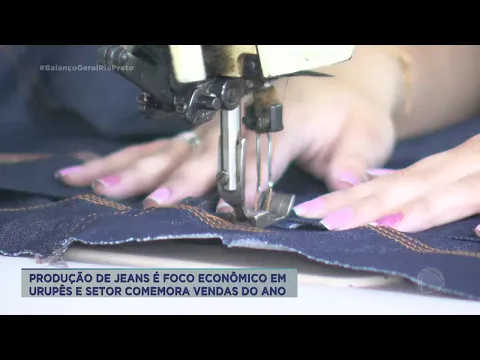

To address the bottleneck, the city hall structured a training program in partnership with local factories.
The training sessions are free and aimed at residents who wish to enter the sector or specialize in activities related to jeans production.
The content covers techniques of cutting and sewing, handling machines, and inspecting pieces.
The proposal is to prepare students for real work routines, with training that helps to understand process stages, standardization requirements, and care with machinery operation.
Classes take place at the Youth House, in front of the city’s bus station, with regular classes and materials provided by the government.
Enrollment is open to individuals aged 18 and over, which expands the initiative’s reach to adults seeking reemployment, career changes, or their first formal job.
By concentrating education in an easily accessible space, the strategy also aims to reduce common barriers for those wishing to qualify.
This way, training gets closer to the daily life of the municipality and the immediate needs of industries.
Qualification Opens Doors for Growth Within Factories
In addition to opening doors for those wishing to enter the market, qualification has also been indicated as a way to improve the use of those already employed.
The sector operates with well-defined tasks, and in many cases, with the possibility of migration between roles as experience increases.

There are reports of workers who started in simpler tasks and, after training, advanced to supervisory and coordination positions.
Progression in these cases often depends on both performance and the ability to take on new responsibilities within the production flow.
This movement helps explain why training is not limited to teaching a single stage.
By learning more than one point in the process, the professional increases the chances of occupying different roles, adapting to what the factory needs and maintaining stability in a sector that operates on targets and deadlines.
Diversification of Production Strengthens the Textile Pole
Although jeans is the symbol that projected Urupês, the trained labor can also be directed to other production lines.
Among them are items such as backpacks and school supplies, which utilize part of the knowledge developed in cutting, sewing, and finishing.
Diversification helps sustain the local industrial ecosystem, creating job alternatives and helping to distribute productive capacity among different market demands.
For the city, this means keeping the sector as an economic axis while seeking ways to reduce dependence on a single product category.







Be the first to react!