





 Portuguese
  English
  Spanish
  4 min of reading
  0 comments



In The Cold War, The HARP Project Used A 406 Mm Cannon To Launch Projectiles At Mach 10 Nearly Into Space, Testing The Limits Of Military Artillery.
In the early 1960s, during the height of the Cold War, the United States and Canada embarked on an experiment that today seems improbable even by extreme military standards: using a naval artillery cannon to launch payloads to near-space altitudes. The program was named Project HARP (High Altitude Research Project) and was conducted under the leadership of Canadian engineer Gerald Bull, a ballistics expert who believed that artillery still had much to offer beyond the conventional battlefield.
The proposal was simple on paper and radical in execution. Instead of expensive, complex, and visible rockets, a giant cannon could launch projectiles at hypersonic speeds, reaching altitudes where satellites, missiles, and spy aircraft began operating. What started as scientific research quickly revealed a military potential that left strategists attentive.
The Cannon That Transformed Artillery Into Near-Space Technology
The heart of Project HARP was a 406-millimeter cannon, the same caliber used in battleships during World War II.
-
BHP builds a mega desalination plant in Chile to supply the world’s largest copper mine, with 2,500 liters per second, four pumping stations, and seawater transported up to 3,200 meters in altitude through giant pipelines in the Atacama Desert.

-
The International Space Station is 109 meters from end to end, orbits the Earth 16 times a day, and covers a distance equivalent to a round trip to the Moon in 24 hours; the orbital laboratory showcases the largest inhabited human structure ever assembled in space.

-
China enters a megaproject in Iraq to build a desalination plant capable of producing 1.1 million m³ of water per day, with giant tanks, 9 distribution stations, and 240 km of pipelines to supply potable water to the province of Basra.
-
Brazilian Army reaches a new level by receiving the first 100% national EOD robot to disarm explosives and reduce risks in UN missions; this unprecedented technology will be used by the 6th Combat Engineering Battalion in high-complexity operations.




The tube was about 36 meters long and was initially mounted in Barbados, in the Caribbean, and later in facilities in Canada. It was not a makeshift weapon: the system was deeply modified to withstand extreme pressures and repeated firings under controlled scientific conditions.
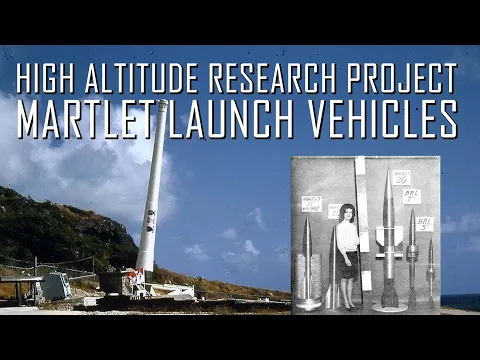

The projectiles, weighing up to 180 kilograms, were launched at speeds exceeding 3,600 meters per second, equivalent to Mach 10. In terms of kinetic energy, each shot rivaled tactical missile systems of the time, but with a crucial difference: the cost per launch was drastically lower.
Nearly Touching Space Without Using Rockets
The most impressive feat of Project HARP occurred in 1966, when a shot reached approximately 180 kilometers in altitude. This number is extraordinary by any standard. It exceeds the 100 km line often used as an international reference for the beginning of space and is far above the operational altitude of aircraft and scientific balloons.
To this day, this remains the world record for altitude achieved by a projectile fired from a cannon. No other artillery system, before or since, has come as close to space.
This result showed that the boundary between artillery and space technology was not as rigid as previously thought. With proper engineering, a concept from the 19th century was reaching domains of the space age.
Why This Scared Military Strategists
Although officially classified as an atmospheric research project, HARP had obvious military implications. A system capable of launching payloads to near-space altitudes, using a nearly instantaneous shot, raised serious questions about detection, interception, and cost.

Unlike a rocket, which emits an intense thermal signature and can be detected from launch, a projectile fired from a cannon appears almost out of nowhere on radar.
In theory, payloads could be launched on long-range ballistic trajectories, sensors could be temporarily positioned at extreme altitudes, and even darker concepts, such as special warheads, began to be discussed in closed circles.
Artillery, traditionally associated with ranges of tens of kilometers, was being designed for a nearly strategic role.
The Physical Limit That Stopped The Dream Of The “Orbital Cannon”
Despite the impressive numbers, Project HARP also revealed hard limits imposed by physics. The acceleration experienced by the projectiles was brutal, often exceeding 10,000 times the force of gravity. This made it nearly impossible to launch delicate electronic equipment without destroying it on firing.
Moreover, ballistic precision at extreme altitudes was limited. Small variations in firing translate into large deviations over hundreds of kilometers. For precision military applications, this was a critical problem.
Another factor was barrel wear. Each firing at hypersonic speeds rapidly degraded the tube, requiring constant maintenance and expensive replacements. What seemed cheap per launch began to lose its advantage when considering the system’s lifespan.
Why The HARP Project Was Terminated

By the late 1960s, with the rapid advancement of rockets and the space race gaining momentum, Project HARP lost priority. Rockets offered trajectory control, more delicate payloads, and real orbital capability, something the cannon could never deliver stably.
The project was terminated but not forgotten. It left a profound technical legacy and fueled an obsession that would accompany Gerald Bull for the rest of his life. Decades later, he would be involved in even more ambitious attempts to create superguns, culminating in the famous and controversial Project Babylon, linked to Iraq.
The Legacy Of An Experiment Ahead Of Its Time
Project HARP occupies a unique place in military and scientific history. It demonstrated that artillery could surpass limits considered absolute, touching space without rockets, satellites, or aerial platforms. At the same time, it exposed why this route was as tempting as it was impractical.
At a time when superpowers sought any possible strategic advantage, HARP was proof that old ideas, when taken to the extreme, could still challenge modern paradigms. A naval cannon, designed for wars of the past, got closer to space than many early space systems.
Today, the project is remembered as one of the boldest experiments of the Cold War, the moment when artillery almost became space technology.






-

1 person reacted to this.