





 Portuguese
  English
  Spanish
  5 min of reading
  0 comments


The reuse of advertising tarpaulins transforms used banners into sustainable bags, reduces event waste, and shows how advertising materials can gain a new function before occupying space in landfills
Giant advertisements that would end up in the trash can now become bags, eco-bags, and accessories. The solution uses advertising tarpaulins that have already served their purpose in events, campaigns, and promotional actions, but can still be reused.
The information was released by EcoModas, a company of sustainable solutions and circular economy, in a publication on August 20, 2025. The company transforms banners and advertising tarpaulins into new products, focusing on material reuse and waste reduction.
The central data that draws attention is that for every 100 m² of reused tarpaulin, about 50 kg of waste are prevented from going to landfills. In practice, the advertisement that aged on the streets can return to use as an everyday item.
-
Instead of leaving waste pickers working without structure, a project in Montenegro was approved under the Recycling Incentive Law to support 28 families, expand selective collection, and transform waste into income in Rio Grande do Sul.

-
A Brazilian city decided to treat waste as currency, created an app that gives points for recyclables, and included cooking oil, coffee capsules, electronics, and even large appliances in the environmental account.
-
While many people change tires and forget the destination of the old rubber, Brazil sent 384,391 tons of used tires in 2025 and revealed the hidden mountain that cars, buses, and trucks leave behind after driving.
-
The gravity of the Earth was factored into the calculation, and now scientists say that sea levels may rise more than many coastal cities imagined by 2100.
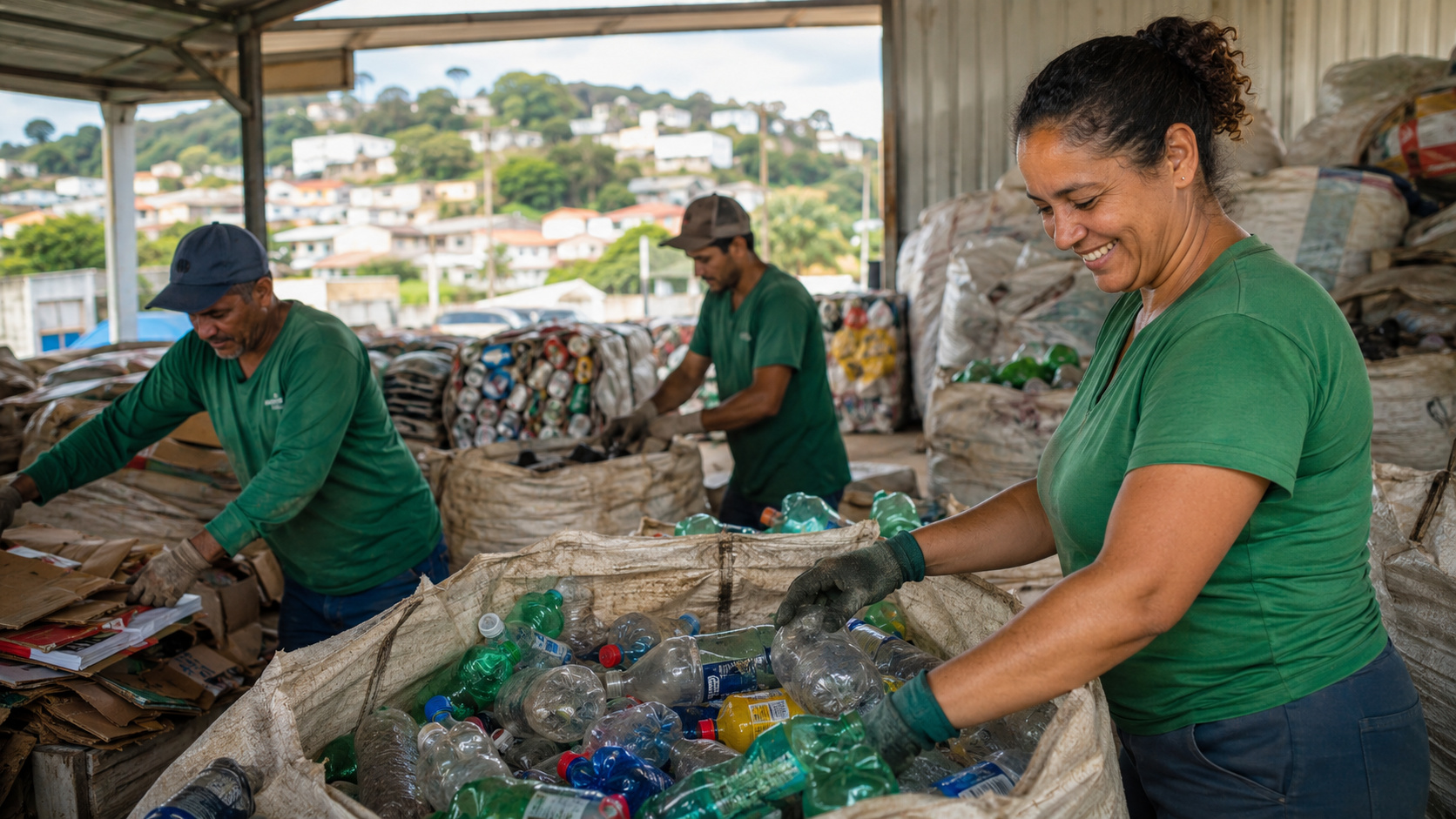


Why advertising tarpaulins become a problem after events and campaigns
Banners and advertising tarpaulins are used to attract attention at fairs, events, campaigns, and company actions. They appear in large spaces, cover structures, display brands, and help communicate a message for a short time.
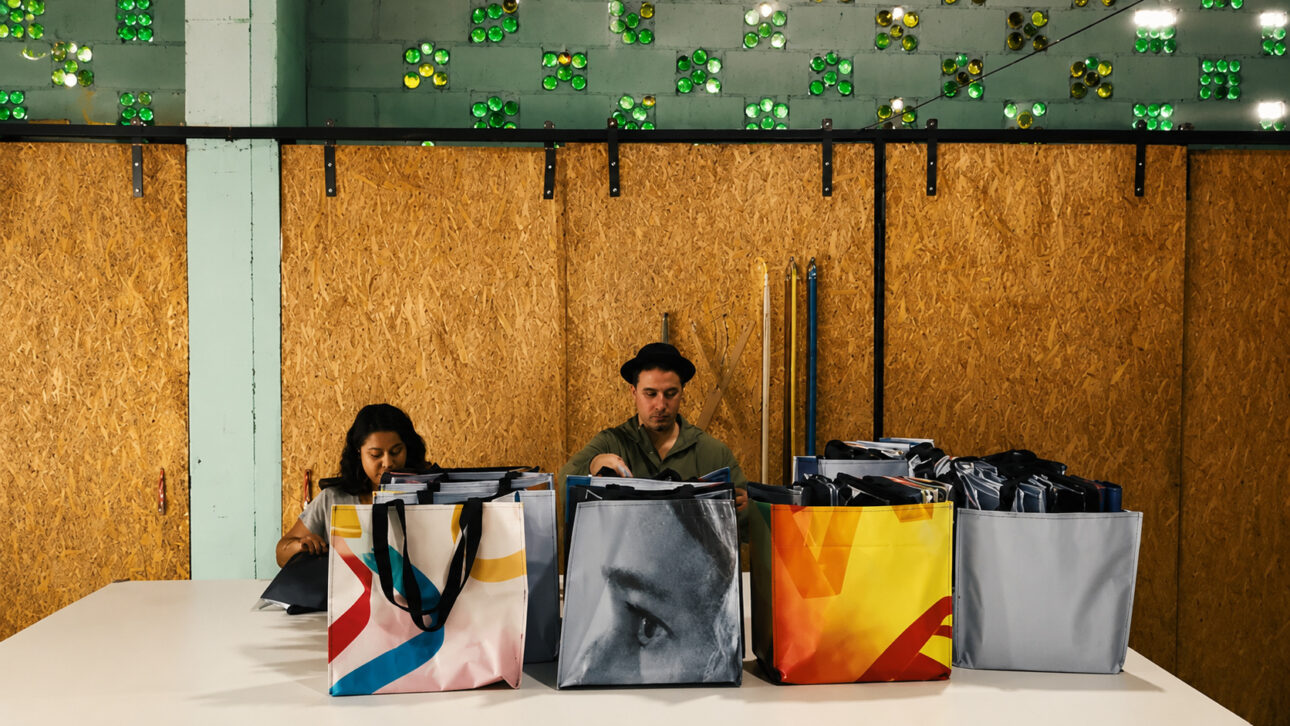
After the campaign ends, the material loses its original function. The tarpaulin that once served to promote an event can become surplus, with no immediate use for the company.
The problem is that this type of material does not disappear easily. The advertising tarpaulin is durable, precisely because it needs to withstand transport, exposure, and use in different environments. This durability, good during the campaign, complicates disposal afterward.
For this reason, reuse changes the logic. Instead of treating the canvas as waste, the material is seen as raw material for new products.
How used banners are cut, sewn, and transformed into products
The transformation begins when the used canvas leaves the advertising space and enters a reuse process. The material is separated, cut, and adapted to gain a new shape.
The image is simple: a large event banner, once attached to a wall or structure, is cut into smaller parts. Then, these parts enter production and can become bags, eco-bags, and accessories.
This process also retains part of the original canvas’s visual identity. Colors, pieces of letters, and fragments of images may appear in the final product, making each piece different from the others.
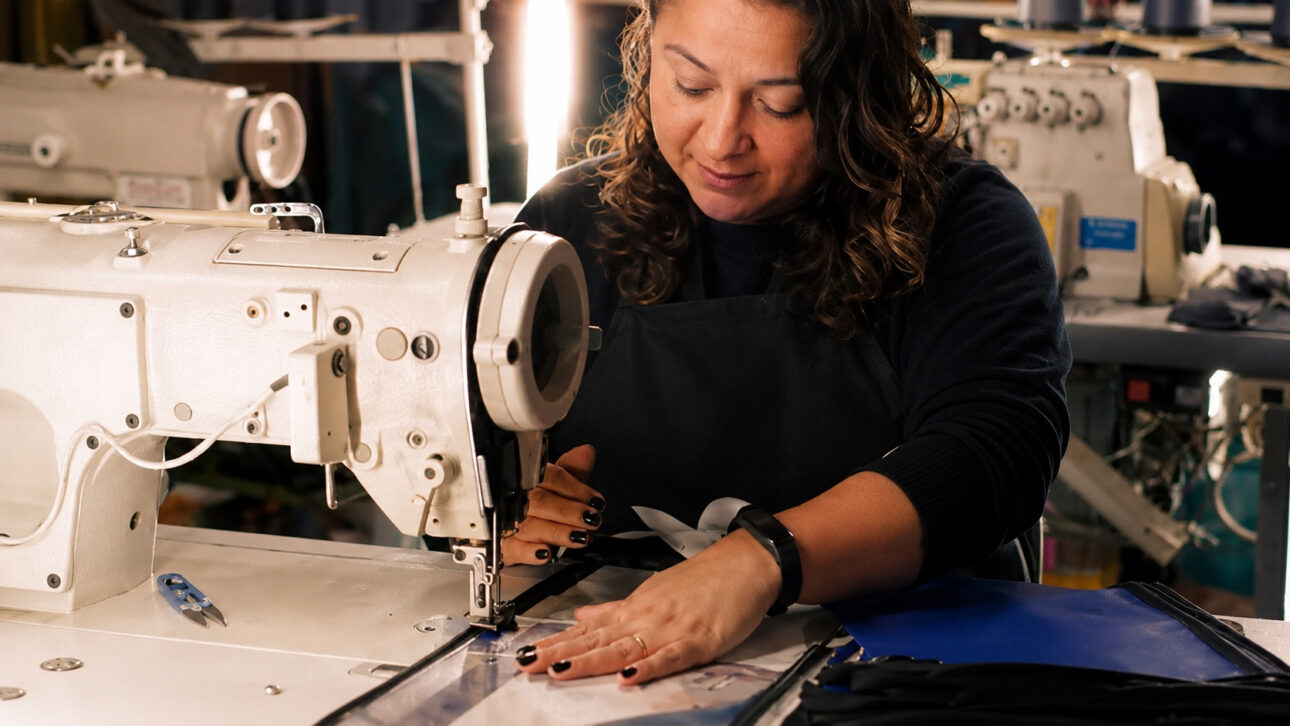
The result is a change of destination. What could end up in landfills now circulates again as a useful object, with a practical function for carrying groceries, documents, or personal items.
Every 100 m² reused prevents about 50 kg of waste in landfills
EcoModas, a company focused on sustainable solutions and circular economy, presented the number that summarizes the environmental impact of the initiative. For every 100 m² of canvas reused, about 50 kg of waste are prevented from going to landfills.
This data helps the reader understand the scale of the problem. A canvas may seem like just a piece of advertising, but when combined with many campaigns and events, the discarded volume can quickly grow.
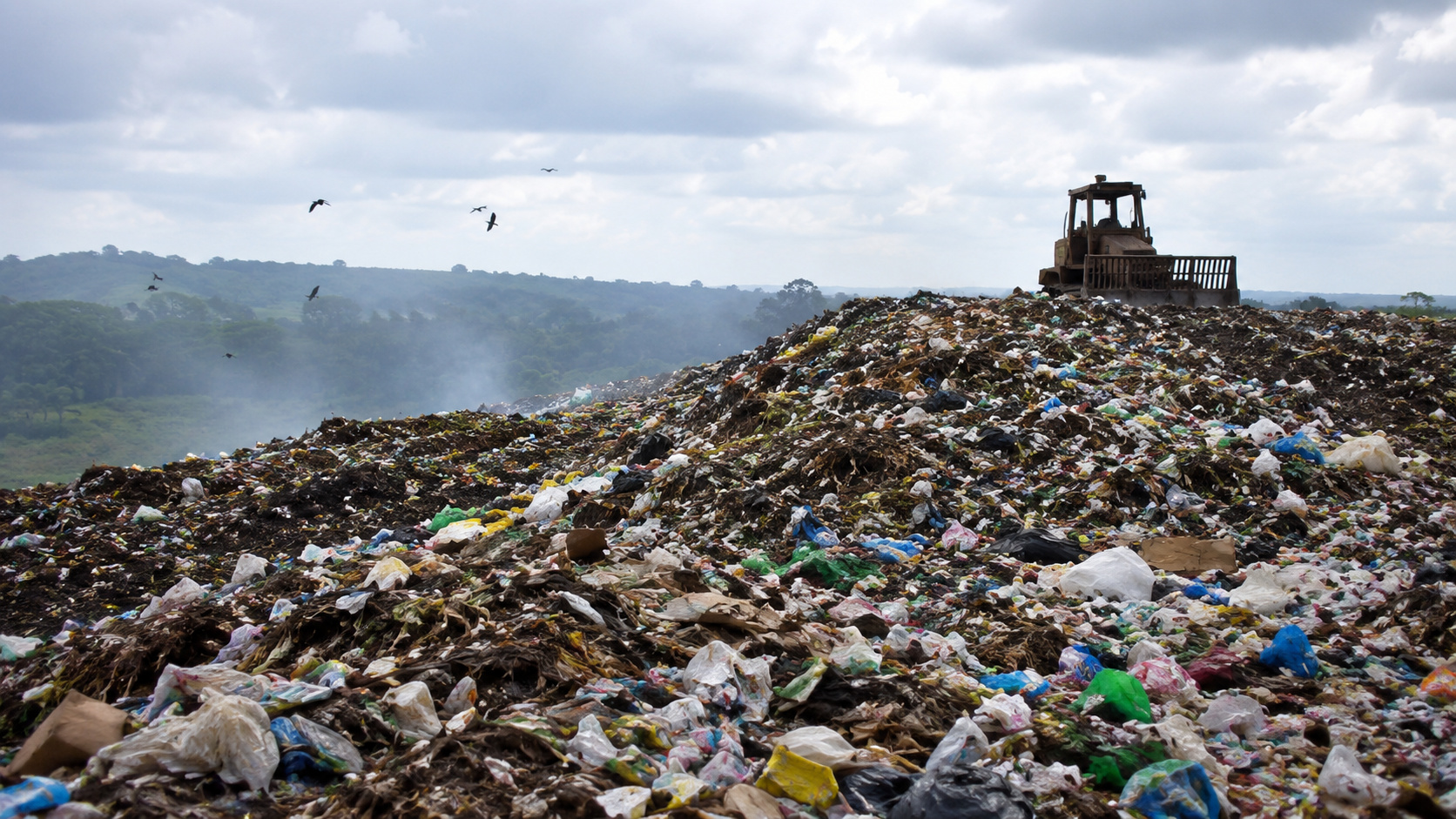
The landfill is the designated place for receiving waste that had no other destination. When the canvas is reused, it no longer occupies this space and gains a new useful life.
The practical consequence is clear: reuse reduces waste, makes better use of already produced materials, and prevents companies from treating old banners as inevitable waste.
Why companies are looking at old banners as a resource
Many companies use tarpaulins to promote brands, events, and campaigns. After use, this material can become an internal problem, especially when there are large quantities stored or without a defined destination.
Reusing creates a simple response to this surplus. The tarpaulin ceases to be seen only as waste and starts being treated as a usable resource.
This also changes the relationship between advertising and sustainability. The campaign doesn’t necessarily end in disposal. It can continue to exist in another format, like a bag or an eco-bag.
For companies, this choice can show care for the destination of their own materials. For the public, it makes understanding sustainability easier, because the impact appears in a tangible product.
What changes when old advertising becomes a sustainable bag
The main change is in the use of the material. The advertising tarpaulin, once linked to a temporary action, gains a longer and more practical function.
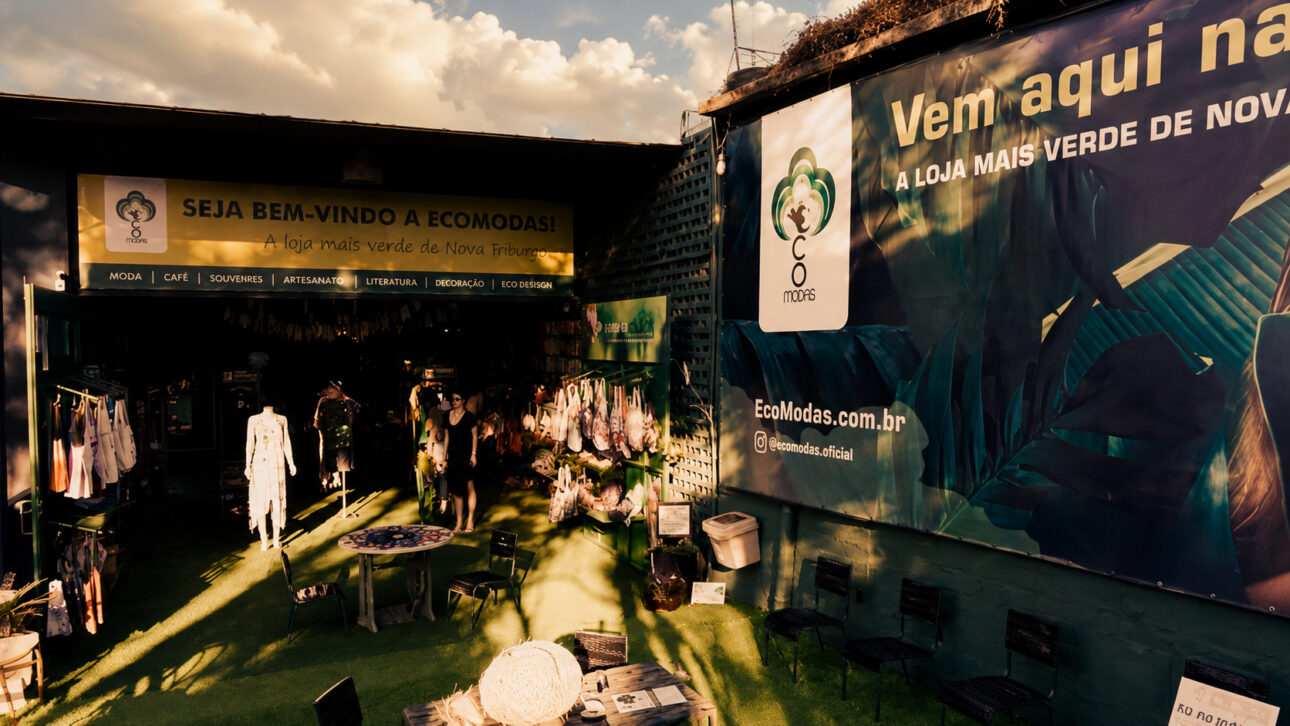
This type of transformation brings sustainability closer to everyday life. Instead of just talking about disposal, the example shows a familiar object being reused in a simple way.
The consumer can also see the before and after. The tarpaulin that advertised a campaign now carries groceries, personal items, or work items.
This path shows that reducing waste doesn’t just depend on big solutions. In many cases, it starts with the decision to reuse what already exists.
Reusing tarpaulins shows a simple alternative to reduce event waste
Reusing advertising tarpaulins shows that part of the material generated by events and campaigns can have a different destination than the landfill. For every 100 m² reused, about 50 kg of waste are prevented from being discarded.
The proposal does not eliminate the entire waste problem, but it offers a practical solution for a common, resistant, and difficult-to-decompose material. In the end, the advertisement that lost value as an ad can gain value as a product.
If even a giant advertising tarp can come back as a bag, what other materials discarded by companies could gain a second life before becoming trash?







Be the first to react!