





 Portuguese
  English
  Spanish
  8 min of reading
  0 comments


Between Secret Reefs, Shipwrecks Full of Barracudas, and Competitions with Elite Divers, the Routine of Those Who Spend a Week Hunting Food with a Spear Shows Blackouts in Shallow Waters, Sharks Contesting Carcasses, Constant Psychological Pressure, and in the End, Dishes Worthy of a Sophisticated Restaurant by the Communal Fire
The accounts of seven days hunting food with a spear show a diver who swaps the supermarket for Florida reefs, shipwrecks in the Atlantic, and a tense test in open water. Each descent in apnea combines technique, instinct, and a simple calculation: either the fish rises to the spear, or the diver rises with nothing.
From the first spiny lobster captured just a few meters from the beach to the Spanish mackerel contested with barracudas in murky waters, the sequence of dives reveals a routine where every breath at the surface is planned. Between one shot of the spear and another, significant ghosts appear: risk of blackout, proximity of sharks, aiming errors that cost fish, and in some cases, the equipment itself.
Seven-Day Routine Under the Surface

The week begins at home, on a shallow reef in Florida, where the diver decides to spend whole days hunting food with a spear for the family. The setting is seemingly calm: warm water, good visibility, and a sequence of coral heads mapped over time.
-
Family has lived for over 50 years without electricity and running water at home in the South of Minas, 10 minutes from the city, improvising light, bath, and water while facing a lack of basic resources and awaiting property regularization.

-
Children from the 1980s and 1990s who spent hours playing in the street until dark naturally developed spatial intelligence, which today has become the subject of expensive courses, cognitive training, and modern methods of child and adult learning.

-
Without bombs, without electricity, and without drilling the ground, villages in southwestern Morocco have discovered how to extract water directly from the air using only polymer nets, wind, and the humidity of the Atlantic amidst the advancing desert.

-
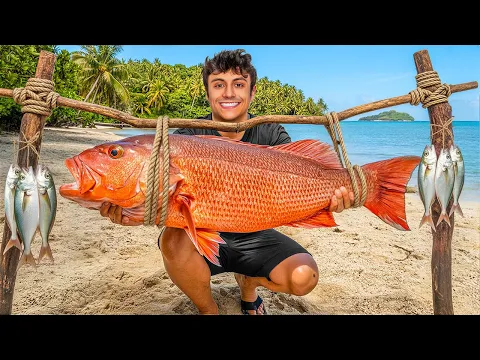
Son of a Brazilian, a 20-year-old young man defies extreme pressure, wins the world rodeo championship, and takes home a million-dollar prize of nearly R$ 5 million.



But right from the first exploration, a wall of spiny lobsters appears, antennas raised in defensive formation and all pointed at the intruder.
This type of catch requires more calculation than strength. Instead of shooting the spear, the diver bets on his bare hands, knowing that the lobsters only retreat and that any hole behind them can turn into an escape route.
With each descent, he manages his bottom time, assesses the risk of blackouts in shallow water, and rises before his vision starts to fade.
The information is repeated as a central alert: dives that are too short and too frequent, without resting at the surface, can lead to silent blackouts at shallow depths.
As the days pass, the list of species increases: black drum fish fed by crustaceans, large mackerel in compact schools, whole jacks used for sushi, and mutton snapper that require precise shots and constant pressure on the spear to avoid escaping.
The technique is repeated: side shot, pierced head, immediate bleeding, and evisceration still in the water to preserve the quality of the meat and reduce the blood that attracts predators.
Technique, Safety, and Limits of the Body in Apnea

The routine of those who spend days hunting food with a spear is marked by a discipline that mixes physiology and psychology. In each dive, the protagonist mentally counts the time, controls anxiety, and tries to keep the heart rate low.
When competitiveness rises too high, he admits his mistake: quick movements, restless gaze, and insufficient breathing use oxygen faster and increase the risk of blackout.
Therefore, one of the repeated protocols is simple and non-negotiable: stay twice as long at the surface as at the bottom. This interval allows for replenishing oxygen reserves in the blood and brain, reducing the chance of sudden blackouts upon ascent.
In the context of free diving, blackout in shallow water is described as a constant threat: the mind believes there is still air, but the body has already entered critical deficit.
At the same time, the environment demands quick decisions with the spear in hand.
In living reefs, care shifts to environmental impact: waiting for the fish to move away from the coral before shooting, avoiding direct hits on sensitive structures, and accepting to lose opportunities when the risk of damaging the reef outweighs the benefit of another fish.
Nonetheless, some mistakes occur, with shots hitting the coral and blinding the spear tip, necessitating repairs and repositioning.
Sharks, Shipwrecks, and High-Level Competition

As the week hunting food with a spear progresses to deeper reefs and shipwrecks, the presence of sharks stops being a possibility and becomes a concrete reality.
Nurse sharks, reef sharks, and large barracudas begin to appear whenever a fish bleeds near the bottom.
The guidance is clear: maintain control of the situation, hold the fish firmly, face the animal head-on, and never swim away in a frenzied escape to avoid being confused with prey.
In the shipwrecks, schools of barracudas form silver walls around the diver. In some areas, the challenge becomes more than just catching fish: it becomes retrieving the spear itself.
When a shot hits a large barracuda without immediately killing it, the fish drags the spear as if it were a piece of metal flying through the rusty hull. In at least one episode, the spear disappears from sight and likely ends up in the jaws of another predator.
Simultaneously, the week includes direct competition with another experienced diver, held in open water with precise rules.
Each species is worth different points, hogfish yielding double points, red grouper and tiger grouper valued more for their rarity and meat quality, and only one shot allowed per fish. Mistakes cannot be corrected.
While the rival manages long dives, slow movements, and surgical shots, the protagonist tries to compensate for asthma and short apnea with strategy, target selection, and timely support from a more experienced diver.
Strategy, Cooperation, and Rivalry Underwater
The competition in open water dismantles the romantic notion that hunting food with a spear is always a solitary activity.
There are temporary alliances, such as when a partner recovers a spear stuck near a seven-foot barracuda, and there are moments when cooperation turns into a direct contest for points.
In an emblematic throw, a fish already shot escapes and becomes a target for both the author of the first shot and the rival, who can turn someone else’s mistake into their own advantage.
The score fluctuates depending on the type of catch. Jacks yield average points, grunts are valued for their taste, Spanish mackerel is treated as a high prize for its white and abundant meat.
Hogfish appear as a central species, both abundant, not very shy, and highly scored.
The logic of competition forces cold choices: shoot a lot or select few high-value opportunities, always at the risk of losing the spear, the fish, or both.
As the day advances, fatigue sets in. Dehydration, vomiting in the water, and a sense of physical limit lead the protagonist to retreat before the competition turns into a serious accident.
The final result is a victory for the opponent, built on a combination of high-value fish and the ability to maintain consistent dives even under strong psychological pressure and the constant presence of sharks in the area.
From Reef to Kitchen: When Hunting Becomes a Meal
At the end of several days hunting food with a spear, the focus shifts from reefs and shipwrecks to the kitchen. Large spiny lobsters, captured in coastal waters, become the basis for a heavy and caloric recipe: a lobster mac and cheese made in a giant pot, with different types of cheese, cream, and layers of shredded meat.
The transition is not merely aesthetic. There is explicit care for the quality of the protein from the moment of capture: removal of tendons from the legs, removal of entrails and blood from fish still in the sea, proper cooling, and attention to every detail of texture.
The result is dishes whose logic resembles haute cuisine, but with an additional component: each bite is directly linked to a shot from the spear, a successful dive, and a decision made underwater.
The collective preparation reinforces another dimension of the practice: the food is shared among family, friends, and crew, transforming a series of risky days into a moment of social celebration.
At the same time, accidents in the kitchen – cuts, burns, makeshift bandaging – expose that the domestic environment also holds its own dangers when the fatigue from the sea has not yet been fully processed.
Environmental Impact, Ethics, and the Culture of Underwater Fishing
Seven days hunting food with a spear also reveal ethical and environmental dilemmas that go beyond technique. Some species, like parrotfish and angel fish in certain regions, are explicitly spared, either by legislation or due to their ecological role in the reefs.
Others, like the invasive lionfish, are viewed as a preferred target: a voracious, venomous predator that harms local balance, but at the same time, is tasty and valued on the table.
Control of fishing effort appears as a central element of responsibility.
In shallow and remote areas, after a good sequence of catches, the decision is to move away from the spot to avoid over-exploitation.
In shipwrecks and more pressured reefs, the guidance is not to insist repeatedly on the same coral head, allowing the environment to recover and fish populations not to be exhausted by successive visits.
Throughout the journey, it becomes clear that this form of food acquisition combines high sporting degree, strong cultural component, and direct impact on the ecosystem.
The difference, compared to industrial fishing, lies in the scale: each decision occurs fish by fish, lobster by lobster, with the animal’s face just a few centimeters from the diver.
Still, the question remains: to what extent is the pursuit of adrenaline, scoring in competitions, and sophisticated dishes compatible with the long-term preservation of the same reefs that sustain this practice?
Between Adventure, Sustenance, and the Limit of Risk
The week narrated shows that hunting food with a spear is not just an exotic adventure for social media.
It is a constant exercise of risk calculation, management of one’s own body in apnea, reading animal behavior, and negotiation with predators competing for the same resource in the same space.
In parallel, it is also a way to produce food in an extremely localized manner, fish by fish, lobster by lobster, with full awareness of the origin of each meal.
In light of this scenario, the final reflection falls on those observing from the outside: if you had access to the sea, reefs, and shipwrecks like these, would you be willing to swap the supermarket for whole days hunting food with a spear, managing sharks, blackouts in shallow waters, and equipment failures in exchange for a more honest dish on the table, or would you prefer to keep your distance and leave this type of diving only for those who choose to live on the edge?






-

-

2 people reacted to this.