





 Portuguese
  English
  Spanish
  5 min of reading
  21 comments


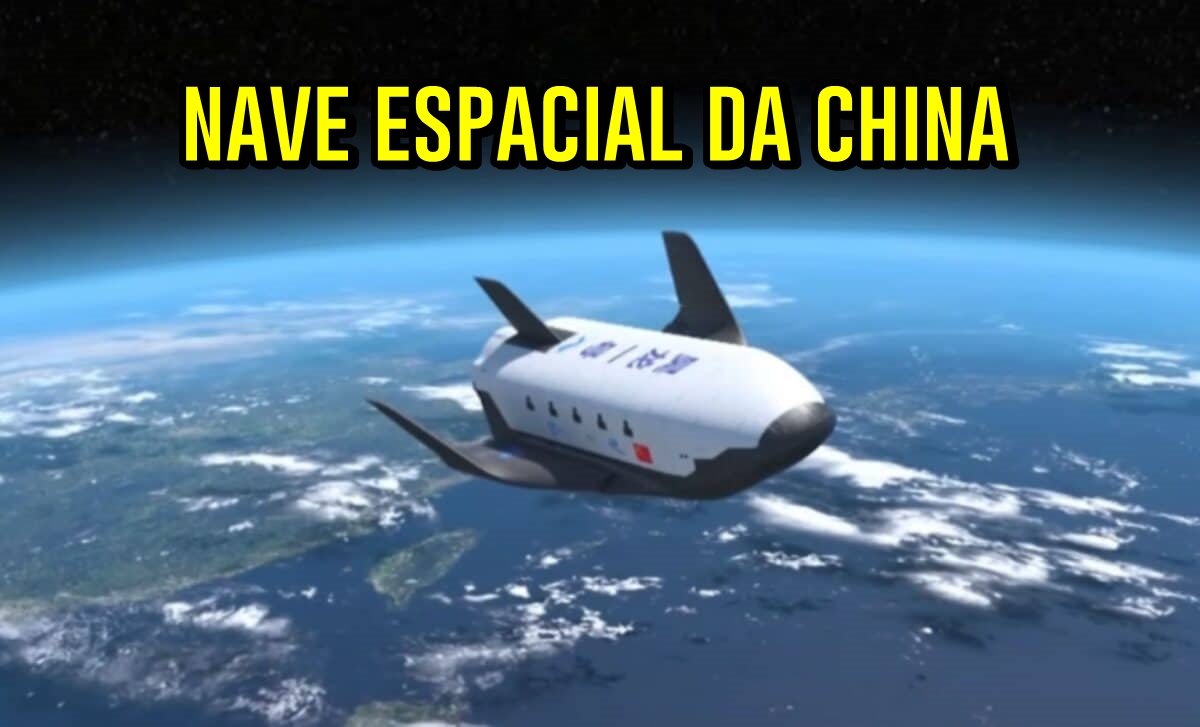


Haolong, The Chinese Spacecraft, Promises High Capacity And Efficiency With 10 In Length And Less Than 7 Tonnes
China is taking off towards the future of space exploration with an innovation that promises to revolutionize supply transport to the Tiangong space station: the Haolong. This Chinese spacecraft, at 32 feet long and 26 feet wide, is designed to be reusable and make a difference in terms of cost and sustainability. But what makes the Haolong so special? Let’s explore that more deeply.
A New Era In Transport With The Chinese Spacecraft
The Haolong is a cutting-edge project developed by the Chengdu Aircraft Design and Research Institute under the guidance of the Aviation Industry Corporation of China (AVIC). Its main feature is reusability.
Unlike current cargo ships like the Tianzhou, which are disposable, the Haolong is designed to be launched into space and return in a reusable manner, like an airplane landing on an airport runway. This represents a major step forward in the advancement of space technologies, not only for its innovation but also for the significant cost reduction.
-
Millions of people have been eating yam for centuries without knowing that this humble tuber contains a compound called diosgenin, which scientists have now discovered can improve memory and help control blood sugar levels.

-
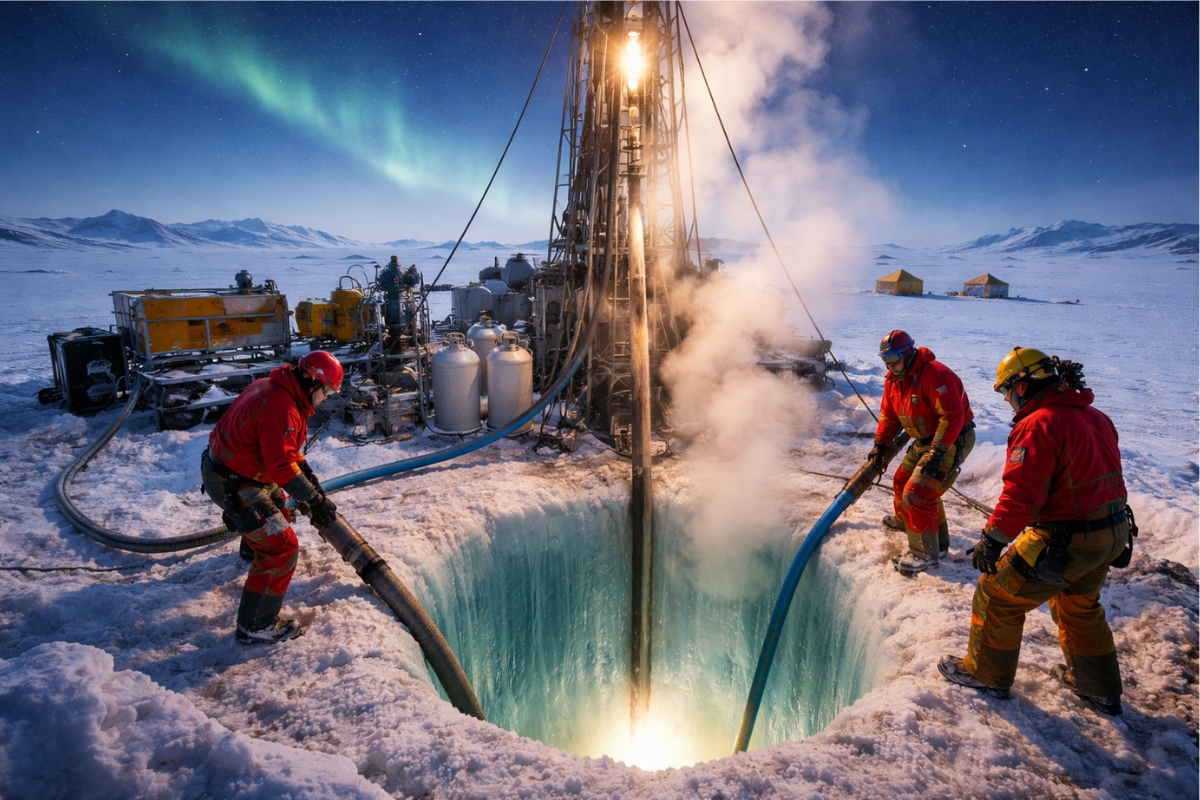
Scientists from an international project drill 1,800 meters of ice in Antarctica using hot water and discover details about one of the most intriguing places on planet Earth.
-
Seen from space, a colossal volcano nearly 5,000 meters high in Russia has released 1,600 km of smoke over the Pacific, forming “devil’s horns” of lava and revealing the brutal force of the Ring of Fire.

-
Expedition 501: Scientists drill into the ocean floor and discover a giant reserve of fresh water hidden beneath the sea, extracting nearly 50,000 liters and revealing an invisible system that could reshape the map of water scarcity.


Imagine a typical situation of ground transport. If you were to use a truck to transport materials from one point to another, but had to discard the truck after each trip, the costs would be outrageous, right?
This is where the concept of reusability comes in, bringing significant savings. The Haolong seeks to replicate this type of economy in space, making each mission more accessible and efficient.
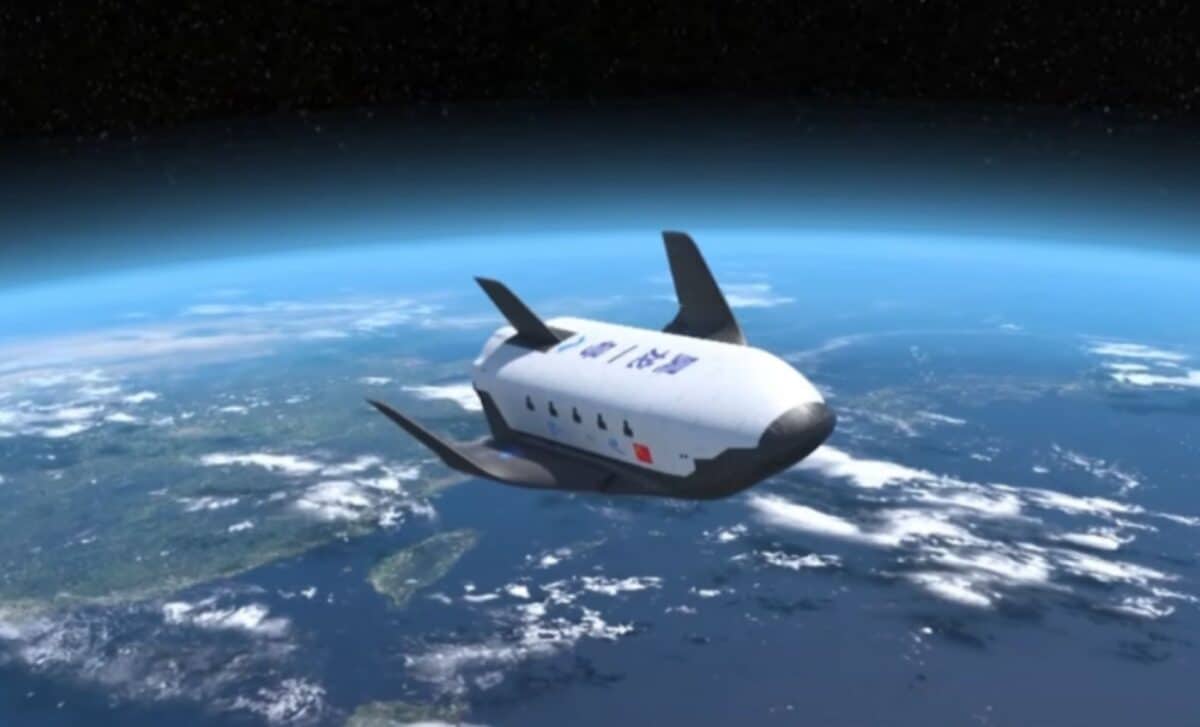
Aerodynamic And Innovative Design
The design of the Haolong is a spectacle in itself. With a blunt-nosed fuselage and large delta wings angled backward, it is a fusion between a spacecraft and an aircraft. The idea is that the Haolong will be launched into space atop a rocket, but upon returning, it will perform a horizontal landing, very similar to an airplane landing at an airport. This not only increases operational efficiency but also simplifies the recovery and maintenance process of the vehicle, allowing it to be reused on subsequent missions.
Compared to current vehicles in China, like the Tianzhou, the Haolong is significantly smaller and lighter, weighing less than 7 tonnes, while the Tianzhou reaches up to 31 tonnes. This weight reduction means that the Haolong can be launched with less fuel, which not only reduces cost but also makes operations more environmentally friendly. Simply put, it is cheaper and greener. This is a big step forward for China’s long-term ambitions to ensure a continuous and economical presence in space.
More Capacity For The Tiangong Station
The Tiangong space station, which already plays a crucial role in the Chinese space program, will be significantly benefited by the Haolong. Tiangong is expected to grow in the coming years, with the addition of new modules. Therefore, the need for efficient, regular, and low-cost cargo transport becomes even more urgent. The Haolong will come into play to ensure that the station receives supplies such as food, scientific equipment, and even experimental cargo continuously.
Best of all, thanks to its ability to perform horizontal landings, the Haolong will be able to autonomously dock at Tiangong, delivering directly the materials the station needs. After delivering, it will exit orbit and return to Earth, landing on a designated runway. This approach increases the flexibility and frequency of missions, allowing the Tiangong station to be resupplied more regularly. And, of course, a reusable spacecraft allows for a greater number of missions, which is essential as the station expands and new scientific missions begin to demand more resources.
Reusability In The Global Context
The concept of reusable spacecraft is not exclusive to China. In the United States, for instance, Sierra Space is developing the Dream Chaser, a reusable cargo spacecraft designed for missions to the International Space Station (ISS). Like the Haolong, the Dream Chaser also combines elements of an aircraft and a spacecraft, facilitating its horizontal landing.
What these two spacecraft have in common is the fact they represent a shift in the paradigm of space operations. Previously, we had to build a new spacecraft for every mission, which made everything more expensive and complicated. Now, with reusable spacecraft like the Haolong and the Dream Chaser, space missions can be more accessible and frequent, without compromising safety or efficiency.
What To Expect From The Haolong?
As the Haolong gains more prominence, its importance extends beyond China. It represents a significant step towards sustainable space operations, and its adoption could shape the future of global space logistics. If it proves successful, it could even pave the way for new international collaborations or escalate competition in the sector.
In a broader context, the success of the Haolong could change the way countries and commercial companies think about space transport. It may even inspire other nations to invest more heavily in reusable technologies, which ultimately benefits us all. Sustainability is a growing concern, and by reducing operational costs and improving efficiency, the Haolong could become a model for the future of space missions.
China, with its Haolong, is taking a significant step towards a more sustainable and economical future in space exploration. The spacecraft promises to transform the way supplies are delivered to the Tiangong space station, ensuring its continuous operation and expanding its capabilities. But it’s not just China that is aiming for this future: the whole world is watching innovations like the Haolong to make space exploration more accessible and effective.
If you think that the future of space exploration is still far away, the Haolong proves that we are closer than we think. After all, space is no longer a distant place – it is right there, waiting to be explored in a smarter and more efficient manner.







Calma pessoal, vamos aguardar o “Bicho” entrar em operação e veremos se realmente trata-se de um bom projeto ou será mais uma tentativa frustrada.
Aliás, convenhamos, os EEUU tem plena capacidade para modificar e melhorar o projeto cdos ônibus espaciais, mas este projeto foi abandonado. Por que será????
Os russos também abandonaram seu projeto. Por que será????
Então, vamos aguardar os chineses com muita calma..
Os defensores do comunismo deveriam ter mais conhecimento, para defender esse sistema, a maioria nunca esteve em um País Comunista, conhecem apenas a teoria! Estudem mais, vocês tiveram o cérebro sequestrado!
A NASA já fez isso com os ônibus espacial. Desistiram desse projeto mas não informaram os reais motivos.
VOCÊS SÃO MUITO “CARA DE ****”! VEM VEM ESSA MATERIA PAGA PELO PARTIDO COMUNISTA CHINÊS, EM PARCERIA COM A SECOM DO GOVERNO BRASILEIRO, PRA TENTAR LIMPAR A INAGEM DO **** E TORTURADORES CHINESES, QUE MATAM ADVERSÁRIOS, ESTUPRAM ESTUDANTES, E CHACINAM AS POPULAÇÕES DOS PAISES QUE INVADEM!