





 Português
  Inglês
  Espanhol
 4 min de leitura
  0 comentários



Rumo Logística Invests R$ 15 Billion in Railway Expansion in Mato Grosso. The Goal is to Double Grain Transportation by 2032, Betting on Competitiveness to Export to the Asian Market.
Amid the growing global demand for food and the strategic importance of Brazilian agribusiness, Rumo Logística plans a new revolution on the rails that cross Brazil.
Although the company already has a massive presence in grain railway transportation, the focus now is to expand its railway network in Mato Grosso, a state that already accounts for 16% of the world’s soy and corn trade.
However, this ambition goes far beyond the known numbers.
-
Brazilian city gains industrial hub for 85 companies that is equivalent to 55 football fields.

-
Peugeot and Citroën factory in Argentina cuts production by half and opens a layoff program for more than 2,000 employees after Brazil drastically reduced purchases of Argentine vehicles.

-
A Brazilian city gains a factory worth R$ 300 million with the capacity to process 200 thousand tons of wheat per year, a mill of 660 tons/day, silos for 42 thousand tons, and an industrial area of 276 thousand m².

-
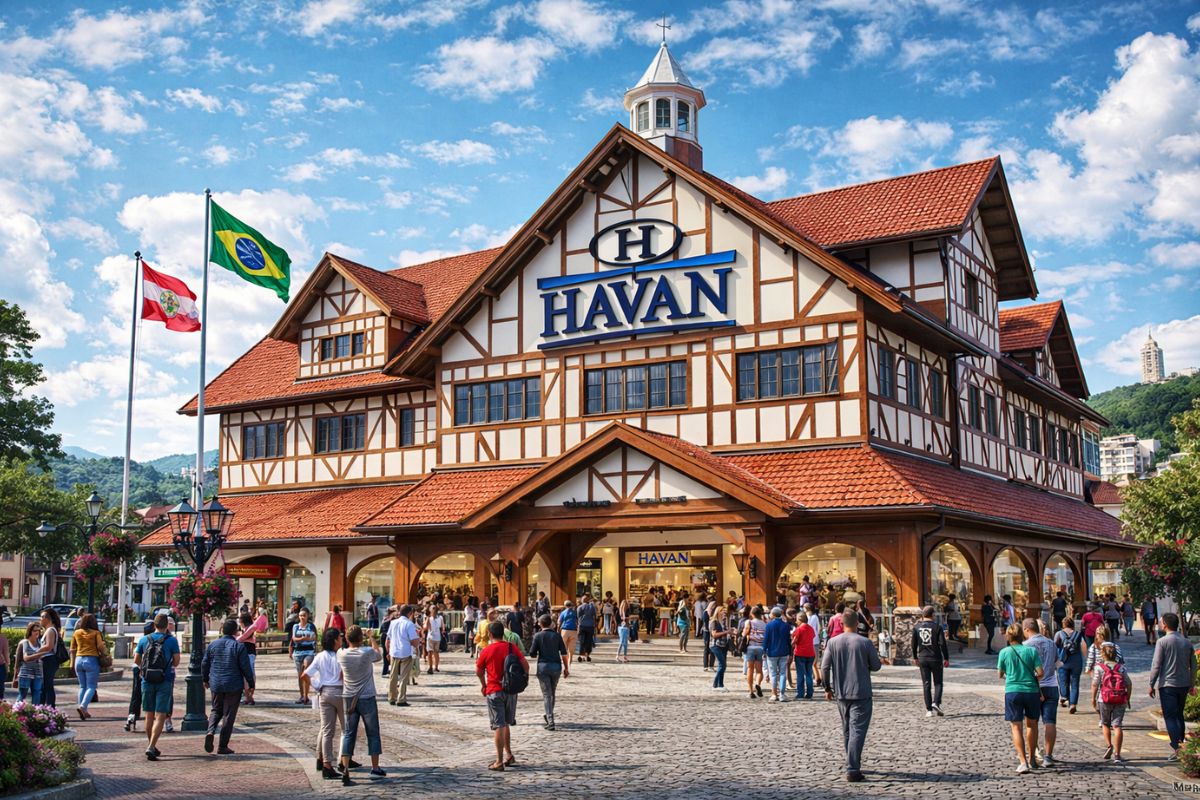
Havan will leave the shopping mall in Blumenau to inaugurate something that the chain has never done before: a megastore in half-timbered style in the Historic Center of the city, which is expected to be completed in May and change the landscape of local retail.

What Rumo is planning could completely transform the agricultural export logistics of the country, but will these new rails truly put Brazil ahead in the global competition?
Billion-Dollar Investments and Impressive Numbers
According to Rumo’s Commercial Vice President, Eudis Furtado, the company has an ambitious project to expand its operations in Mato Grosso, Goiás, and Tocantins, focusing on the railway routes that transport grains to the Port of Santos.
“We are positioned in one of the most strategic regions for global grain trade. Today, Mato Grosso represents 16% of the global trade of soy and corn, and adding Goiás, that number rises to 21%,” Furtado stated to AgFeed portal.
Rumo already moves about 75 million tons of cargo per year, with 32 million tons coming solely from grains cultivated in Mato Grosso and Goiás.
The company’s ambition is to double this number in the coming years, betting on billion-dollar investments in railways.
The goal is to transport up to 60 million tons of grains by 2032, according to the company’s calculations.
Railway Expansion in Mato Grosso: A Bet on the Future
The main focus of this investment is in Mato Grosso, a state that has proven to be an agricultural powerhouse and that, according to experts, can triple its production without cutting down a single tree.
Currently, Rumo operates from Rondonópolis, in southern Mato Grosso, and transports grains to the Port of Santos through a complex railway system.
Now, the company is building a new railway that will extend to the north of the state, passing through important hubs such as Campo Verde, Nova Mutum, and Lucas do Rio Verde.
This expansion is being carried out in partnership with the government of Mato Grosso, and the expected investment is around R$ 15 billion, according to Rumo.
The project will add an additional 750 kilometers of tracks to the company’s railway network and is already in its initial construction phase.
The expectation is that the project will generate significant savings in grain transportation costs and reduce CO2 emissions compared to road transport.
Comparison with the North Arc and Competitiveness in the Asian Market
One of Rumo’s main arguments for this investment lies in the competitiveness of the routes that bring agricultural production from Mato Grosso to the Asian market, the main destination for Brazilian grains.
The company’s calculations indicate that the cost of exporting through the Port of Santos is lower than through the North Arc, a route that includes transporting grains to Barcarena, in Pará.
According to data provided by Rumo, in the second quarter of 2023, the cost of exporting soy from Mato Grosso through Barcarena was R$ 552 per ton, while through the Port of Santos, the cost was R$ 538 per ton.
Additionally, the maritime distance between Santos and Asian markets is 16% shorter than the route by the North Arc, making Santos a more competitive option to meet the increasing demand from Asia for grains.
The Strategic Importance of the Port of Santos
The Port of Santos is one of the main points of flow for Brazilian agricultural production.
Furtado highlighted that the port is strategically positioned to serve the Asian market, which has been the main destination for Brazilian grains over the past two decades.
“All the expansion of Brazilian agribusiness is anchored in Asia, and Santos is the best exit point for this production,” Furtado stated to AgFeed.
Rumo’s investments are not limited to Mato Grosso.
The company is also investing in new railway sections, such as a possible extension linking western Bahia to the railway network of Tocantins, in addition to improvements at the Port of Santos, which remains the main export hub for the Asian market.
Robust Growth and Plans for 2024
In 2023, grains accounted for 70% of the volume handled by Rumo, and the trend is for this number to continue growing in the coming years.
The company recorded a record movement in September 2023, with 7.4 billion TKUs (tons per kilometer useful), and forecasts even greater growth for 2024.
Despite the climatic challenges faced by agribusiness, such as heavy rains in Rio Grande do Sul that affected soy production, Rumo remains confident in its expansion capacity.
What to Expect from the Future of Rumo Logística?
Rumo already dominates grain transportation in Brazil, but the company does not intend to stop there.
With billion-dollar investments in new railways and the expansion of its railway network, the company plans to double its transportation capacity by 2032, focusing on efficiency, competitiveness, and sustainability.
But will this strategy be enough to face the competition and keep Brazil as the global leader in grain trade?
Do you believe that Rumo Logística’s investments will be sufficient to transform Brazil’s railway infrastructure? Share your opinion in the comments!








-

Uma pessoa reagiu a isso.