





 Portuguese
  English
  Spanish
  2 min of reading


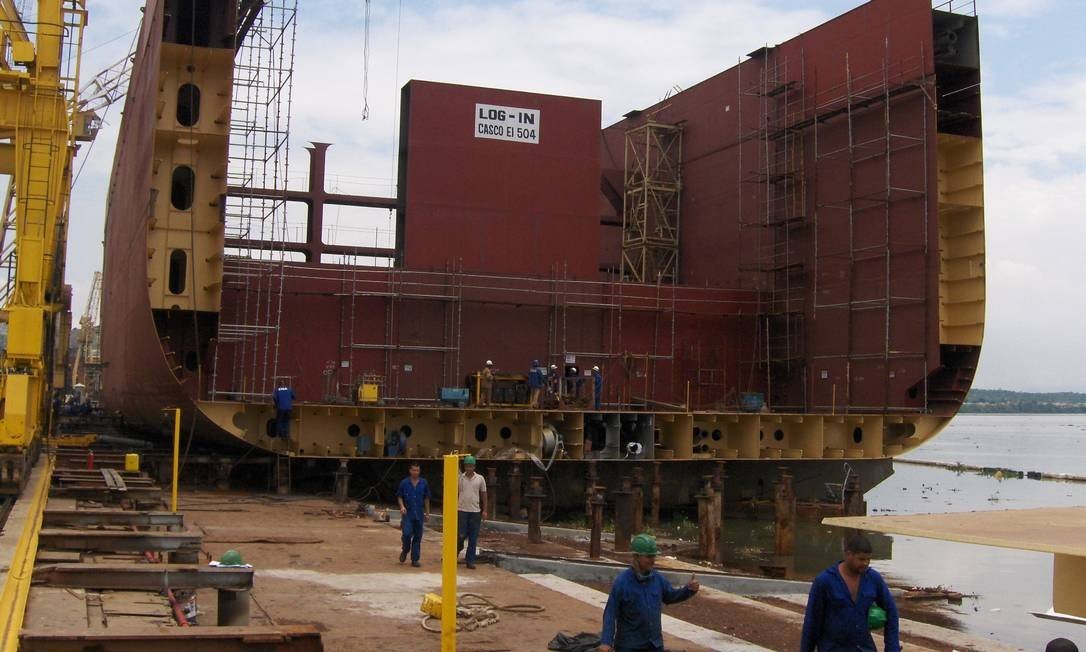
The Fluminense Shipbuilding Industry and the Splendid Retreat That Began in 2014, Now Employing Only 3,000 Workers
The case of the Fluminense shipbuilding industry draws attention to the Brazilian industrial retreat and its consequences. At the end of 2014, the sector employed 30,000 workers in the State. Currently, there are around 3,000.
- Job Openings in Macaé to Support Global Leader Wood’s Project Today, January 17
- Approved Resolutions That Improve the Quality of Brazilian Gasoline
- Steel Producer Ternium Brazil is Hiring in Rio de Janeiro
The 27,000 lost jobs have disappeared with shipyards closed or nearly shut down, according to Sergio Bacci, vice president of Sinaval, the entity that represents the shipbuilding industry. The units in operation are without projects, dedicated to mooring vessels or performing small repairs and maintenance.
-
Historic bankruptcy of Centauro shocks the market, and the century-old company puts more than 500,000 products, machines, and complete infrastructure up for online auction.

-
Unemployment rises again to 5.8% at the beginning of 2026, raising alarms about the end of temporary positions and its impact on the Brazilian job market.

-
Document organization can cut invisible costs in small businesses, a simple step that prevents waste, rework, and losses in daily operations.

-
Chinese giant worth nearly R$ 4 billion that manufactures cables for electric cars, solar energy, and robotics wants to open a factory in SC.

At the end of 2015, Estaleiro Ilha S.A. (Eisa) laid off 3,000 employees, closed, and filed for bankruptcy protection. According to Rogério de Carvalho da Silva Sobrinho, now 39, he had worked at the Eisa shipyard since 2008. He was laid off along with most of his colleagues in December of that year. On a Friday morning, the “grapevine” announced the layoffs. The following Monday, alarmed, “the day shift workers stopped working and went to confront management,” Carvalho recounted. The “confrontation” resulted in the confirmation of the layoffs.
In 2014, Eisa began to experience financial problems. There were delays in salaries, but a loan of US$ 120 million in August of that year provided some temporary relief. With ups and downs, the agony continued through 2015, when the economy was already sinking into recession. It was then that the shipyard added to the statistics of closed industries in Brazil.
In crises like the one affecting the Brazilian industry, there are many versions for the closure of factories. There are companies that, unable to keep one or all of their plants nearly idle, choose to close them for good. There are cases of definitive bankruptcy, with productive capacity and jobs destroyed. There are also discussions about strategy revisions.
Source: Estadão









Seja o primeiro a reagir!