





 Portuguese
  English
  Spanish
  4 min of reading
  0 comments


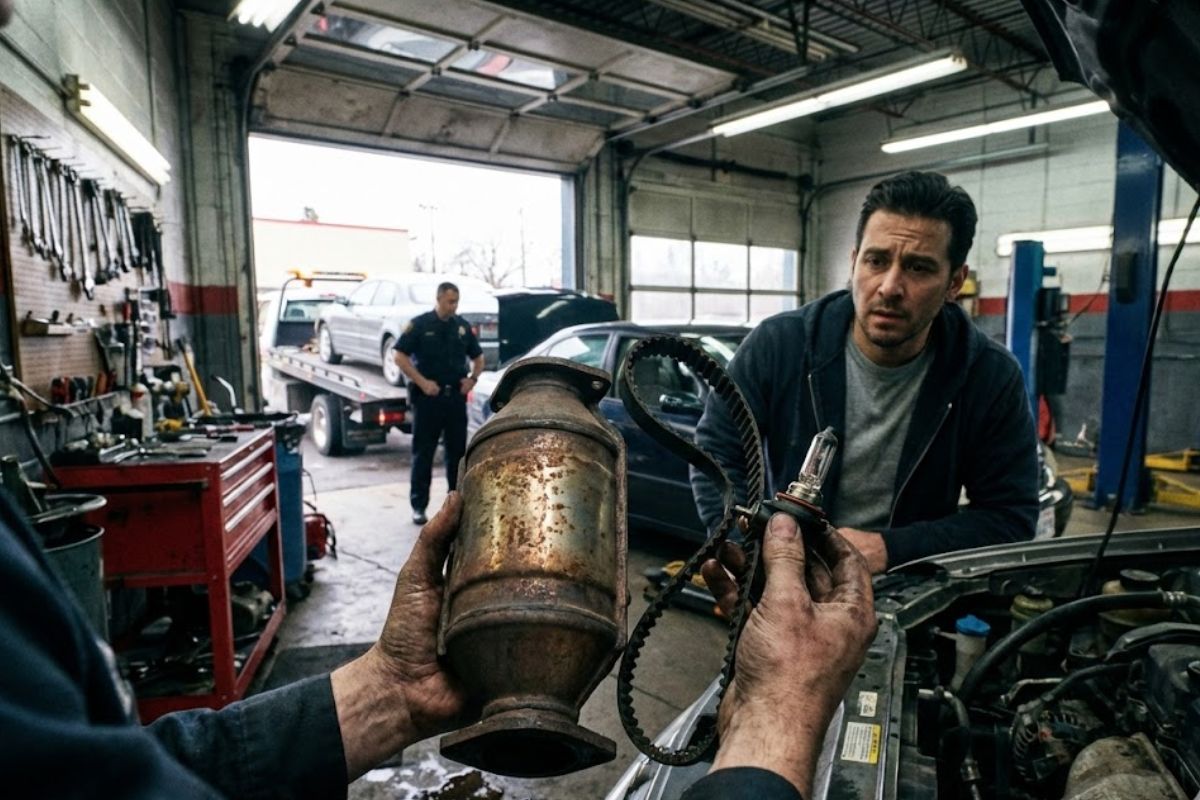
In 2025, Preventive Maintenance Stopped Being an Afterthought and Became a Financial Survival Issue: Ignoring Bald Tires, Bubbled Insulation, and Wiper Blades Can Result in Severe Fines in 2026, Retentions in Blitzes, and Points on the Driver’s License Even with Vehicle Tax and Licensing Up to Date for Drivers Across the Country.
Amid the deadlines for vehicle tax and licensing, another expense begins to worry drivers: the severe fines in 2026 related to simple maintenance failures. Items that wear out with use and go unnoticed can lead to vehicle retention even with all documentation up to date.
In 2025, traffic authorities already indicate that the inspection of safety items will be reinforced in the following year, focusing on bald tires, bubbled insulation, and wiper blades. In this scenario, treating preventive maintenance as a secondary expense is paving the way for financial losses and a real risk to safety on the roads.
Why Severe Fines in 2026 Go Beyond Car Taxes
Regularity in vehicle tax and licensing remains mandatory, but it is no longer enough to keep the vehicle off the authorities’ radar.
-
OMODA & JAECOO grows in Europe in 2026 with an integrated strategy of sales, innovation, local production, and technological advancement in the United Kingdom, Italy, and Spain.
-
OMODA & JAECOO expands after-sales service in Brazil with competitive maintenance, a 7-year warranty, and high availability of parts for technological SUVs.
-
OMODA & JAECOO appoints Alessandra Souza as executive marketing director in Brazil and accelerates brand expansion with a focus on innovation, networking, and hybrid portfolio.

-
Jaecoo 7 with super hybrid SHS system exceeds 1,200 km of combined range with a 1.5 turbo engine, high-density battery, and intelligent energy management.

The combination of severe fines in 2026, vehicle retention in blitzes, and points on the driver’s license tends to fall precisely on those who neglect basic safety components.
The Brazilian Traffic Code classifies driving a vehicle with inefficient or poorly maintained mandatory equipment as a serious offense.
In practice, this includes operating with bald tires, allowing circulation with bubbled insulation in the field of vision, and ignoring wiper blades that can no longer remove water from the windshield.
Bald Tires Become Immediate Shortcut to Severe Fines in 2026
Driving with bald tires remains one of the most risky and common behaviors on Brazilian roads.
When the wear reaches the limit, the driver exposes themselves to severe fines in 2026, vehicle retention until the set is replaced, and points on the license, in addition to the concrete increase in the risk of hydroplaning and loss of control during braking.
The tread wear indicator, that rubber projection between the grooves, is the parameter used in inspections.
If the tread has already leveled with this mark, it means that the tire has reached 1.6 millimeters of depth, the minimum safety threshold stipulated.
From there, replacement ceases to be a recommendation and becomes an obligation.
The preventive maintenance of tires, with weekly inflation checks and frequent visual inspections, reduces the risk of being stopped in a blitz with bald tires and prevents a routine check from ending in vehicle removal for regularization.
Bubbled Insulation Goes from Aesthetic to the Focus of Inspection
The solar control film has become almost a standard item, but bubbled insulation has started to be classified as a safety issue rather than merely an aesthetic inconvenience.
Blisters, fading to purplish tones, and deep scratches distort the image and compromise proper visibility of the road, especially at night and in the rain.
The latest updates to the transparency rules require that the windshield and front side windows preserve at least 70 percent light transmittance.
When bubbled insulation alters this standard, the vehicle can be classified as having equipment in violation of the legislation, leading to a record of serious offenses and the possibility of retention for film removal.
Reviewing the application of the film annually, replacing bubbled insulation with a compliant installation, is part of preventive maintenance that avoids unnecessary expenses with fines and ensures adequate visibility under any conditions.
Wiper Blades and the Fine Line Between Heavy Rain and Zero Visibility
The wiper blades rarely make it onto the driver’s priority list, but their malfunction fits directly into the article that punishes inefficient mandatory equipment.
Dried rubber that leaves water streaks or does not sweep the entire windshield area reduces visibility and can lead to fines during heavy rains or inspection operations.
The technical recommendation is to replace the pair of wiper blades at least once a year, or sooner if the vehicle frequently drives under intense sun and rain.
Ignoring the wear can transform a simple trip during a downpour into a high-risk scenario for collisions due to lack of visibility.
Including wiper blades in the routine of preventive maintenance, testing the system with water on the windshield and observing noises, failures, or vibrations, reduces the chance that a cheap piece of equipment is the cause of accidents and new severe fines in 2026.
Preventive Maintenance as a Financial Shield for Drivers in 2026
More than just meeting requirements in inspections, adopting consistent preventive maintenance is the simplest way to avoid severe fines in 2026, emergency expenses in the workshop, and time loss with vehicle retention in inspections.
Taking care of bald tires, bubbled insulation, and wiper blades before problems arise keeps the vehicle within the law.
Allocating part of the 2025 budget to review these items, instead of just paying taxes, is a risk management decision.
By treating preventive maintenance as an investment and not as a superfluous expense, the driver reduces exposure to accidents, protects their points on the driver’s license, and drives in 2026 with a greater margin of safety.
And you, have you checked if the tires, insulation, and wiper blades of your car would pass a blitz without resulting in severe fines in 2026 or are you still postponing the next review?






-

-

2 pessoas reagiram a isso.