





 Português
  Inglês
  Espanhol
  5 min de leitura
  7 comentários


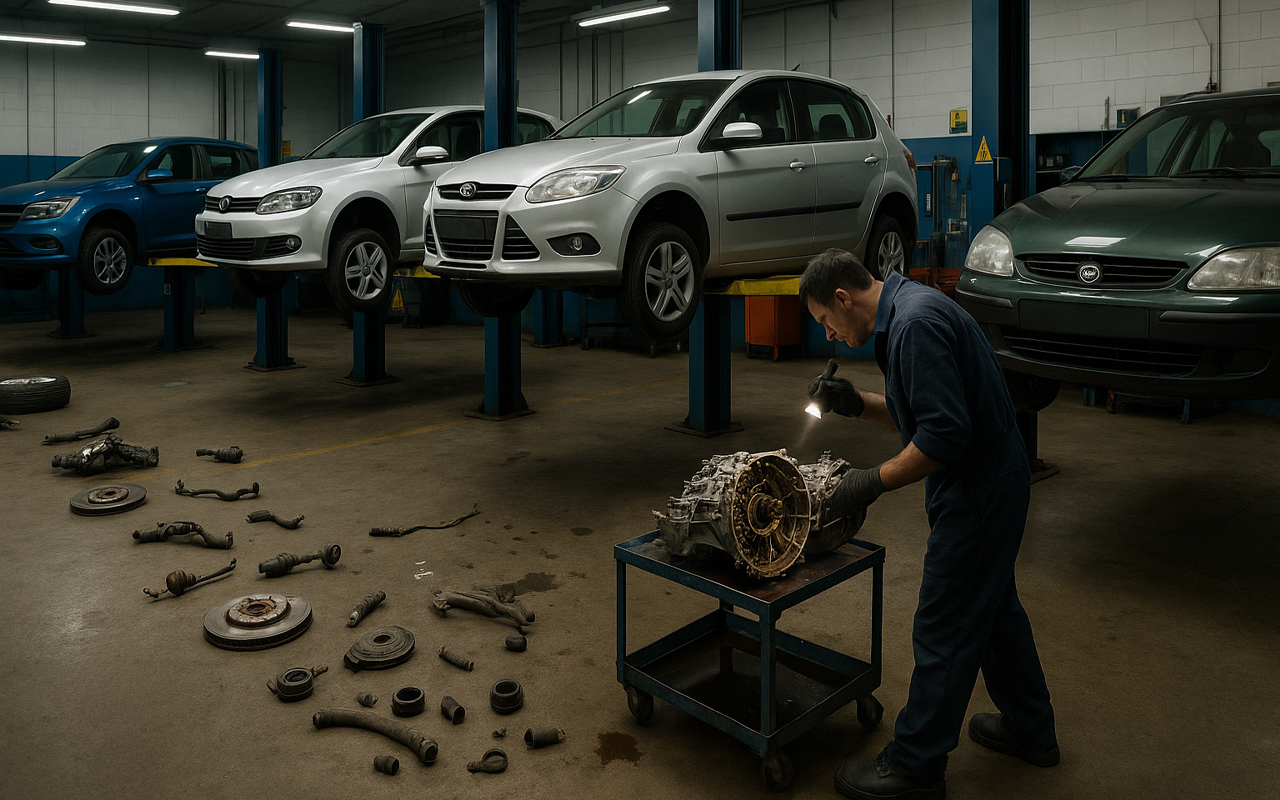


When A Defect Becomes A Chronic Problem, Mechanics’ Recommendations Change And The Car Loses Resale Value. It Happened With Marea, 206, Focus With Powershift, Golf With DSG And Onix With Oil-Soaked Timing Belt.
Recurring reports of technical failures have led workshops and specialists to review recommendations for some cars in the Brazilian market. When a defect becomes a chronic problem, trust declines, buyers pull back, and models lose momentum in dealerships and the used car market.
Among the most cited cases are Fiat Marea, Peugeot 206, Ford Focus with Powershift, Volkswagen Golf with DSG DQ200, and Chevrolet Onix with oil-soaked timing belt. Common issues include high maintenance costs, risk of repeated repairs, and direct impact on reputation.
See what failed in each model, what official measures were adopted by each manufacturer, and how this affected public interest.
-
OMODA & JAECOO grows in Europe in 2026 with an integrated strategy of sales, innovation, local production, and technological advancement in the United Kingdom, Italy, and Spain.
-
OMODA & JAECOO expands after-sales service in Brazil with competitive maintenance, a 7-year warranty, and high availability of parts for technological SUVs.
-
OMODA & JAECOO appoints Alessandra Souza as executive marketing director in Brazil and accelerates brand expansion with a focus on innovation, networking, and hybrid portfolio.

-
Jaecoo 7 with super hybrid SHS system exceeds 1,200 km of combined range with a 1.5 turbo engine, high-density battery, and intelligent energy management.

1. Fiat Marea: Complex Maintenance And Oil Change Intervals Poorly Adapted To Brazil
The Fiat Marea gained a reputation as a refined sedan in the late 1990s, but the demanding maintenance of the Fivetech engine and the outdated guideline of longer oil change intervals than ideal in Brazil created fertile ground for breakdowns and internal sludge. Experts recall that the error was often in procedure: wrong oil and extended deadlines undermined perceived reliability.
Another factor that affected the reputation was the cost of services and the need for truly qualified labor. As a result, the Marea came to be seen as a “difficult” car, impacting demand in the used market and, consequently, sales vitality over the years.
Lesson for the Consumer: Following lubricant specifications and manual intervals drastically reduces risk in complex engines.
2. Peugeot 206: Rear Axle By Torque Bar And Demanding Cooling System
In the Peugeot 206, workshops and repairers report wear of the rear axle with torque bars, which can cause play, noises, and wheels “closing” at the top. There are established technical solutions, but the service requires careful inspection of the assembly and quality parts.
Furthermore, owners and mechanics point to the need for attention to the cooling system and fuel components, like fuel injectors, especially in older units.
When these items do not receive preventive maintenance, the car accumulates complaints and loses appeal among used models, reflecting in the demand for family 206/207 models. Before buying, take the car for an inspection focusing on the rear frame and cooling system.
3. Ford Focus, Fiesta And EcoSport With PowerShift Transmission: From Procon-SP’s Fine To Extended Warranty
The PowerShift (DPS6) transmission was present in Focus, Fiesta and EcoSport and accumulated reports of vibrations, overheating, and clutch wear. In 2021, Procon-SP fined Ford R$ 10.5 million for infractions related to the case, classifying the defect as a hidden defect.
Following notifications from defense agencies, there was an extension of the warranty for system components, reaching five years or 160,000 km in covered situations, which is relevant for those who still own the vehicle.
For the consumer, it is worth noting to record calls and seek support from Procon in case of repair refusal. Consumer Rights and maintenance history are crucial to avoid loss.
4. Volkswagen Golf And The DSG DQ200: Mechatronics Under The Radar And Recalls In Other Markets
The DSG DQ200 seven-speed dry transmission equipped Golf and other models from the group. In 2013, China mandated a recall of 384,000 vehicles due to issues associated with the transmission, particularly failures linked to the mechatronics unit and fluid. In Brazil, there was no equivalent wide campaign, which kept the topic on the radar of used cars and workshops.
For those seeking a used Golf with DSG, the recommendation is specialized diagnosis: read stored faults, assess behavior in cold and hot conditions, and check the history of interventions on mechatronics and clutches.
Failures in this transmission usually entail expensive repairs, a factor that weighs in the purchase decision and can affect the liquidity of the model in the market.
5. Chevrolet Onix: Oil-Soaked Timing Belt Under Scrutiny And Reinforcements In The 2026 Lineup
The current generation of the Chevrolet Onix adopted an oil-soaked timing belt for the engine’s timing. Cases of damage associated with the use of off-spec oil prompted actions from the brand. On April 17, 2025, Chevrolet reactivated the timing belt warranty for 240,000 km for vehicles produced since 2019, an important move to restore confidence.
In the Onix 2026 lineup, GM claims to have reinforced the timing belt to mitigate clogs even if inappropriate oil is used, along with efficiency improvements. Recent evaluations show urban consumption that can reach 13.7 km/l and 17.7 km/l on highways with gasoline in manual versions, while the automatic models record lower numbers, something expected due to the transmission.
It is a fact that the Onix remains one of the best-selling cars in the country, but in February 2025, GM promoted stoppages in Gravataí to adjust production, which also impacts availability and may temporarily reflect on registrations. This reinforces how technical reputation and factory logistics go hand in hand in sales results.
Real Impact on Sales And How Consumers Can Protect Themselves
Not all controversies derail a model forever. In some cases, the effect is temporary and related to specific batches, model years, or the manufacturer’s technical communication. Nevertheless, the mere perception of risk is enough to drive away buyers and demand larger discounts on used cars. The recommendation is to look at registration data and production context before making definitive conclusions about “sales decline.”
To protect yourself, adopt a simple checklist: check recalls on the manufacturer’s website, request an independent report with fault readings, confirm the maintenance history, and in the event of recurring failures immediately after purchase, assess the fit as a hidden defect with support from Procon. In transmissions like Powershift and DSG, a longer test drive and inspection at specialized mechanics are worth the investment.
The five cases above show that engineering, correct maintenance, and manufacturer response define a car’s image in Brazil. When the manufacturer acts quickly with extended warranty, technical campaigns, or revised parts, part of the reputational damage is recovered. When delayed, the consumer’s memory takes care of the rest. For the reader, the path is quality information, oil to specification, correct intervals, and detailed technical inspection before closing any deal.









O mercado é cruel, se tentar enrolar ou subterfúgios como garantia estendida etc. o mercado não perdoa, pára de comprar.
Simplesmente seguir a especificação do óleo recomendado pelo fabricante e o que determina a troca do óleo não é o km é o uso ex: se for uso urbano uso severo km oculto carro parado não marca odômetro trocar a cada 6 meses se rodar pouco
Pois eu tenho um Onix plus turbo 2020 e é só elogios. Nada que reclamar, carro excelente, anda muito,bebe pouco e nunca tive uma dor de cabeça com ele. Sempre coloquei o óleo específico dele ( que consta no manual ). Carro nota mil.