





 Portuguese
  English
  Spanish
  4 min of reading
  1 comment


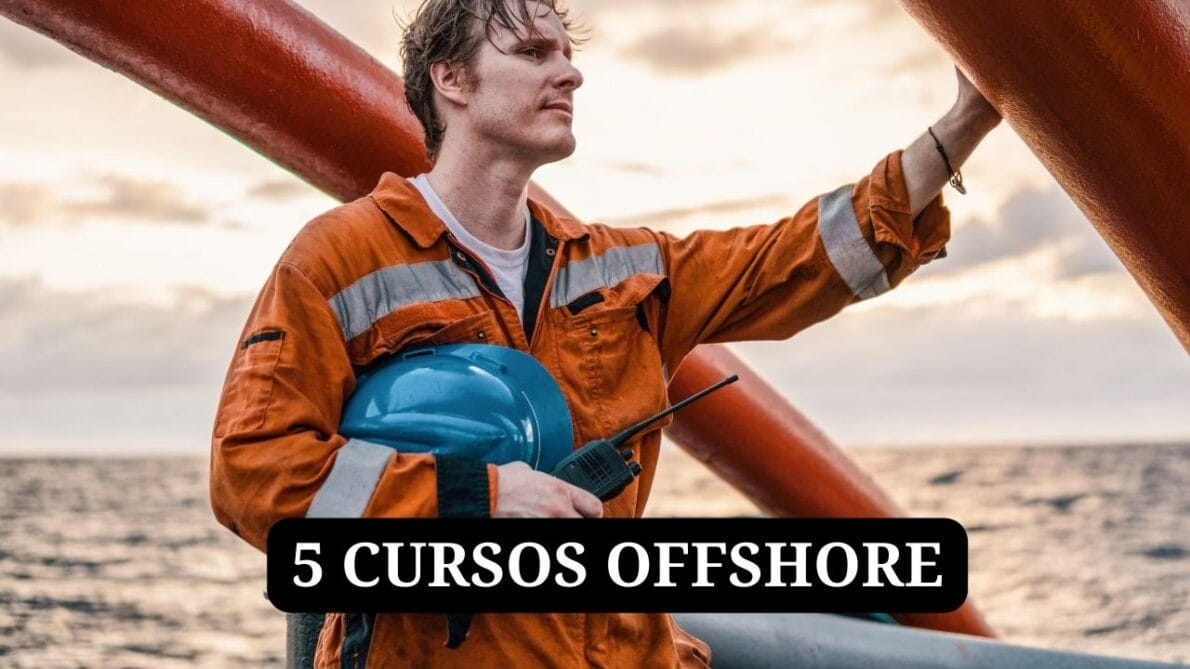


Discover The Best Academic Programs To Start A Promising Career In The Offshore Sector, With Interest And Growth Opportunities
If you are thinking about working on oil rigs and ships, then you need a solid educational foundation. After all, you can’t face the open sea and the challenges of the offshore sector without being prepared, right? And, of course, we are also talking about an environment where internships are quite interesting! To give your career a boost, we selected the five university courses you cannot ignore if you want to dive headfirst into this world.
Free courses are not always geared towards the offshore sector, but some specific academic programs are essential if your goal is to secure a spot on oil rigs and ships. Shall we learn more about these careers?
1. University Courses / Petroleum Engineering: The Backbone Of The Offshore Sector
If you are already envisioning working on oil rigs and ships, Petroleum Engineering needs to be at the top of your list of university courses. This course is practically the foundation of the sector, responsible for everything that involves the exploration and production of oil. The petroleum engineer deals with investigation projects, data analysis, and even team management on rigs. Oh, and of course, they also need to ensure that all of this is done safely and with environmental considerations.
-
USP opens 10,000 spots in a free 100% online course lasting 110 hours in areas such as nutrition and health, with registrations until April 15 and classes on diabetes, obesity, and educational public policies.

-
Excel dominates job openings even in the era of artificial intelligence: analysis reveals high demand and highlights 5 courses to move beyond the basics and advance in the job market.

-
Senai launches free technology courses in Amapá and creates a strategic opportunity for those seeking quick qualification, entry into the job market, and professional growth in areas with high digital demand.

-
Take a free course at the Federal University: UFPR calls 200 candidates for intensive preparation for master’s and doctoral programs.


With an initial salary ranging from R$6,000 to R$10,000, this career is promising and offers many growth opportunities. It is one of the courses that puts you at the heart of the energy industry, ensuring that oil reaches the refineries and from there to the whole world!
2. Mechanical Engineering: Ensuring Everything Works Properly
Imagine an oil rig without maintenance… it would be chaos, right? Mechanical Engineering comes in here to ensure that the equipment used on oil rigs and ships is always in perfect working order. This includes maintenance of engines, pumps, and complex mechanical systems that keep the entire operation running.
Employed mechanical engineers can earn between R$7,000 and R$15,000, depending on their experience and location. It is one of the courses that provides significant responsibility, as any failure could halt production entirely.
3. University Courses / Production Engineering: Optimizing Processes Offshore
Those seeking efficiency at work need a production engineer by their side! Production Engineering prepares professionals for the management and optimization of all production processes. In the offshore sector, this means ensuring that degradation, transportation, and even oil refining occur in an efficient and cost-effective manner.
Salary for production engineers ranges from R$7,000 to R$15,000, with good growth prospects, especially in leadership roles. This course is essential for those who wish to bring order to chaos and ensure everything runs as efficiently as possible, even on oil rigs and ships.
4. Geology: Exploring The Riches Of The Subsoil
If you have ever been intrigued by the location of oil at the bottom of the sea, then Geology is the right course for you. Geologists are fundamental to exploration operations, analyzing the subsoil and identifying where the largest oil reservoirs are located. They also work on oil rigs, helping to evaluate soil and predict new drilling.
With salaries ranging from R$6,000 to R$10,000, these professionals play a key role in ensuring the continuity of operations. Without them, we simply wouldn’t know where to dig!
5. University Courses / Industrial Chemistry: Controlling The Quality Of Processes
Last but definitely not least, we have the university course in Industrial Chemistry. This course prepares you to work with the refining and treatment processes of oil-derived products. On an oil rig, the industrial chemist controls the quality of the extracted oil and ensures that the entire process is safe and efficient.
The earnings for these professionals start between R$6,000 and R$8,000, and with the demand for more sustainable processes, industrial chemistry has become increasingly relevant in operations on oil rigs and ships.
If you are eyeing these careers and want to stand out on oil rigs and ships, choosing one of these university courses is the first step. Finally, it is worth investing in specialization university courses and improving your English, which is practically a mandatory language in the offshore sector.








Foi tão bom ler gostaria tanto o curso de.Geologo.