





 Portuguese
  English
  Spanish
  4 min of reading
  0 comments


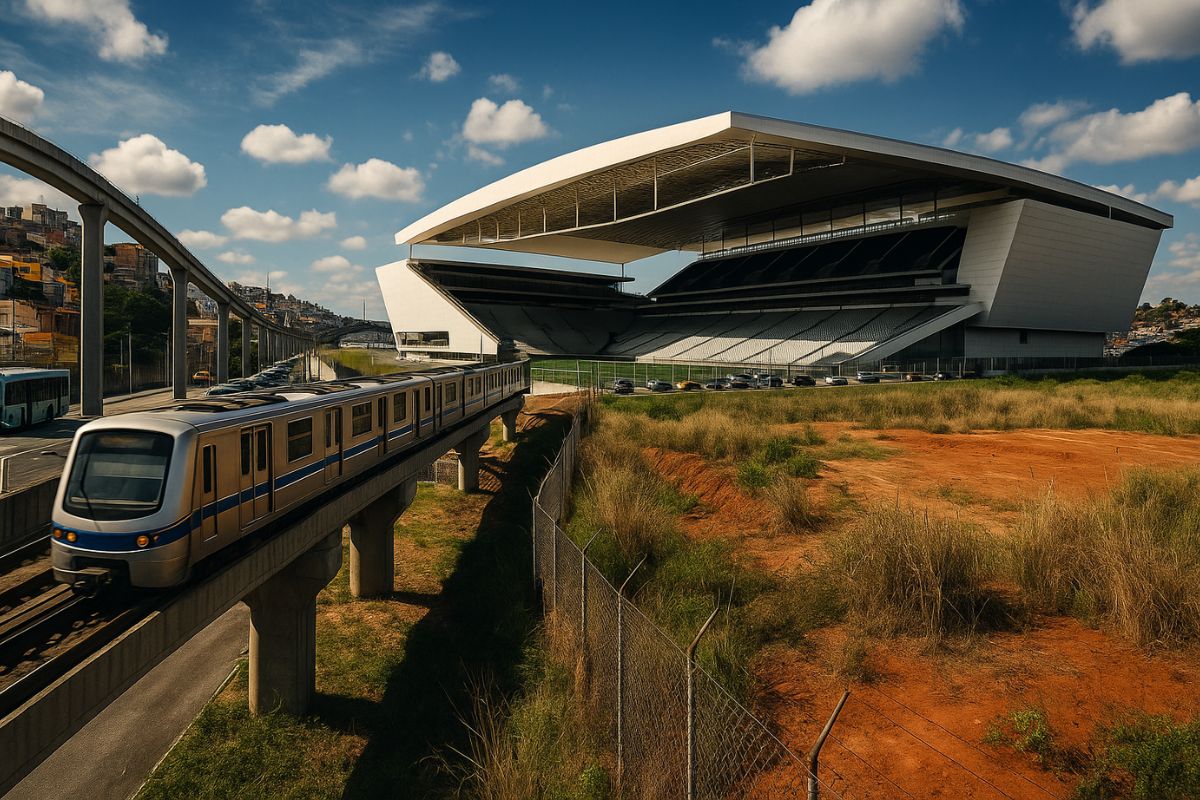
Even After Half a Century of Billion-Dollar Plans, Metro, Stadium, Housing, and Technology Parks, Itaquera Remains a Symbol of the Disconnection Between Public Investment and Quality of Life.
Exactly 50 years ago, Itaquera has been hearing the same speech: major projects would bring jobs, income, and urban development to the far east of São Paulo. Every decade, new plans for metro, billion-dollar stadium, technology centers, housing complexes rekindled the hope of transforming one of the most populous regions of the capital.
But half a century later, the results remain modest. Even with flashy constructions, the daily life of the population has changed little: long distances, lack of integration between transportation and absence of local jobs still define the routine of those who live there.
From Industrial Dream to Reality of Urban Voids
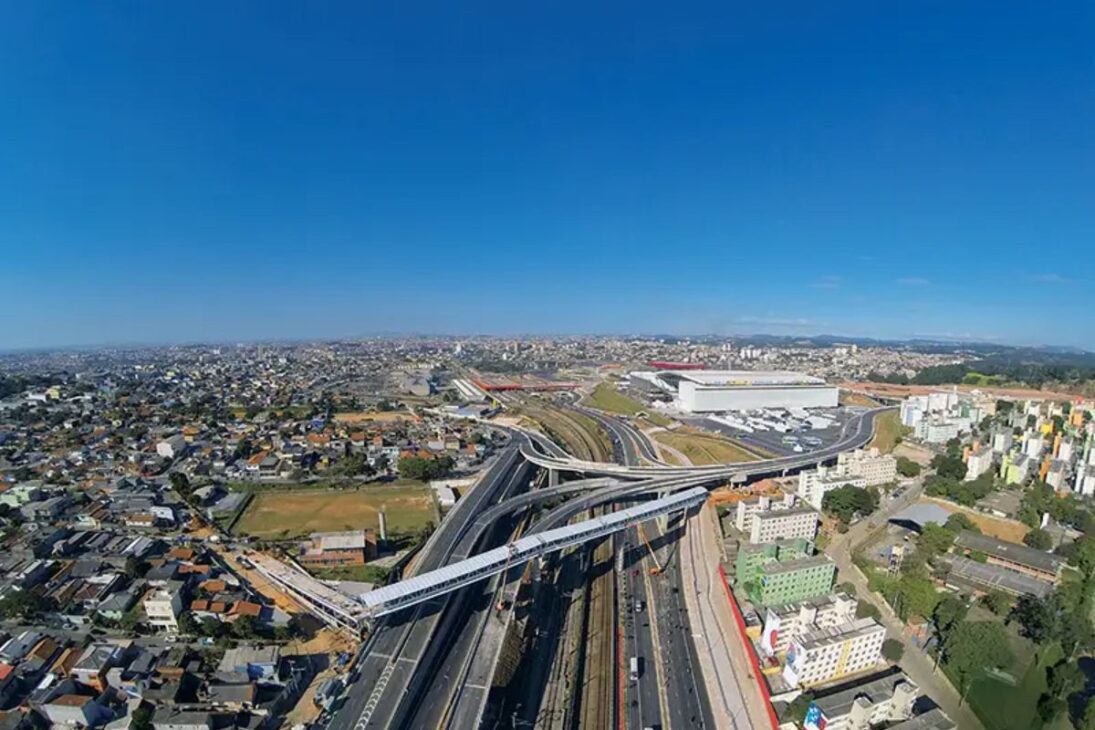
In the 1970s, the military regime launched the project to build an industrial park in Itaquera capable of generating thousands of jobs and balancing the city’s growth.
-
Larger than entire cities in Brazil: BYD is building a 4.6 km² complex in Bahia with a capacity for 600,000 vehicles per year, but the discovery of 163 workers in conditions analogous to slavery has shaken the entire project.

-
With an investment of R$ 612 million, a capacity to process 1.2 million liters of milk per day, Piracanjuba inaugurates a mega cheese factory that increases national production, reduces dependence on imports, and repositions Brazil on the global dairy map.

-
Brazilian city gains industrial hub for 85 companies that is equivalent to 55 football fields.

-
Peugeot and Citroën factory in Argentina cuts production by half and opens a layoff program for more than 2,000 employees after Brazil drastically reduced purchases of Argentine vehicles.


The promise remained on paper. Instead, the enormous Cohab I and II housing complexes came, expanding the population without providing adequate infrastructure.
The arrival of the metro, initiated during the dictatorship and completed only in 1988, was supposed to correct part of the imbalance. That did not happen.
Public transportation expanded without urban planning around it neighborhoods grew disconnected, and the area around the Itaquera station became filled with vacant lots, parking lots, and fences that isolate pedestrians.
The Billion-Dollar Stadium and the Impact That Never Came
The 2014 World Cup reignited the redemption speech. O Itaquerão, or Arena Corinthians, was presented as a development engine.
Then-President Lula called the project a “historic gift” for the Eastern Zone, and the state government promised a technology park in the surrounding area.
None of the promises materialized. Even real estate speculation showed no interest in the vicinity of the stadium. The promised Sesi and Senai did not materialize. The theater and technical courses had the land donated, but the construction never began.
The stadium, despite being modern, remains isolated, with an entrance facing parking lots and no urban life around.
Experts remind us that public sports facilities often function as urbanization poles as seen in London, Tokyo, and Madrid.
But in São Paulo, the model got lost amid political disputes, delayed permits, and lack of dialogue between government and the private sector.
Mobility Stalled and the Forgotten Pedestrian
Anyone walking through Itaquera can easily notice the lack of integration among the works. Each investment seems to exist in isolation.
The pedestrian is the most affected: disconnected crosswalks, nonexistent sidewalks, and physical barriers surround the station and the stadium.
Even where there are public buildings—schools, colleges, and administrative centers the entrances face inward toward the walls, not toward the city.
The result is an urban space that repeats the historical mistake of separating housing, work, and transport, forcing long and tiring commutes every day.
The Urban Lesson That São Paulo Still Has Not Learned
The Itaquera sub-prefecture has around 520,000 inhabitants, more than entire cities like Santos. Adding the neighboring districts of Guaianases and Cidade Tiradentes, there are more than 1 million people concentrated in an area marked by a low supply of jobs and inadequate infrastructure.
Even with a higher population density than neighborhoods like Moema and Pinheiros, Itaquera continues to be a “dormitory neighborhood”.
Most of the population depends on public transport to work in other regions, reflecting urban policies that expanded the city eastward, but without distributing opportunities evenly.
Between the Speech and the Ground of the City
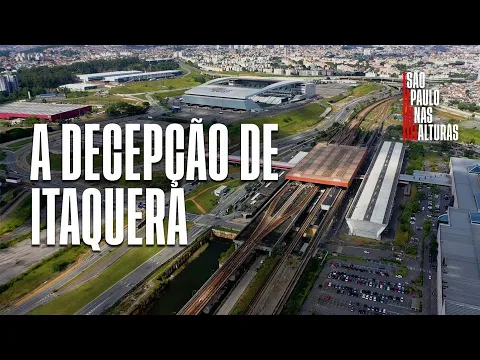

Billion-dollar investments arrived, but the quality of life did not keep up. The eastern zone hosts almost 40% of the population of São Paulo, but continues to suffer from a lack of jobs, green spaces, and integrated urban planning. Even the recent home office benefited the region little, restricted to a minority with higher education.
Meanwhile, neighborhoods criticized for verticalization, such as Tatuapé and Mooca, concentrate most local jobs—ironically, the only ones that managed to create a dynamic urban ecosystem. Itaquera, with all its history of promises, remains the great lesson on what not to do in urban development policy.
Five decades later, Itaquera remains a symbol of a city that plans in parts and executes without integration. The billion-dollar stadium, the metro, and the housing complexes are there but do not communicate with each other, nor with those who live around.
Do you believe that Itaquera can still reinvent itself with new urban projects? Or will the neighborhood continue to be held captive by promises that are never fulfilled? Share your opinion in the comments we want to hear from those who live this reality day to day.









Seja o primeiro a reagir!