





 Português
  Inglês
  Espanhol
  7 min de leitura
  0 comentários


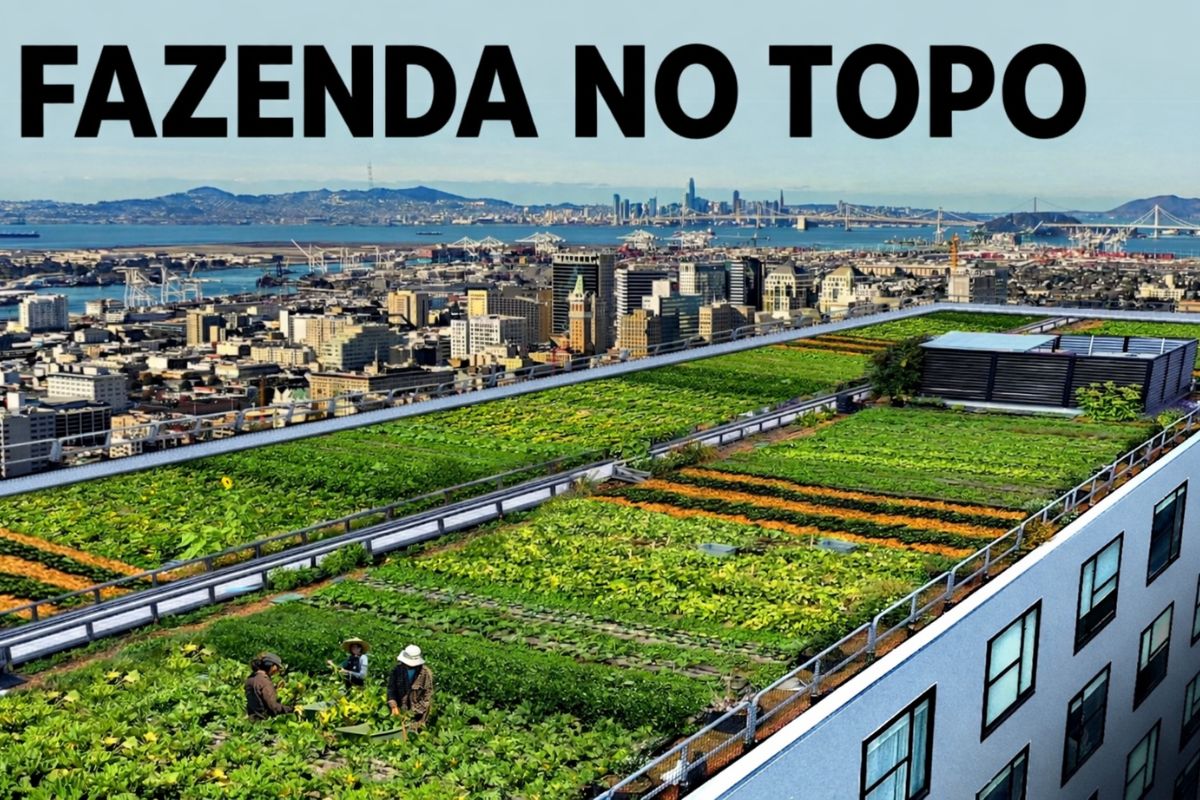
With 1 Acre and 180 Beds, The Largest Rooftop Farm Transforms a Common Roof into a Living System: 12 Inches of Soil, Layers of Drainage, and Irrigation with Compost Teas. The Operation Delivers Free Organic Food to Those Facing Food Insecurity and Pushes Oakland to Redesign Nutrition Policies and Public Funding.
Oakland has placed the impossible on top of a building and called it food. The largest rooftop farm in the West operates like a living organism: it receives engineered soil, irrigation with fertigation, and harvests tons of organic food that goes from the roof directly to the community on the same day.
The largest rooftop farm has also become a political test. By proving that production and donation can exist at the same address, it pushes the city to discuss government structures that ensure universal basic nutrition, with public support for agroecological farms and benefits that go well beyond a spreadsheet.
The Largest Rooftop Farm That Became “Medicine” on Top of Oakland

On top of a building in North Oakland, the largest rooftop farm in the West operates, a 1-acre roof built and designed by Top Leaf Farms and managed by the nonprofit organization Deep Medicine Circle.
-
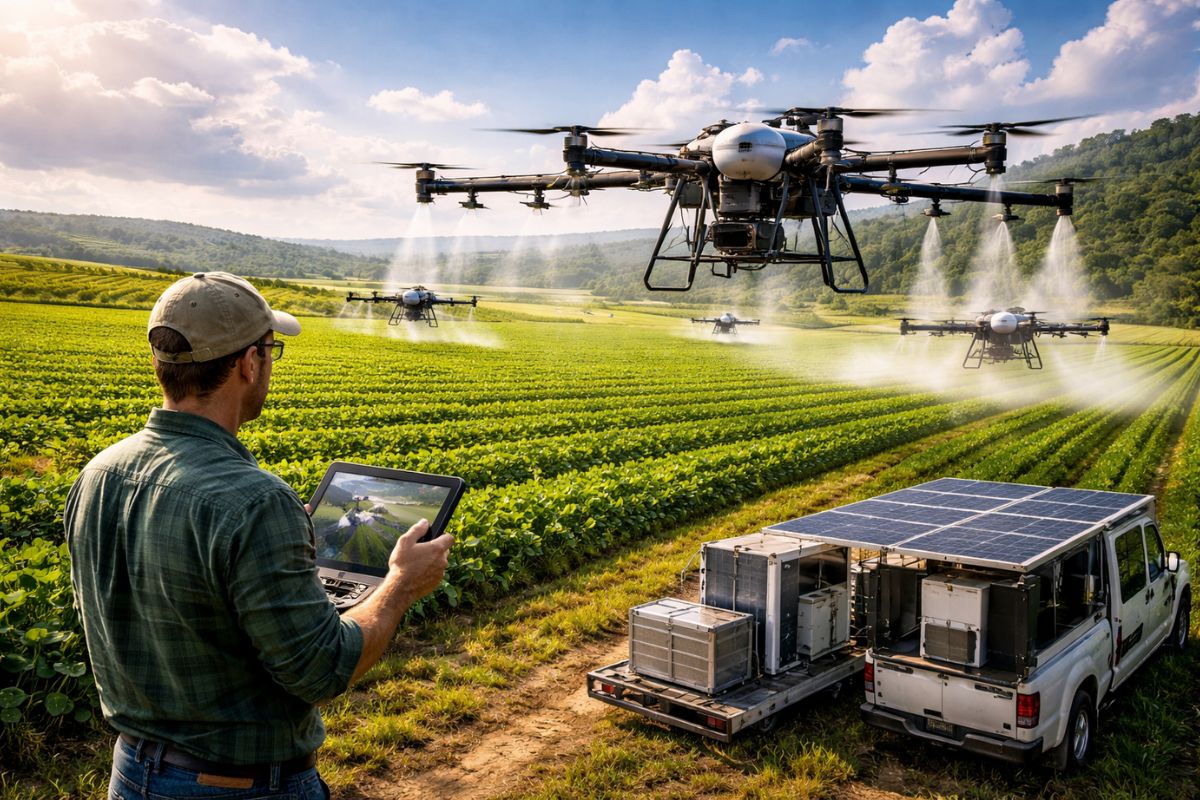
Alone, the producer applies 7,400 hectares with the T100 drone in an optimized structure, replaces the generator with a silent battery, and demonstrates how technology reduces costs, increases productivity, and even challenges the uniport in the field.
-
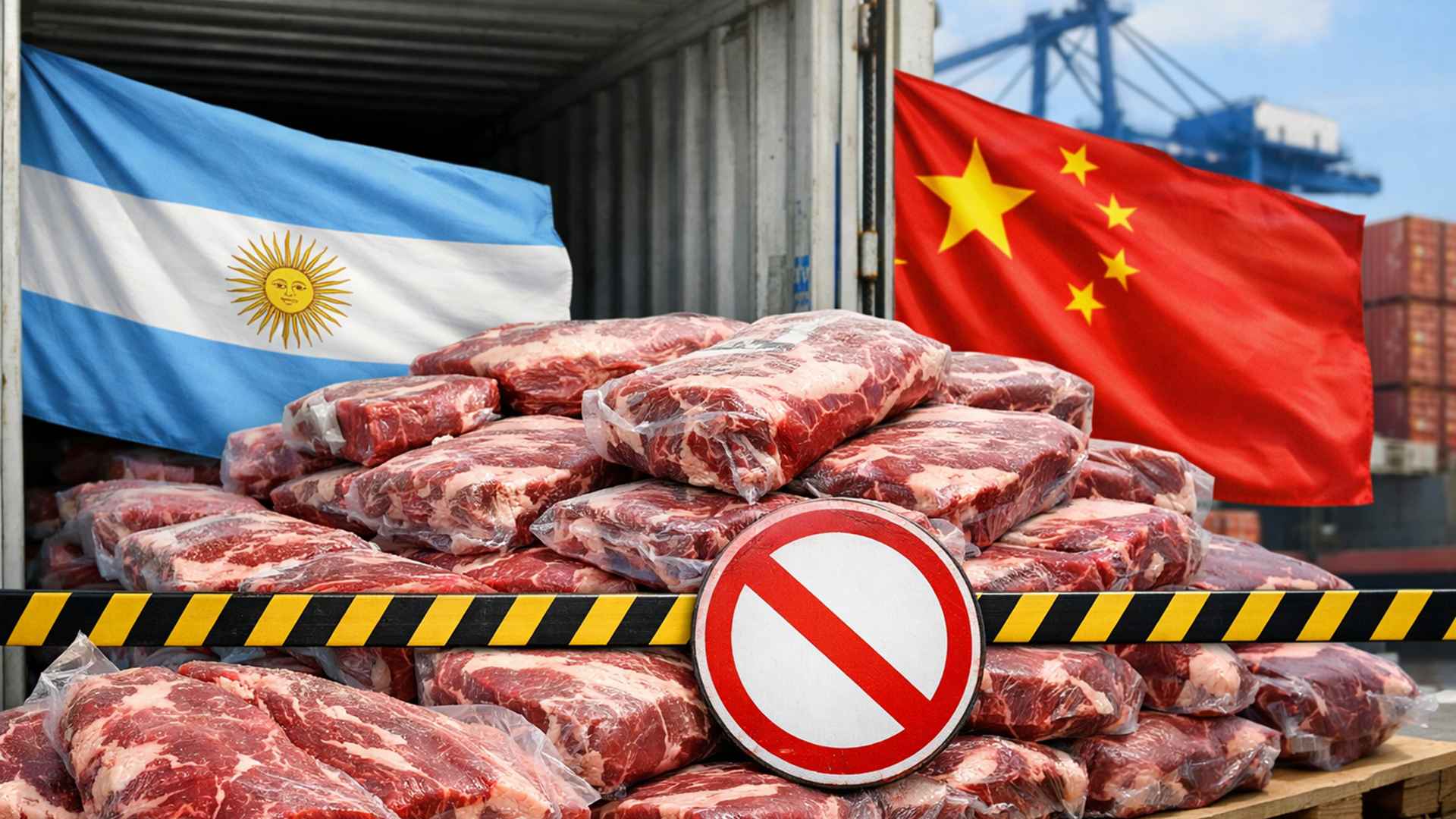
China banned the export of 22 tons of meat from Argentina.
-
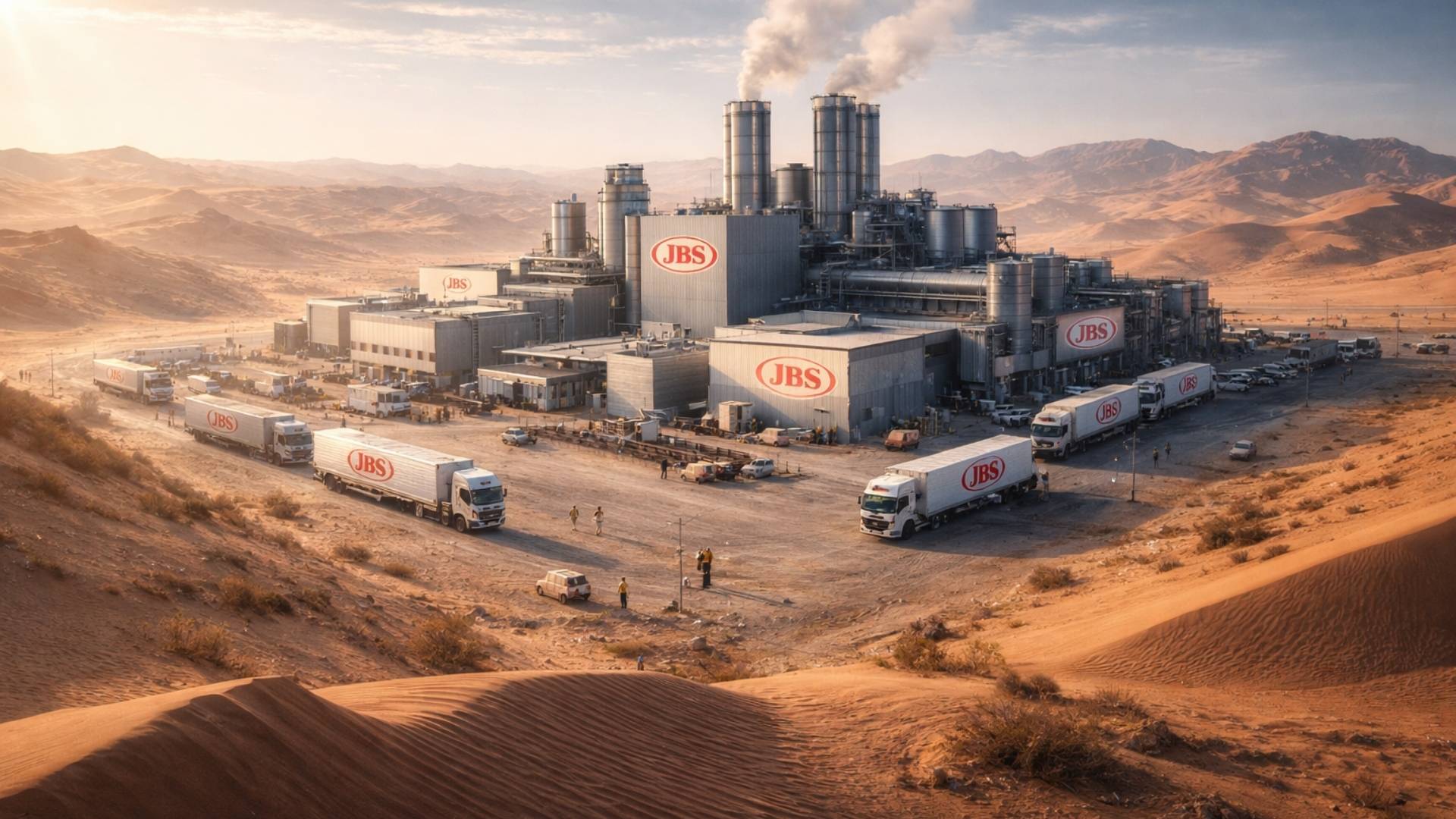
JBS, founded by the Batista brothers, continues to conquer the world: entrepreneurs built a ‘factory in the desert’ creating 3,000 jobs.
-
With only 1% of Brazil’s territory, Santa Catarina has built one of the most competitive industrial parks in the country, with 64,000 companies, nearly 1 million jobs, and a growth rate of 5.3% while the national industry is practically stagnant.


The farm is presented as a “rooftop medicine farm,” with a central idea: health starts in the soil.
The group treats farmers as health caretakers. The logic is that health is not an attribute of an isolated individual, but a reflection of a system functioning for mutual benefit.
For this reason, the largest rooftop farm is not described as a “dream” project, but rather as a real infrastructure that attempts to make buildings more than just shelter and turn them into an active part of the city.
How Much This Farm Produces and Why Same-Day Donation Changes the Game
The operation registered about 20,000 pounds of food produced on the roof in the past year. This volume equals 9.07 tons of food.
It is certified organic food, of market quality, but intended for the community free of charge, as fresh, whole, and nutrient-dense food.
The rule that stands out is the timing: food goes from the roof to the community within the same day it was harvested.
What would be “market value” turns into immediate access to real food, aimed at people facing food insecurity in Oakland.
The 1-Acre Roof with 180 Beds and the Design of Productivity per Inch
The largest rooftop farm has 180 beds, each about 30 feet long. It is not a decorative garden, but a system designed for high production in a limited space.
The method is to “stack” the planting to maximize every square foot. A practical example: cabbages are interspersed with lettuce.
The cabbages take 85 to 90 days to mature, while the lettuces are ready in 30 days. When the cabbages start to cover, the lettuces have already been harvested. The space is never idle; the cycle runs all the time.
In addition to vegetables, there are perennials like two types of artichokes. Along paths used by residents, there are herbs, flowers, and different plants to create a residential self-harvesting corridor.
There is also the intention to develop seeds adapted to the roof, because, over time, the plants will adjust to the specific conditions of that elevated environment.
680.4 Tons of Soil on Top of the Building and the Calculation That Frightens
The most impressive part of the largest rooftop farm is the weight. Most roofs are lightweight structures, made to support almost nothing beyond the roof system itself. Here, the logic has been inverted.
The roof receives about 12 inches of soil. The reference used is that this volume, saturated, weighs approximately 80 pounds per cubic foot.
Spread over about 40,000 square feet, the calculation comes to about 1.5 million pounds of weight on the roof. This equals 680.4 tons.
None of this “just happens.” This weight needs to be accounted for and engineered into the building. It’s not just putting dirt on top and hoping for the best. It’s structural engineering turning into urban agriculture.
Drainage, Protection, and Why the Question “Will It Leak?” Is Inevitable
When someone sees a farm on top of a building, the first question is usually about leaks. The project’s response is pragmatic: any roof can leak if it is not protected. The difference lies in the layers.
The described system includes 10 to 12 inches of soil, a layer of filter fabric, and a layer called “drain wick,” where capillary roots have constant access to water and nutrients.
This layer is presented as something close to a hydroponic component, but without being pure hydroponics.
Below, there are protective mats, drainage plates, root barriers, and other layers that protect the waterproof membrane of the roof.
The defense is simple: to break through all this would require something extreme, as there are many barriers between the planting and the waterproofing.
The “Engineered” Soil and the Farm as a Living Organism
The largest rooftop farm does not use regular dirt. The soil is described as an engineered medium, designed for that use, with about 50% rocky aggregate and 50% organic matter.
The project claims to invest energy in building the soil food web, with inoculation and presence of mycelium on the roof.
Nutrition is sustained through fertigation: compost teas are prepared and injected into the irrigation system to feed this biological network and deliver nutrients to the plants.
The result is a hybrid. It’s not hydroponic, but it’s also not “traditional soil” connected to the ground.
It is described as a living system on top of the building, capable of producing a lot of food in a relatively small layer of soil. The building becomes a support and the roof becomes an ecosystem.
Nothing Wasted: Composting on the Roof Itself and Only Food Leaves
A symbolic detail of the largest rooftop farm is what comes in and what stays. The proposal states that the only thing leaving the roof is food. The rest, such as field waste and plant material, is composted at the edges of the building.
This cycle reinforces the discourse of regeneration and an integrated system.
Production is not treated as extraction, but as a circuit, with decomposition and return of organic matter.
Native Area, Pollinators, and a Roof That Functions as Habitat Year-Round
Within the roof, there is a zone closer to a “living roof,” with native plants like ceanothus, coffeeberry, manzanita, and wax myrtle. There are also native California medicines, poppies, salvias, and sticky monkey flowers.
The choice is strategic: to maintain nectar sources throughout the year for insects, creating continuous habitat for pollinators.
The vision is that the largest rooftop farm is not just for people. It should also sustain urban life, connecting biodiversity in a place previously ignored as “just a roof.”
Why the Roof Becomes an Urban Solution for Space, Heat, and Rainwater
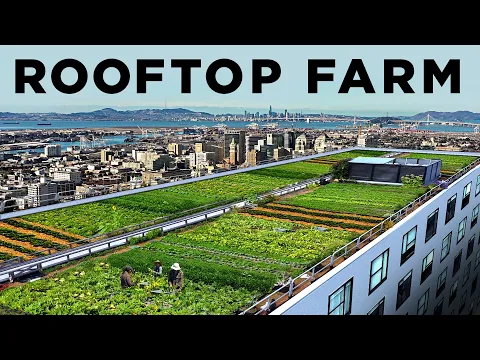

In an urban environment, space is a constant battle. There is tension between open area and development.
The proposal of the largest rooftop farm is to forge a new path: you maintain housing while simultaneously creating productive green space on top of the building.
The project associates this model with multiple urban effects: greening the city, improving ecology, reducing the heat island effect, and managing stormwater.
The idea is that the roof becomes a place where the city gains environmental services alongside food production.
There is a cultural component: visits and volunteering happen once a week.
For many, the initial motivation is to be in the garden and enjoy the view, but the declared impact is to connect people to the food system and show that it is possible to produce a lot in a small space.
The Hardest Point: How to Prove Value Without Turning Everything into a Spreadsheet
The project claims that, without government incentives, it is difficult to convince investors.
The reason is that many outcomes don’t fit into a common spreadsheet: how to value a hummingbird, bees, or the experience of harvesting and tasting a fresh piece of celery, broccoli, or lettuce coming from the roof?
The critique is direct: society undervalues food and ecology.
The hope is that climate change will force a revision of this calculation and make the environmental and social value of structures like the largest rooftop farm for urban resilience more visible.
The Political Pressure: Oakland Can Treat Nutrition as Basic Infrastructure
The final argument of the largest rooftop farm is that this work is a seed, a model that can be replicated thousands of times.
The goal is not just rooftops, but also the ground, in urban spaces, so that “everyone eats and eats well” and participates in their own food system.
The team reports that they are working with food organizations to innovate government structures in Oakland and create mechanisms that ensure universal basic nutrition through public support for agroecological farms.
The comparison used is with already accepted infrastructure: streetlights, buses, sewage, and wastewater treatment.
If the largest rooftop farm can already produce 9.07 tons of organic food on a single roof and deliver it on the same day, the uncomfortable question remains: should Oakland treat nutrition as an essential service, just as it treats public lighting and sanitation?










-

2 pessoas reagiram a isso.