





 Portuguese
  English
  Spanish
  5 min of reading
  3 comments


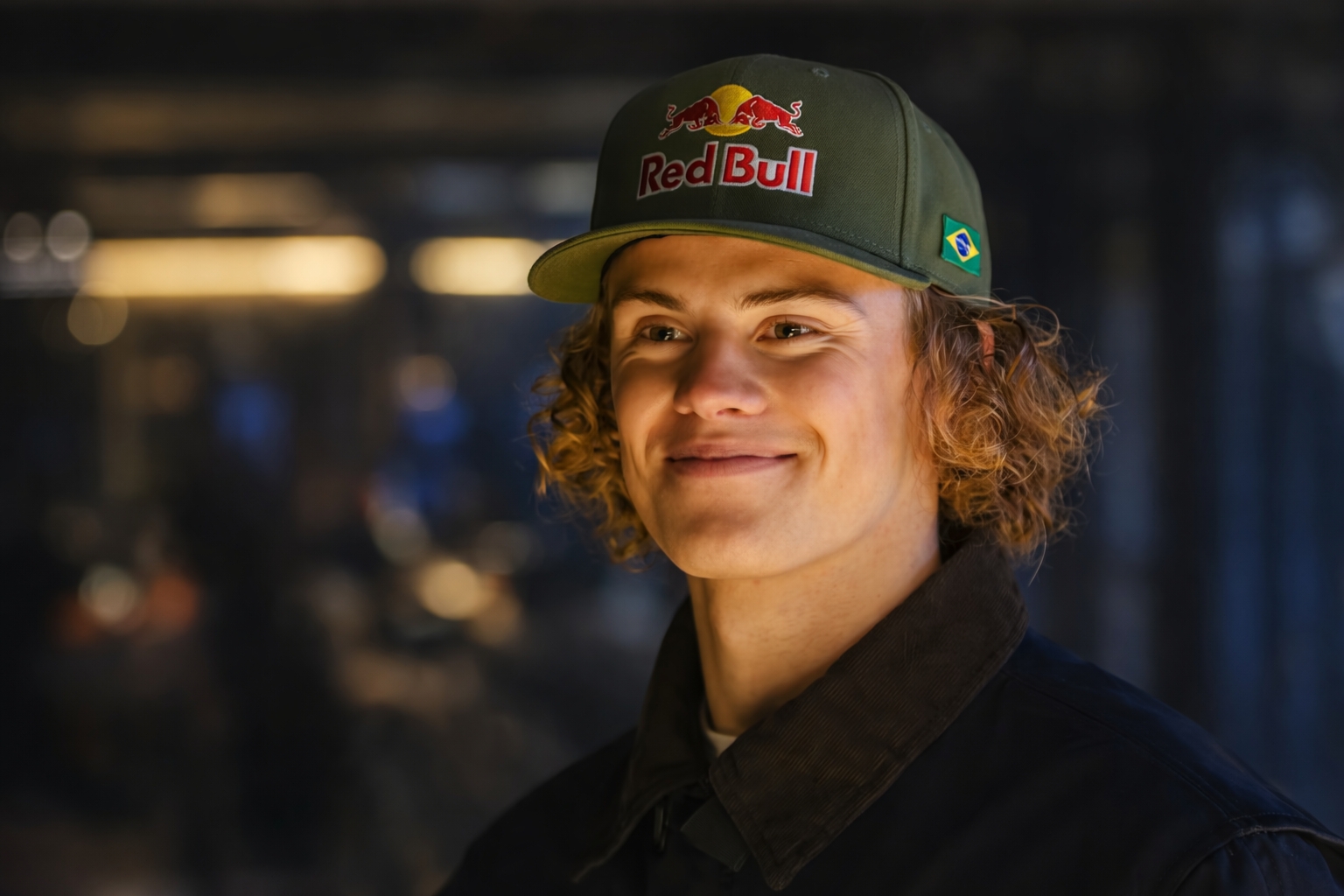


The Young Brazilian Who Became a Symbol of Generation Z and Redefined Market Value with Over R$ 1 Billion
The young Brazilian Lucas Pinheiro not only won a Winter Olympics. He changed the game. At 25, a legitimate representative of Generation Z, he made history by winning the first gold medal for a South American country at the Milano Cortina 2026 Winter Olympics. And along with the title came something even more impressive: a market value estimated at over R$ 1 billion, putting him on the path to becoming a young billionaire built by the strength of his own brand.
In a country where it doesn’t snow, he rose to the top of the world alpine skiing. And he did it wearing green and yellow.
According to the official website Olympics.com, Milano Cortina 2026 marked a new phase of diversity and geographical expansion in winter sports, and Lucas Pinheiro’s name is already recorded in this historic shift.
-
Friends have been building a small “town” for 30 years to grow old together, with compact houses, a common area, nature surrounding it, and a collective life project designed for friendship, coexistence, and simplicity.

-
This small town in Germany created its own currency 24 years ago, today it circulates millions per year, is accepted in over 300 stores, and the German government allowed all of this to happen under one condition.

-
Curitiba is shrinking and is expected to lose 97,000 residents by 2050, while inland cities in Paraná such as Sarandi, Araucária, and Toledo are experiencing accelerated growth that is changing the entire state’s map.

-
Tourists were poisoned on Everest in a million-dollar fraud scheme involving helicopters that diverted over $19 million and shocked international authorities.


From Oslo to Brazil: The Young Brazilian Made History
Born in Oslo, Norway, Lucas Pinheiro grew up between two worlds. Mother from São Paulo. Father a rural Norwegian. Childhood divided between completely different cultures.
He even competed for Norway, including at the Beijing 2022 Winter Olympics. But a conflict with the local federation — involving sponsor exposure, dress code rules, and commercial freedom — led to his early retirement at 23.
After a period in Ilhabela on the São Paulo coast, he decided to officially adopt his mother’s surname. He left “Braathen” as a secondary sports brand and started competing for Brazil.
The decision, according to him, was never purely commercial.
“It was much more about identity and purpose than commercial. I needed to be aligned with who I am, with my story.”
This change redefined his career. At 24, he started wearing green and yellow. At 25, he wrote his name in Olympic history.
Generation Z, Creator Economy, and a Billion-Dollar Market Value
Lucas Pinheiro understands something that many athletes still do not: performance today is not enough. Narrative matters. Positioning matters. Culture matters.
The creator economy has transformed individuals into brands. And he rode this wave with ease.
Rafaela Queiroz, co-president of the agency Leo, summed up the phenomenon well:
“When an athlete like Lucas achieves cultural relevance, not just sporting, he drastically increases his value. He stops delivering only visibility and starts offering narrative, emotional connection, and influence over behavior.”
After the gold in Milano Cortina, market speculation indicated that his personal brand — driven mainly by Octo — surpassed R$ 1 billion in market value.
He responds directly:
“Fast and direct? I have no idea. Because to me, numbers, whether sports results or the commercial value of my brand, are consequences.”
This mentality is typical of Generation Z: purpose before profit. But, interestingly, it is precisely this that multiplies profit.
Visa, Corona, and the Ecosystem of Brands That Boost the Young Billionaire
The young Brazilian Lucas Pinheiro has built a portfolio of brands that mixes sports, fashion, and premium lifestyle.
He is sponsored by Moncler, a constant presence at Milan Fashion Weeks. He also has his own line of glasses with Oakley, a globally recognized brand in the sports universe.
Among his partners are giants like Visa and Corona.
Visa, a historic sponsor of the Olympic Games according to the official site visa.com, reinforces its strategy of associating with athletes who engage with culture and innovation.
On the other hand, Corona, a global brand of AB InBev (according to information from ab-inbev.com), connects Lucas to a youthful, global, and aspirational positioning.
Additionally, he maintains partnerships with BMW, the Austrian ski manufacturer Atomic (atomic.com), and other strategic companies.
It is not just sponsorship. It is integrated brand building.
Octo: The Brand That Elevated Market Value
The main driver of his market value is Octo.
He prefers to call it a health brand, not a beauty brand.
“Health is beauty,” he repeats.
Octo was born in Milan but has roots in the Amazon. Its main product is a cream formulated with eight ingredients — hence the name. The concept also refers to the infinity symbol: continuous connection to the earth.
According to him, there was a comparative study of the microbiome of Amazonian populations in relation to the urban environment to define the active ingredients used.
The proposal is simple: a single, functional product designed for those who live in constant motion. Something that speaks directly to athletes and global professionals.
This premium minimalist positioning aligns with international skincare trends, as noted by Forbes in recent analyses of brands founded by athletes and celebrities.
“The True Home Is Inside You”
Lucas Pinheiro talks a lot about identity.
He grew up without feeling total belonging to a single place. And this shaped his mentality.
“I never felt completely at home anywhere; I was always the one who entered an environment and needed to make my presence marked. This develops a capacity to trust who you are, even when you’re different.”
And he completes:
“You grow until you realize that the true home is inside you.”
This vision explains his confidence in difficult decisions — like leaving Norway at the height of his career.
Fashion, Design, and Cultural Presence Beyond Sports
He is more than just an athlete.
He is a model, attends Milan Fashion Week, designed the uniforms for the Brazil National Alpine Ski Team, and positions himself as a creator.
This transition from athlete to cultural figure broadens his reach to audiences who do not even follow winter sports.
He speaks to those who consume fashion. To those who consume lifestyle. To those who consume purpose.
Luci Foundation: Social Impact in Brazil
Lucas also created the Luci Foundation.
The focus is to help underprivileged children practice sports.
After the medal, he declared that he wants to expand the impact in Brazil and generate inclusion.
He understands that representativeness matters. If a young Brazilian can win gold in alpine skiing, other children can dream bigger.
Where Does He Live Today?
His main base is Innsbruck, Austria. He also has an apartment in Milan for about a year and a half. And a base in Brazil.
In practice, he spends a good part of his life in hotels, competing.
Between global commitments, he still maintains simple habits: he wears Havaianas all year round, wants to eat picanha when he returns to Brazil, and values family — including his girlfriend, actress Isadora Cruz.
A Young Brazilian Who Became a Global Reference
Lucas Pinheiro is more than just a medal.
He is identity. He is branding. He is strategy. He is Generation Z in practice.
He represents a new category of athlete: one who transforms cultural relevance into market value.
And if he keeps up this pace, the label of young billionaire may stop being speculation and become a statistic.
And you? Do you believe that the future of sports is increasingly tied to personal brand building? Leave your comment below and share this article with those who need to know the story of the young Brazilian who made history.










O cara nem é brasileiro. Só um boyzinho q quando jovem vinha pro Brazil passar as férias 1x ao ano, e vira ídolo ‘brasileiro’. Mal fala português. Vai entender essa carência do brasileiro…
Na minha época, fenômeno global era alguém que havia se destacado para criar algo de bom para a humanidade, algo como a Polilaminina por exemplo…
Hoje um joven, geração Z, faz algo que só diz respeito a ele próprio, com uma possibilichance grande de acidente e suas consequências, e vira “fenômeno global”.
Graças a sua geração, que aceitou tudo de boca fechada, hoje a geração Z está pagando do altos impostos e com muito menos possibilidade de conquistas. Você está desmerecendo a conquista dele, no seu quarto com cheiro de ****.