





 Portuguese
  English
  Spanish
  5 min of reading
  0 comments



Seven Stars in Kyushu Accommodates Up to 20 Passengers for a 4-Day Journey and Is Considered the Only 7-Star Train in the World.
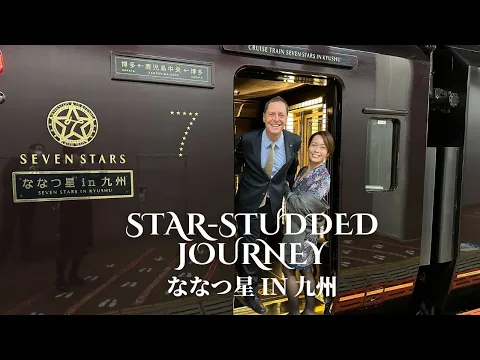
While planes cross Japan in a few hours and bullet trains connect cities at high speed, another type of travel moves across the island of Kyushu at a slow, almost ceremonial pace. It’s not about quick transportation, but about the experience. The Seven Stars in Kyushu, operated by Kyushu Railway Company (JR Kyushu) since October 2013, is often described as the only “7-star” train in the world, an informal classification associated with its extreme level of exclusivity and service.
With a capacity of only about 18 to 20 passengers per journey, depending on the suite configuration, the train operates itineraries of two or four days in the southern region of Japan. The proposal is not just to transport people between cities, but to transform the journey into a ritual of hospitality and design.
The Birth of Seven Stars and JR Kyushu’s Strategy
The project was officially launched in October 2013 by JR Kyushu as part of a strategy to revitalize regional rail tourism. The island of Kyushu, known for its volcanic mountains, hot springs, and cultural traditions, sought to attract high-end visitors willing to invest in unique experiences.
-
Friends have been building a small “town” for 30 years to grow old together, with compact houses, a common area, nature surrounding it, and a collective life project designed for friendship, coexistence, and simplicity.

-
This small town in Germany created its own currency 24 years ago, today it circulates millions per year, is accepted in over 300 stores, and the German government allowed all of this to happen under one condition.

-
Curitiba is shrinking and is expected to lose 97,000 residents by 2050, while inland cities in Paraná such as Sarandi, Araucária, and Toledo are experiencing accelerated growth that is changing the entire state’s map.

-
Tourists were poisoned on Everest in a million-dollar fraud scheme involving helicopters that diverted over $19 million and shocked international authorities.


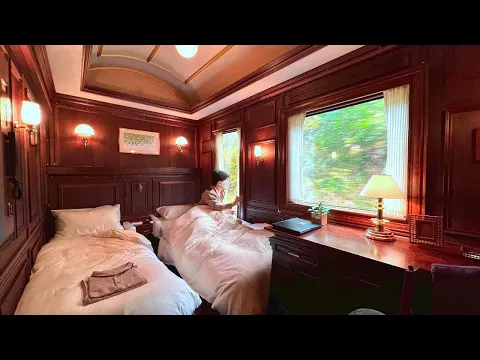
The train was designed by Japanese industrial designer Eiji Mitooka, known for railway projects that combine modernity with traditional Japanese aesthetics. The visual design of the Seven Stars mixes solid wood, stained glass, polished metals, and handcrafted details that evoke classical architecture.
Instead of betting on speed, like the Japanese shinkansen, JR Kyushu opted to create a high-value tourist product.
Interior, Suites, and Operational Exclusivity
The Seven Stars operates with an extremely limited number of cabins. The original layout featured 14 suites distributed across seven cars, including a larger luxury suite at the end of the train.
After structural renovations carried out years after the inauguration, the configuration was adjusted, further reducing the total passenger capacity to enhance the interior space and reinforce the feeling of exclusivity.

Each cabin features a private bathroom, fine wood furnishings, and detailed finishes. Common areas include a panoramic lounge, a dining car, and gathering spaces with wide views of the landscapes.
The operation with only about 20 passengers allows for highly personalized service. The onboard staff is trained to offer service akin to that of luxury hotels, focusing on Japanese hospitality.
This deliberate limitation of capacity is an essential part of the business model. Scarcity enhances the perceived value of the experience.
Four-Day Itinerary Through the Island of Kyushu
The four-day, three-night itinerary traverses different regions of the island, including areas near cities like Fukuoka, Kumamoto, and Kagoshima.
During the journey, the train makes strategic stops for cultural visits, artistic performances, and local culinary experiences. The route includes stretches with views of Mount Aso, one of the largest volcanic calderas in the world, as well as coastal landscapes and traditional rural areas.
The proposal is to integrate nature, culture, and cuisine into a continuous narrative. Unlike maritime cruises with hundreds or thousands of passengers, the Seven Stars operates on an intimate scale, where each stop is carefully planned.
Pricing, Demand, and Passenger Selection
The level of exclusivity is reflected in the reservation policy. Demand for the Seven Stars frequently exceeds the number of available spots. During certain periods, JR Kyushu holds lotteries among interested parties, as international demand is high.
Prices vary depending on the cabin and itinerary, but the experience can exceed tens of thousands of dollars per couple for complete itineraries.
This structure transforms the train into a premium tourist product, comparable to luxury cruises or top-tier hotels. The model also reinforces Japan’s image as a destination capable of offering sophisticated experiences beyond technology and speed.
Railway Luxury as an Economic Strategy
The launch of the Seven Stars was not just an aesthetic initiative. It is part of a global trend to revitalize luxury trains as tourist products.
Countries like India, South Africa, and Peru also operate premium trains aimed at immersive experiences. However, the Seven Stars stands out for its extreme limitation of passengers and the level of internal detailing.
By investing in high-end railway tourism, JR Kyushu has diversified revenues beyond conventional transport. The train has become a symbol of the region and a tool for territorial marketing.
The initiative also inspired other luxury railway projects in Japan, such as the Train Suite Shiki-shima, operated by JR East, expanding the segment of exclusive train travel in the country.
More Than Transportation, a Rare Experience
The Seven Stars in Kyushu does not compete with high-speed trains or airlines. It occupies a completely different niche.
By limiting capacity to around 20 passengers and extending the journey over four days, the operation transforms travel into an event.
In a world where travel is becoming increasingly fast and standardized, the proposal of the Seven Stars is to slow down. The experience involves silence, contemplation, personalized service, and cultural integration. The “7-star” classification is not official, but it symbolizes the perception of extreme luxury associated with the project.
Instead of transporting crowds, the train operates as a nearly private experience on tracks. Between cutting-edge technology and handcrafted tradition, the Seven Stars represents an alternative vision of rail transport. Not as a means to quickly reach a destination, but as a destination in itself.
With only 20 passengers at a time, it redefines the concept of travel by rail and transforms the railway into the stage for one of the most exclusive experiences in contemporary tourism.










-

-

-

-

5 pessoas reagiram a isso.