





 Portuguese
  English
  Spanish
  5 min of reading
  0 comments


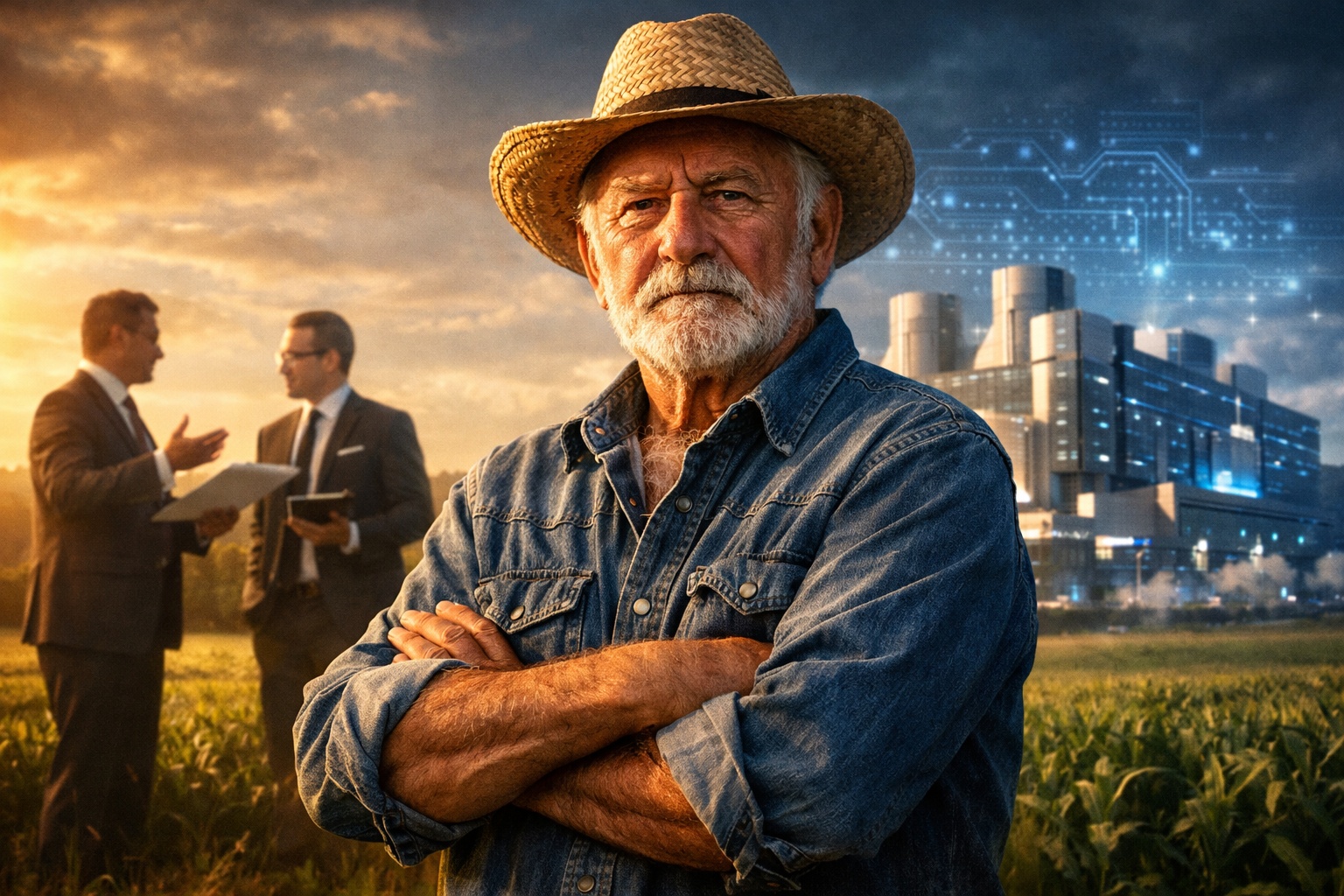
75-Year-Old Doctor Turns Down $10 Million Offer and Blank Proposal to Sell 250-Acre Farm in Kentucky to Group Interested in Building AI Data Center
In March 2025, three men sat down with Timothy Grosser and his son Andy in Mason County, Kentucky, with a $10 million proposal for the 250-acre farm that the two have built together for nearly four decades. The amount was 35 times what Timothy paid for the land in 1988. But there was one detail that the representatives refused to reveal: who was behind the offer and what venture would be established there. When Timothy said no, the men returned with an even more unusual proposal. This time, with no fixed amount.
“Then they said, ‘You can write whatever price you want’”, Grosser reported. “I said we’re not interested.”
To The Guardian, he was even more direct: “There’s no number.”
-
Friends have been building a small “town” for 30 years to grow old together, with compact houses, a common area, nature surrounding it, and a collective life project designed for friendship, coexistence, and simplicity.

-
This small town in Germany created its own currency 24 years ago, today it circulates millions per year, is accepted in over 300 stores, and the German government allowed all of this to happen under one condition.

-
Curitiba is shrinking and is expected to lose 97,000 residents by 2050, while inland cities in Paraná such as Sarandi, Araucária, and Toledo are experiencing accelerated growth that is changing the entire state’s map.

-
Tourists were poisoned on Everest in a million-dollar fraud scheme involving helicopters that diverted over $19 million and shocked international authorities.


From Family Doctor to Farmer in Kentucky
Timothy Grosser was not born a farmer. For decades, he worked as a family doctor in downtown Maysville, Kentucky, treating patients in the area. His son Andy followed another career — he is an engineer at the local Mitsubishi Electric factory.
It was Timothy who bought the 250 acres along the Ohio River in the late 1980s, initially for recreational hunting. Over time, father and son learned together to raise cattle, starting with 10 heads and today maintaining about 40. Andy built his own house on the property. Timothy’s grandson travels hours on the road to hunt deer and turkey in the area.
“It’s a place of peace”, Timothy said, describing the smell of freshly cut hay. “We cut it, let it dry, rake it, roll it, and store it to feed the cattle in winter.”
This is not a scenic farm. It is a territory shaped by continuous work, deliberate decision, and three generations that attribute to that land a value that cannot be measured just in dollars.
The Secretive Approach of Fortune 100 and the Non-Disclosure Agreement
The meeting followed an increasingly common pattern in the expansion of artificial intelligence infrastructure in the United States. The representatives claimed to act on behalf of a company classified as “Fortune 100” — one of the 100 largest corporations in the world, interested in acquiring the area for unspecified industrial development.
To obtain details about the installation type, timeline, environmental impact, or energy consumption — Timothy and Andy would need to sign a non-disclosure agreement (NDA). The contract would prevent them from sharing information with third parties.
“We refuse to sign”, Timothy said. “I won’t sell my farm for any amount.”
Months later, local authorities publicly confirmed that Mason County was being evaluated as a possible site for a hyper-scale data center with an estimated investment of over $1 billion, linked to a Fortune 100 company in the technology sector.
Energy and Water: Why Mason County Became a Target for AI Data Centers
The location is not random. A few miles from the Grosser property is the Ohio River and the H.L. Spurlock power plant, operated by East Kentucky Power Cooperative, with a capacity of 1,346 megawatts and in the process of partial conversion to natural gas.

Large volumes of water for cooling and high energy availability make the region strategic for artificial intelligence data centers, which operate 24 hours a day with intensive cooling, backup, and transmission systems.
“Becoming an Island”: The Fear of Rural Isolation Amid Digital Infrastructure
Timothy’s concern is not just losing the farm. It’s the potential aftermath.
“What worries me most is that the project proceeds, and we become an island”, he stated.
If neighboring properties are sold, the farm could be surrounded by industrial warehouses, cooling systems, and electrical substations. Andy reinforced the unease: “I don’t know if we’ll continue to have the view of this ridge and the landscape in front of us.”
In counties like Loudoun County, Virginia — considered the largest hub for data centers in the world — residents report constant noise from generators and ventilation systems.
The Lack of Transparency in the Expansion of AI Data Centers
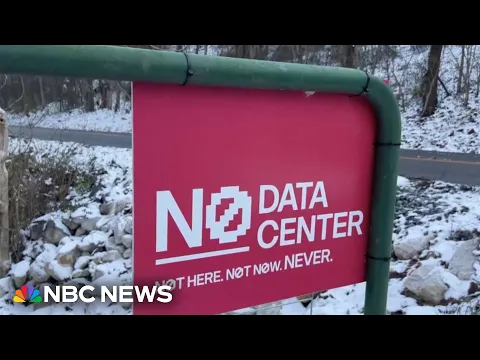
The case highlights a broader pattern. An NBC News investigation analyzed over 30 data center proposals in 14 states and found that local authorities often sign non-disclosure agreements with intermediary companies, often structured to conceal the real investors.

In Mason County, county officials also signed NDAs, preventing the disclosure of the company’s name to residents.
“If they want to be good neighbors, they should show who they are”, said Max Moran, who organized local resistance to the project.
The “We Are Mason County” movement has gathered nearly a thousand online members and started monitoring every step of the negotiations.
The Billion-Dollar Race for Rural Land in the US
The expansion of AI infrastructure has driven rural land prices to unprecedented levels. In Virginia, an investor paid $615 million for less than 100 acres in 2024. Amazon spent $700 million for another agricultural area in the same region. In Georgia, a plot acquired for $4 million was resold for $270 million a year later.
Other landowners also turned down million-dollar offers. In Pennsylvania, an 86-year-old farmer rejected $15.7 million. In Wisconsin, another turned down $80 million.
But Grosser’s case stands out due to the blank proposal, and the company’s willingness to pay any amount. The answer continued to be no.
“Money is not worth giving up your way of life”, he stated.
The Calculation That Financial Models Do Not Make
Timothy is not a farmer who is unaware of the market. He is a doctor trained to analyze risks, assess consequences, and make complex decisions.
When considering the sale, he weighs variables that do not enter corporate valuation reports: family continuity, territorial identity, preservation of way of life.
Rural sociologist Mary Hendrickson notes that many landowners see land maintenance as an intergenerational commitment.
In Kentucky, Timothy continues to drive the truck through the pasture, cutting hay, storing it for winter, and waiting for his grandson for the hunting season.
The blank proposal remains unanswered because, according to him, there truly is no number that fills that line.










-

Uma pessoa reagiu a isso.