





 Portuguese
  English
  Spanish
  3 min of reading
  0 comments


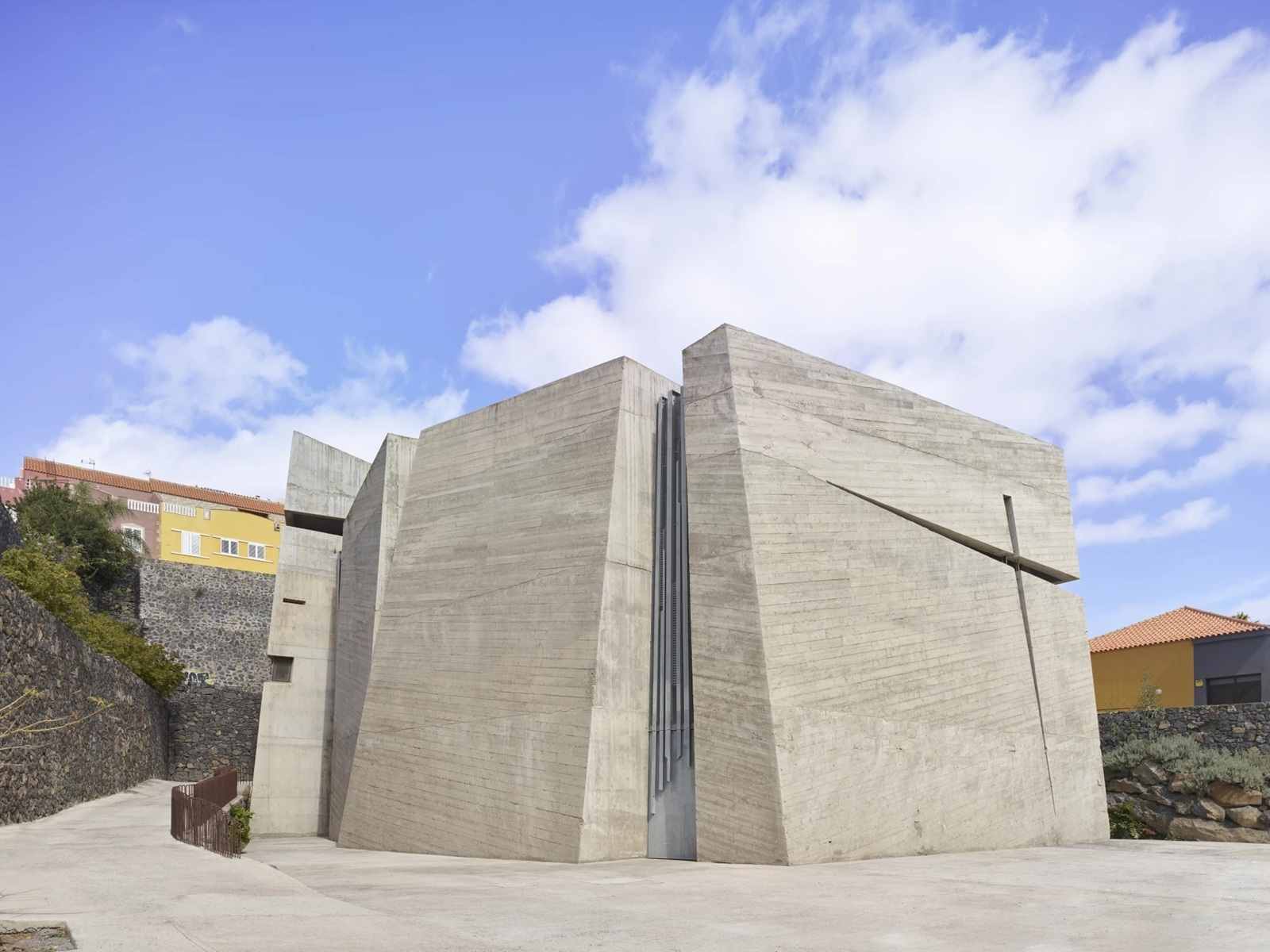
Concrete Church Inspired by the Volcanic Landscape of Tenerife Wins the Building of the Year 2025 Award and Becomes a Symbol of Urban Renewal in Las Chumberas.
The announcement of the winner of the Building of the Year 2025 award highlighted the Church and Community Center of the Most Holy Redeemer of Las Chumberas. The choice was made due to its striking use of concrete and the strong community focus present throughout the project stages.
The construction has a robust character while being sensitive to the needs of the region’s residents.
The church and community center are part of an urban renewal process in a peripheral area of La Laguna, Tenerife, that was in need of attention.
-
Friends have been building a small “town” for 30 years to grow old together, with compact houses, a common area, nature surrounding it, and a collective life project designed for friendship, coexistence, and simplicity.

-
This small town in Germany created its own currency 24 years ago, today it circulates millions per year, is accepted in over 300 stores, and the German government allowed all of this to happen under one condition.

-
Curitiba is shrinking and is expected to lose 97,000 residents by 2050, while inland cities in Paraná such as Sarandi, Araucária, and Toledo are experiencing accelerated growth that is changing the entire state’s map.

-
Tourists were poisoned on Everest in a million-dollar fraud scheme involving helicopters that diverted over $19 million and shocked international authorities.

The complex includes religious spaces, areas designated for social activities, and a public square. These elements create an essential meeting point for the community, offering social interaction and services.
The project’s progress was financed by small contributions, resulting in an irregular timeline and distinct phases of development.
Architectural Concept and Execution
The construction consists of four independent volumes and was executed in stages. The first two volumes, corresponding to the community center, were completed in two years.
The other two structures could only be finished 16 years later, in 2021, when new resources became available. This pace highlighted the dependence on community financing for each construction advancement.
The project distances itself from traditional church models and relies on exposed concrete walls inspired by the volcanic landscape of Tenerife.
The aesthetic is marked by narrow openings filled with sculptural metal and glass, allowing for controlled natural light entry. This lighting creates dynamism inside and enhances the uniform texture of the materials, reinforcing the identity of the building.
Jury Highlights
Paul Finch, Director of Programming for the World Architecture Festival, emphasized the intensity of the architectural proposal.
He pointed out that light was used decisively to shape the interior spaces and to accentuate the tactile nature of the surfaces.
According to him, the project precisely meets both the symbolic and practical needs of the local community. For the jury, this combination made the work a relevant addition to the architectural landscape of Tenerife.
The award ceremony took place during the World Architecture Festival held in Miami Beach.
The event also featured highlights in the categories of Interior of the Year, Future Building of the Year, and Landscape of the Year, which expanded the view on different contemporary architectural approaches.
Interior of the Year
The Interior of the Year award was given to the Fractal Chapel, located in Graz, Austria, designed by Innocad Architecture. Situated within a hospital, the chapel serves as a space of tranquility for patients, staff, and visitors. The design follows the same logic as the main winner in its careful use of natural light, seeking well-being and stress reduction.
Future Project of the Year
The recognition for Future Project of the Year went to the Bjarke Ingels Group (BIG), which is developing the future International Airport of Belephu in Bhutan.
The terminal will have a diagonal lattice shape and will be constructed with locally sourced sustainable wood.
Traditional wooden sculptures and the structure aimed at regulating humidity and internal ventilation reinforce the proposal for integrating architecture and climate.
Landscape of the Year
The Landscape of the Year award was given to the project “Embracing the Flood: Ecological Corridor of the Xinjiang River” by Turenscape. Located in Shangrao, China, the project transforms a 102-hectare floodplain into an ecological and recreational space.
The initiative increases flood resilience, restores native habitats, and ensures constant public circulation through elevated walkways distributed throughout the area.










Seja o primeiro a reagir!