





 Portuguese
  English
  Spanish
 4 min of reading
  2 comments


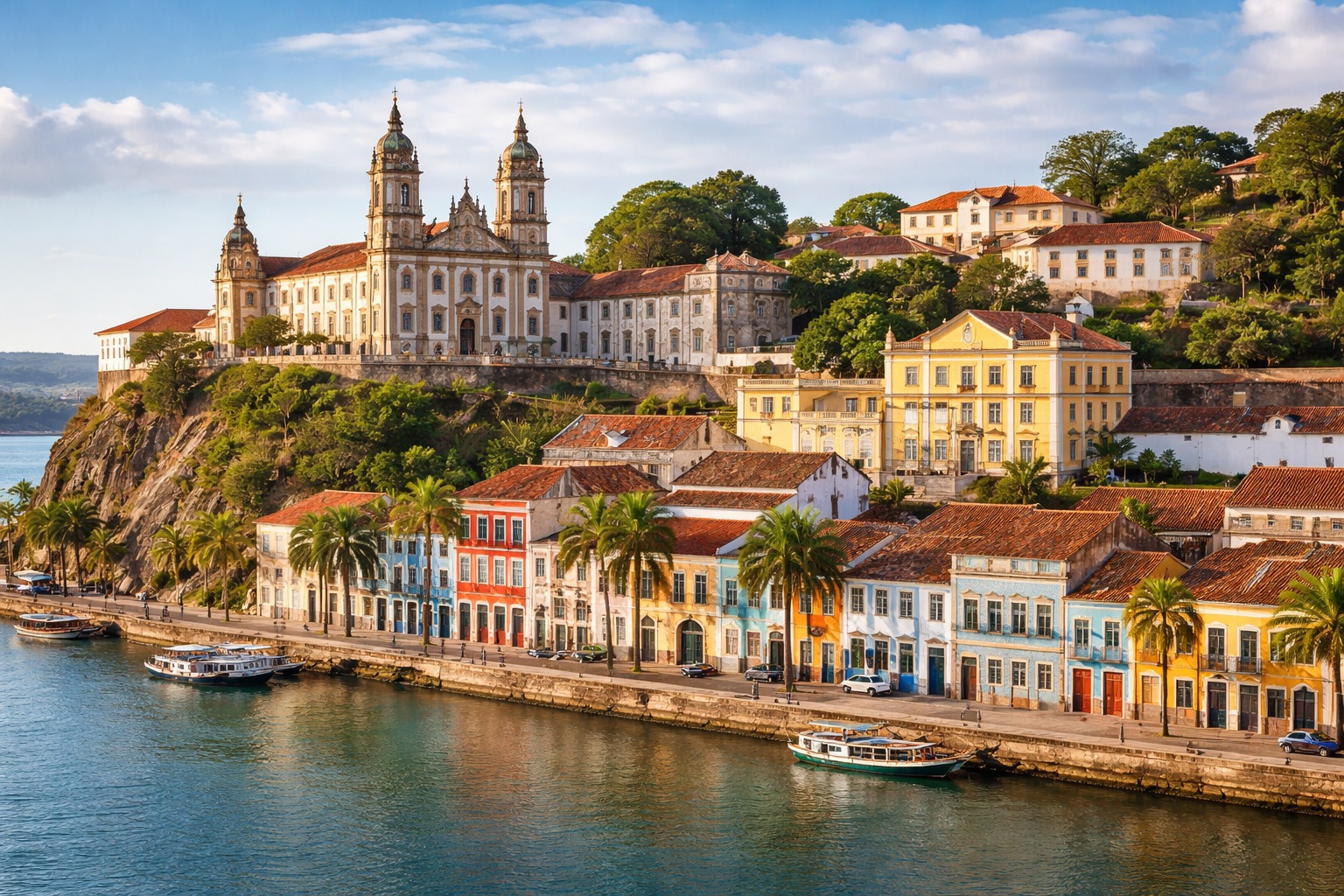


Penedo, 160 km from Maceio, Features a Historic Center Recognized by IPHAN Since 1996, Churches from 1764 and 1769, a Theater from 1884 and 25°C Climate by the Banks of the São Francisco River
Penedo, also known as the Alagoan Athens, rises on a rocky outcrop by the São Francisco River, 160 km from Maceio, with a historic center recognized by IPHAN in 1996, 18th-century churches, a theater from 1884 and an average annual climate of 25°C, establishing the destination as a cultural reference in the south of Alagoas.
Historical Formation of Penedo and Occupations Between the 16th and 17th Centuries
The origin of Penedo dates back to the 16th century when the Portuguese established a strategic settlement on the banks of the São Francisco to control navigation and fend off invaders. The location, on a rocky outcrop, defined the name and initial importance of the municipality.
In 1637, Dutch forces occupied the city and built Fort Maurício de Nassau on the rock. The foreign presence lasted about a decade, leaving marks on the architecture and local memory that remain recorded in the historic center.
-
Friends have been building a small “town” for 30 years to grow old together, with compact houses, a common area, nature surrounding it, and a collective life project designed for friendship, coexistence, and simplicity.

-
This small town in Germany created its own currency 24 years ago, today it circulates millions per year, is accepted in over 300 stores, and the German government allowed all of this to happen under one condition.

-
Curitiba is shrinking and is expected to lose 97,000 residents by 2050, while inland cities in Paraná such as Sarandi, Araucária, and Toledo are experiencing accelerated growth that is changing the entire state’s map.

-
Tourists were poisoned on Everest in a million-dollar fraud scheme involving helicopters that diverted over $19 million and shocked international authorities.


In the 19th century, Penedo gained imperial prominence. Dom Pedro II visited the city in 1859 during an expedition along the São Francisco.
The house where he stayed became the Museum of the Imperial Palace, which preserves porcelain, furniture, and records of the emperor’s visit.
The heritage recognition occurred in 1996 when IPHAN recognized the architectural, landscaping, and urban ensemble, officially establishing the historic center as a national preservation area.


Historic Center of Penedo Concentrates Churches, Museums, and Lookouts in a Few Blocks
The route through the historic center of Penedo can be done on foot. Cobblestone streets connect churches, museums, and lookouts in a course of just a few blocks.
The Church of Our Lady of the Current, dating back to 1764, is notable for its gilded main altar and walls covered with Portuguese tiles. The temple is regarded as one of the references of rococo style in the Northeast.
The Convent of Santa Maria dos Anjos houses illusionistic paintings and baroque woodwork. According to records, powdered gold was mixed with whale oil and egg whites in the decoration of the altars.
The Theatro Sete de Setembro, inaugurated in 1884, was the first in Alagoas. The facade features four porcelain statues representing goddesses of the arts, preserving characteristics of the belle époque along the Velho Chico.
The Lookout of Rocheira offers a panoramic view of the São Francisco River, especially at sunset. The Oratory of the Gallows, built in 1769 in Praça Barão de Penedo, was the place where prisoners attended mass before executions.
Why It Is Called Alagoan Athens
The nickname Alagoan Athens originated in the 19th century when Penedo distinguished itself through artistic and intellectual development.
The Convent of the Franciscans offered classes in philosophy, Latin, and French, forming an educated elite that influenced the state’s culture.
The Theatro Sete de Setembro and the literary tradition reinforced this cultural reputation. The vocation remains active with initiatives like the Brazilian Film Festival of Penedo, which transformed squares and historic buildings into exhibition halls.
The Casa do Penedo Foundation maintains a library with over 20,000 titles and a photographic collection dedicated to preserving local memory, solidifying the cultural profile of the city over time.
Climate, Cuisine, and Access to the City on the Banks of the São Francisco
The climate of Penedo is tropical, with an average annual temperature of 25°C and an approximate rainfall of 1,292 mm. The driest period occurs between September and March, suitable for hiking and boat trips.
The local cuisine combines river ingredients with northeastern spices. The proximity to the São Francisco ensures fresh fish year-round.
Among the notable dishes are the Penedo fish stew, with seasoned broth, farofa, and white rice; the sururu with farofa; fried pilombeta; and cassava with sun-dried meat, prepared with butter and cheese.
Road access is via BR-101 South. The distance to Maceio is 160 km, with an approximate travel time of 2.5 hours by car. From Aracaju, it is 120 km to Neópolis in Sergipe, where a ferry crosses the river to the city’s port.
The neighboring Piaçabuçu, 28 km away, serves as a starting point for boat trips to the mouth of the São Francisco.
In just a few blocks, Penedo brings together heritage, memory, and riverside landscape, maintaining its historical identity preserved over the centuries and reinforcing its cultural importance in the state.
With information from Correio Braziliense.









PENELO em Alagoas é realmente digna de um passeio histórico.
ESSA É UMA HISTÓRIA FASCINANTE TAMBÉM CONHECIDA COMO A PRINCESA DO SÃO FRANCISCO UMA CIDADE PRÓSPERA NOS SESSENTA ATE OS ANOS SETENTA, TODO POVO RIBEIRINHO IA FAZER NEGÓCIOS EM PENEDO – AL, POVO TEM QUE SABER DE HISTÓRIAS COMO ESSAS, GRANDES NAVIOS SUPORTAVAM NO CAIS DE PENEDO…