





 Portuguese
  English
  Spanish
  4 min of reading
  0 comments


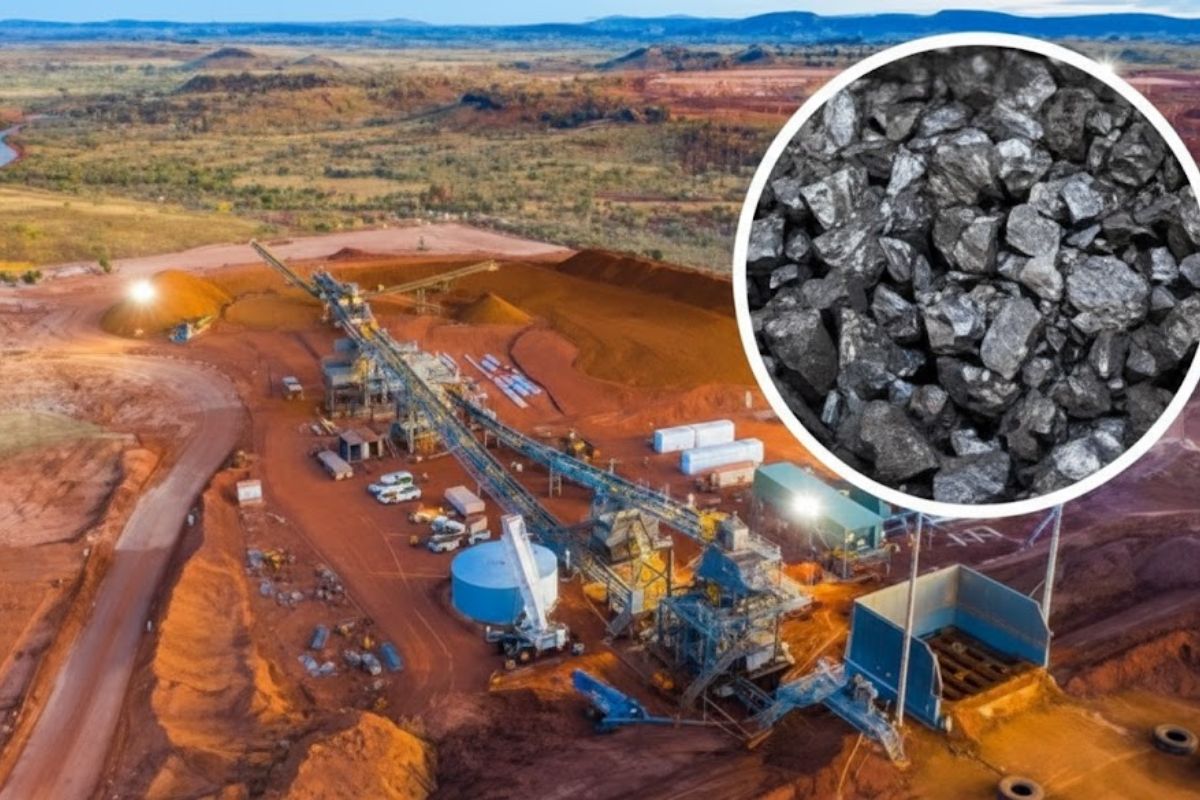
With 55 Billion Tons and High Grade, the Megadeposit of Iron Ore in Hamersley, Australia’s Pilbara Region, Reignites Debates on Global Steel Prices, Infrastructure Investments, Australia’s Export Advantage, and Environmental Impacts That Could Redefine Industrial Strategies in the Coming Decades on a Global Scale.
The iron ore has returned to the center of international discussions with the announcement of an estimated reserve of 55 billion metric tons in the Hamersley province of Pilbara, in western Australia, with an approximate value of US$ 6 trillion, about R$ 30 trillion at the conversion mentioned in February.
Around this discovery, the discussion is no longer limited to the size of the deposit. The debate includes ore quality, effects on industrial costs, possible rearrangement of trade routes, and the strategic weight of a resource that could influence everything from private investments to industrial policy decisions across various continents.
Pilbara at the Center of the New Mineral Dispute

Pilbara was already a key area for Australian mining, but the magnitude attributed to the Hamersley deposit has raised the stakes of the topic.
-
The government requests the Federal Revenue Service for a new system to automate the income tax declaration, reducing errors, time, and bureaucracy for millions of Brazilians.

-
Pix in installments, international Pix, and contactless payment without internet: the Central Bank revealed the new features coming to the tool that is already used by almost every adult in Brazil.

-
Mercado Livre has just started selling medications with delivery in up to three hours to your door, and this move could completely change the way Brazilians buy medicines on a daily basis.

-
In Dubai, rising tensions from the war in the Middle East are causing super-rich individuals to leave the Gulf and direct their fortunes to a new financial refuge in Asia.


What draws attention is not just the gross volume of the reserve, but rather the combination of scale and potential quality of the material, with zones above 60% grade reported, something highly relevant for steelmaking.
In practice, when a deposit of this magnitude appears on the global radar, it becomes a treated as a geoeconomic asset. Mining companies, steelmakers, investment funds, and governments are observing the same point for different reasons: supply security, price predictability, logistical access, and long-term competitive advantage.
Why Volume and Grade Change the Steel Equation
In the steel market, ore grade matters because it affects industrial efficiency. Higher quality iron ore tends to reduce processing steps, decrease waste, and improve metallurgical performance in part of the production routes.
This does not eliminate energy challenges, but changes costs and productivity on a large scale.
With an estimated 55 billion tons, the potential impact also involves a temporal horizon.
A reserve of this size increases the perception of structural supply and can influence long-term contract negotiations, planning of steel plants, and timelines for port and railway infrastructure. It is not just a mining news; it is a signal for the entire industrial chain.
The Geological Revision and the Link to Supercontinents
Another relevant point is the change in interpretation regarding the age of formation of the deposit.
Technical reports released in the Australian press indicate dating between about 1.4 and 1.1 billion years, in contrast to the previous hypothesis of approximately 2.2 billion years for these iron-rich bodies.
This revision is not an academic detail. It suggests that tectonic cycles linked to the fragmentation and reorganization of supercontinents may have favored the circulation of fluids and heat, promoting progressive enrichment of iron ore from levels near 30% to levels above 60% in specific areas.
This changes the mental map of where and how to search for high-grade reserves in the future.
Global Economic Effect and New Pressure on Investments
Australia already holds a dominant position in the maritime trade of iron ore, and a reserve of this size is likely to reinforce this centrality.
The expected result is greater influence over export flows, supply terms, and setting investment priorities in mineral infrastructure and logistical outflow.
For international buyers, especially large Asian importers, the issue combines opportunity and dependence.
Opportunity because robust supply can increase supply predictability. Dependence because concentration of origin can raise strategic exposure. In this delicate balance, price is not the only important indicator; political predictability and contractual stability also weigh in.
Geopolitics, Environment, and the Paradox of Low-Carbon Steel
The discovery comes at a time when industrial decarbonization pressures the steel industry. The iron and steel sector is often linked to a significant share of global carbon dioxide emissions, and the debate over “green steel” is gaining traction with routes that seek to reduce coal use through hydrogen and electrification in part of the process.
At the same time, mineral expansion in Pilbara brings concrete local dilemmas: opening areas, dust, intensive water use, effluent management, and impacts on ecosystems and culturally sensitive territories for Indigenous communities.
The central point is that the same iron ore that can support industrial transitions also imposes environmental and social costs that cannot be treated as a secondary variable.
The Hamersley megadeposit brings together four forces in the same movement: economic scale, industrial relevance, geopolitical value, and environmental pressure.
If the estimates of volume and quality are confirmed over the development of the project, Australian iron ore is likely to gain even more weight in price formation, steel investments, and international trade relations.
Beyond the numbers, the decisive question is political and strategic: who will turn this geological advantage into a long-term sustainable advantage. In your view, what should be the immediate priority in this scenario—lower the steel price, accelerate low-emission steel, or impose stricter environmental regulations even with the risk of reducing supply?









-

-

4 pessoas reagiram a isso.