





 Portuguese
  English
  Spanish
  8 min of reading
  0 comments


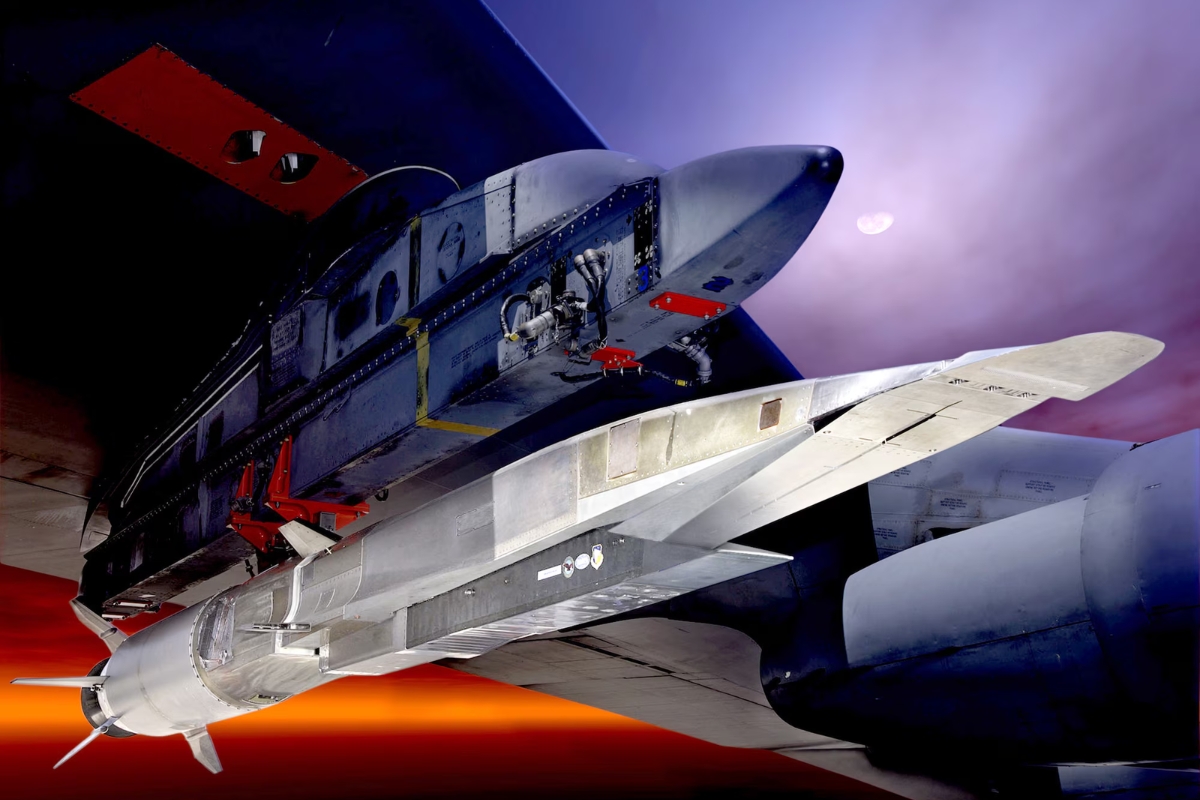
Scramjet Engine Promises to Take Aircraft and Vehicles to Mach 5–15 Using Airborne Oxygen, Reducing Weight and Onboard Systems, and Paving the Way for Hypersonic Flights and Space Access with “Air-Breathing” Propulsion
The scramjet engine is one of the most advanced and strategic technologies of the new era of hypersonic aviation, with the potential to change the way we fly and even how we access space. It promises to enable aircraft and vehicles capable of exceeding five times the speed of sound using oxygen from the air itself, reducing weight, consumption, and system complexity.
What Is a Scramjet Engine?
A scramjet (Supersonic Combustion Ramjet) is a type of “air-breathing” jet engine designed to operate at hypersonic speeds. Unlike conventional jet engines, such as turbojets or turbofans, the scramjet has no compressors or turbines with moving parts: it relies solely on the high speed of the vehicle to compress the incoming air.
In traditional ramjets, the supersonic air is decelerated to a subsonic regime before combustion. In the scramjet, the flow remains supersonic within the combustion chamber, allowing for efficient operation within speed ranges typical between Mach 5 and Mach 15. It is precisely in this region that most conventional engines lose efficiency or simply cease to operate.
-
Motorola launched the Signature with a gold seal from DxOMark, tying with the iPhone 17 Pro in camera performance, Snapdragon 8 Gen 5 that surpassed 3 million in benchmarks, and a zoom that impresses even at night.

-
Satellites reveal beneath the Sahara a giant river buried for thousands of kilometers: study shows that the largest hot desert on the planet was once traversed by a river system comparable to the largest on Earth.

-
Scientists have captured something never seen in space: newly born stars are creating gigantic rings of light a thousand times larger than the distance between the Earth and the Sun, and this changes everything we knew about stellar birth.

-
Geologists find traces of a continent that disappeared 155 million years ago after separating from Australia and reveal that it did not sink, but broke into fragments scattered across Southeast Asia.

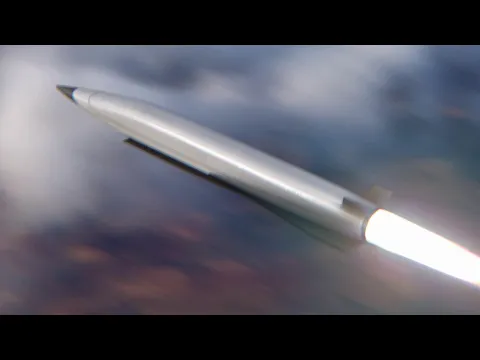

How a Scramjet Works in Practice
Beneath an apparently simple appearance, the scramjet is a highly sophisticated system, typically integrated into the vehicle’s own fuselage. In general terms, it consists of three main sections: air intake, combustion chamber, and nozzle.
Main Operation Steps
Air Intake
At hypersonic speeds, air enters the intake with enormous kinetic energy. The geometry of the duct compresses this air through carefully controlled shock waves, maintaining the flow in a supersonic regime.
Dynamic Compression
Without mechanical compressors, the pressure and temperature of the air rise due to the vehicle’s motion and the configuration of the intake. All “compression” occurs aerodynamically, with the flow conditioned for the next stage.
Fuel Injection and Combustion
High-energy fuels, such as hydrogen or special hydrocarbons, are injected into the supersonic flow. The mixing and burning must occur in milliseconds, generating extremely hot and pressurized gases without losing the supersonic regime.
Expansion and Thrust
The hot gases expand through the exit nozzle, converting thermal energy into thrust and propelling the vehicle to sustained hypersonic speeds. This final stage is crucial for transforming the generated heat into actual acceleration.
This architecture with no moving parts tends to be lighter and, in theory, simpler than a turbojet. The critical point is maintaining stable combustion within such a fast and turbulent flow, at extreme temperatures and pressures.

Advantages of Scramjets Compared to Other Engines
The scramjet stands out in the speed range where conventional engines simply cannot operate efficiently. It occupies an interesting middle ground between jet engines and chemical rockets, combining characteristics of both.
Among the main advantages of scramjets are the use of atmospheric oxygen and the potential to reduce the total mass of the vehicle. Since the engine “breathes” oxygen from the air, it eliminates the need for onboard oxidizer tanks, freeing up space for payload and allowing for more compact designs.
Another significant advantage is the high efficiency in hypersonic regimes. At speeds between Mach 5 and Mach 15, the scramjet can be more efficient than rockets carrying all the oxidizer, as it takes advantage of the ambient air along the way.
Furthermore, scramjets pave the way for “spaceplane” concepts and ultra-fast point-to-point flights. These designs seek to combine features of an aircraft and a spacecraft into a single system, which could reshape high-speed aviation.
On the other hand, this technology is not a “one-size-fits-all” solution. It works very well at high speeds but relies on another system to accelerate the vehicle to the regime in which the scramjet can operate stably.

Limitations and Current Challenges of Scramjets
As promising as it is, the scramjet faces significant challenges before it becomes common in super-fast aircraft or commercial applications. The first is that it does not work at low speeds and requires a supersonic airflow to operate.
This means the vehicle must be accelerated by turbojet, ramjet, or rocket engines to a sufficiently high speed before the scramjet is activated. Without this initial stage, there is no effective dynamic compression, and the engine does not produce thrust.
Another challenge is the extreme operating environment. Sustained flight at Mach 5–15 generates intense thermal loads on the fuselage, leading edges, and combustion chamber, requiring special materials and complex cooling strategies.
There is also the issue of stable supersonic combustion. Getting the fuel to burn in a controlled manner in a supersonic flow is a difficult problem of physics and engineering, as the air-fuel mixture needs to be precise, fast, and stable.
Finally, development costs and complexity are high. Hypersonic testing requires specialized wind tunnels, expensive experimental flights, and advanced simulations, making technological maturity slower and more costly.
While these hurdles are not fully overcome, the technology remains focused on research programs, flight demonstrations, and strategic military applications. Nevertheless, gradual progress is accumulating knowledge and concrete results.

Scramjet in Super-Fast Aircraft and Hypersonic Vehicles
Scramjets are already a reality in several hypersonic vehicle projects, mainly in defense and experimental space access programs. Although many details remain restricted, the direction is clear: faster, higher flights with greater range.
One of the main applications under study is hypersonic cruise missiles. These “air-breathing” systems can fly above Mach 5 for long distances, combining extreme speed, maneuverability, and extended range in strategic scenarios.
Another avenue involves reentry vehicles and spaceplanes. Experimental platforms use scramjet for part of the trajectory to reach altitudes and speeds close to low orbit, seeking to reduce space access costs.
There are also concepts for ultra-fast civil transport. Studies analyze aircraft capable of connecting major cities in under two hours, integrating scramjets for part of the route to drastically shorten flight time.
In these scenarios, the scramjet is often part of a hybrid propulsion system. Instead of entirely replacing other engines, it works alongside turbojets, ramjets, or rockets, optimizing performance in phases.

Hybrid Integration: Scramjet + Conventional Engines
One of the most promising approaches to enable super-fast aircraft is to combine different types of engines on the same aircraft. This way, the design takes advantage of the best of each technology at specific speed ranges, improving overall efficiency.
During the takeoff and climb phase, conventional turbojet or turbofan engines are used to take off, climb, and accelerate. They operate efficiently and safely at moderate supersonic speeds, where the scramjet would not yet have optimal conditions.
In the transition phase, around Mach 3 or more (depending on the design), the airflow, altitude, and aerodynamic heating begin to favor the use of ramjets. From there, the system can evolve into scramjet mode.
In the hypersonic phase, the scramjet takes the lead role. It utilizes the dynamically compressed air to burn fuel in the supersonic regime, keeping the aircraft at high speeds during the hypersonic cruise segment.
In some concepts, the air intakes and nozzle of the engines can be repositioned or reconfigured in flight. This reduces drag and improves efficiency, but significantly increases engineering complexity and real-time control.
Main Technological Challenges for the Next Generation of Hypersonic Aircraft
For scramjets to move from being test prototypes to being equipped on operational aircraft, progress will need to be made in several areas. The first major axis involves advanced materials and thermal protection.
Surfaces exposed to hypersonic flow need to withstand extremely high temperatures without losing mechanical strength. Research involves special ceramics, composite materials, and active cooling systems, as well as solutions to reduce wear.
Another critical axis is precision aerodynamics. The design of the fuselage, wings, and air intakes must be calculated to the millimeter to control shock waves, minimize drag, and ensure that the air reaches combustion under the correct conditions.
Control and navigation systems also need to evolve. At Mach 5 or more, any slight attitude change can have a huge impact on trajectory, requiring advanced automation, robust sensors, and algorithms capable of reacting in fractions of a second.
When considering civil use, issues of safety, certification, and regulation come into play. Noise, environmental impact, air routes, failures at high speeds, and emergency procedures under extreme conditions will require new standards.
Despite so many challenges, the interest from governments, armed forces, and the aerospace industry ensures that research will not cease anytime soon. The pace may vary, but strategic and technological pressure keeps the programs active.
The Future of Scramjets and Super-Fast Aviation
Scramjets have already moved beyond the purely theoretical phase and are accumulating concrete results in wind tunnel tests and experimental flights. The trend is that, in the coming decades, this technology will become the foundation of a new generation of hypersonic vehicles.
Among the most cited possibilities are reusable spacecraft that take off and land like airplanes. These systems could reach altitudes and speeds close to those of rockets, with the potential to reduce costs and increase mission frequency.
Ultra-fast commercial routes are also emerging, linking continents in a matter of hours or even less. Prices could gradually decrease as the technology matures, gaining reliability, scale, and certification standards.
Another likely application is strategic defense systems with global reach and extremely reduced response times. The combination of speed and range makes these concepts very attractive for military and deterrence scenarios.
If the industry can make scramjets more reliable, accessible, and safe, it is likely that in a few decades traveling on a hypersonic aircraft will cease to be science fiction. Gradually, this could become part of the routine of high-performance aviation.








-

-

-

20 pessoas reagiram a isso.