





 Portuguese
  English
  Spanish
  4 min of reading
  0 comments


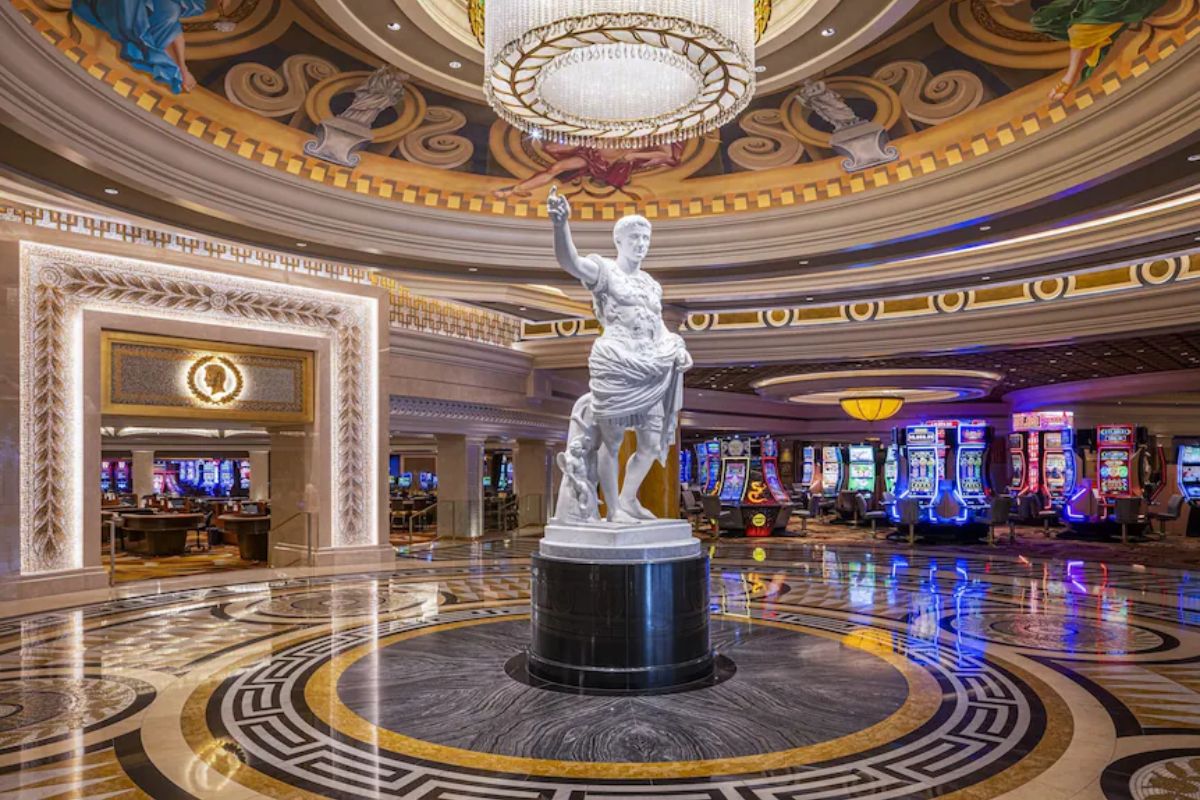
At 60 Years Old, The Ancient Rome-Inspired Resort Expands Its Commitment To Extreme Hospitality On The Las Vegas Strip With 3,980 Rooms And New Presidential Suites Of Up To 778 M², In A Strategy That Combines Memory, Renewal, And Positioning To Remain Relevant Among The Giants Of Worldwide Entertainment In The City Today
The ancient Rome-inspired resort that has shaped Las Vegas’ image reaches 60 years in 2026 with a clear blend of tradition and modernization. At the core of this narrative is Caesars Palace, which maintains 3,980 rooms and has introduced new presidential suites as a showcase of high standards right on the Strip.
The movement is not merely commemorative. It signals how Caesars Palace tries to preserve symbolic value and commercial appeal in a city where constant renewal is part of the business model. The announcement of the new accommodations enhances luxury appeal, but it also serves as a repositioning within a permanent competition for attention on the Strip.
What Changes In The Complex At 60 Years

Upon completing six decades, Caesars Palace reinforces an identity that has always been linked to the imagery of excess in Las Vegas.
-
Friends have been building a small “town” for 30 years to grow old together, with compact houses, a common area, nature surrounding it, and a collective life project designed for friendship, coexistence, and simplicity.

-
This small town in Germany created its own currency 24 years ago, today it circulates millions per year, is accepted in over 300 stores, and the German government allowed all of this to happen under one condition.

-
Curitiba is shrinking and is expected to lose 97,000 residents by 2050, while inland cities in Paraná such as Sarandi, Araucária, and Toledo are experiencing accelerated growth that is changing the entire state’s map.

-
Tourists were poisoned on Everest in a million-dollar fraud scheme involving helicopters that diverted over $19 million and shocked international authorities.


The celebration project includes two new presidential suites on the top floor of the Colosseum Tower, focusing on space, exclusivity, and aesthetics inspired by classic European references combined with contemporary design.
According to reported data, the new presidential suites reach 749 m² and 778 m², with terraces of about 158 m² and a panoramic view of the city.
If connected, they can exceed 1,700 m² in the sum of internal and external areas. This volume helps explain why Caesars Palace maintains visual and commercial prominence even in a market accustomed to frequent launches.
Luxury As A Strategy For Staying On The Strip
The strength of Caesars Palace does not solely depend on the total number of rooms, although the 3,980 rooms are a significant asset for operations, events, and a continuous flow of guests.
The central point is how the ancient Rome-inspired resort transforms anniversary into a product, converting brand memory into new high-standard experiences within the Strip.
In this context, the presidential suites serve a function that goes beyond accommodation. They operate as a symbol, marketing, and differentiation simultaneously.
A private elevator, a lobby inspired by Roman gardens, floor-to-ceiling windows, a double-sided fireplace, a game room, a marble pool table, and terraces with a travertine bar reinforce a narrative of exclusivity that speaks directly to the luxury profile of Las Vegas.
What The New Accommodations Reveal About Caesars Palace’s Positioning
The two presidential suites have similar layouts but distinct styles, with one featuring lighter finishes and the other a darker visual language.
This choice suggests an attempt to broaden reach without breaking the core identity of Caesars Palace, offering aesthetic variation for audiences seeking the same level of privacy and status.
It is also noteworthy that the accommodations are named Presidential Villas, referencing leaders, celebrities, and authorities who have passed through the venue over the decades.
This gesture reinforces the symbolic capital accumulated by Caesars Palace and helps sustain the perception that the ancient Rome-inspired resort still occupies a unique position in Las Vegas, especially when considering the competition on the Strip for premium tourism.
Expansion, Modernization, And The Weight Of The Calendar Until 2027
The new presidential suites do not appear in isolation. The complex also inaugurated 29 Sky Villas in the Octavius Tower, expanding the offering of high-end accommodations alongside the 60th anniversary.
This indicates that the current movement is not merely a one-time celebratory action, but part of a broader plan for modernization.
The reported data also indicate renovations planned until 2027, a new VIP check-in space, and improvements across different towers.
In terms of management, this shows a layered updating strategy, preserving the historical image of the ancient Rome-inspired resort while Caesars Palace tries to maintain relevance in a Las Vegas where novelty has a short lifespan and the Strip requires continuous renewal.
The 60th anniversary of Caesars Palace shows that, in Las Vegas, legacy alone does not sustain prominence for long.
The combination of memory, scale, and luxury renewal helps explain why the ancient Rome-inspired resort remains at the center of the conversation when it comes to high-end hospitality on the Strip.
If you had to choose, what weighs the most in your evaluation of a venue of this caliber in Las Vegas, history, size, location on the Strip, or the visual impact of giant presidential suites?










-

Uma pessoa reagiu a isso.