





 Portuguese
  English
  Spanish
  5 min of reading
  0 comments


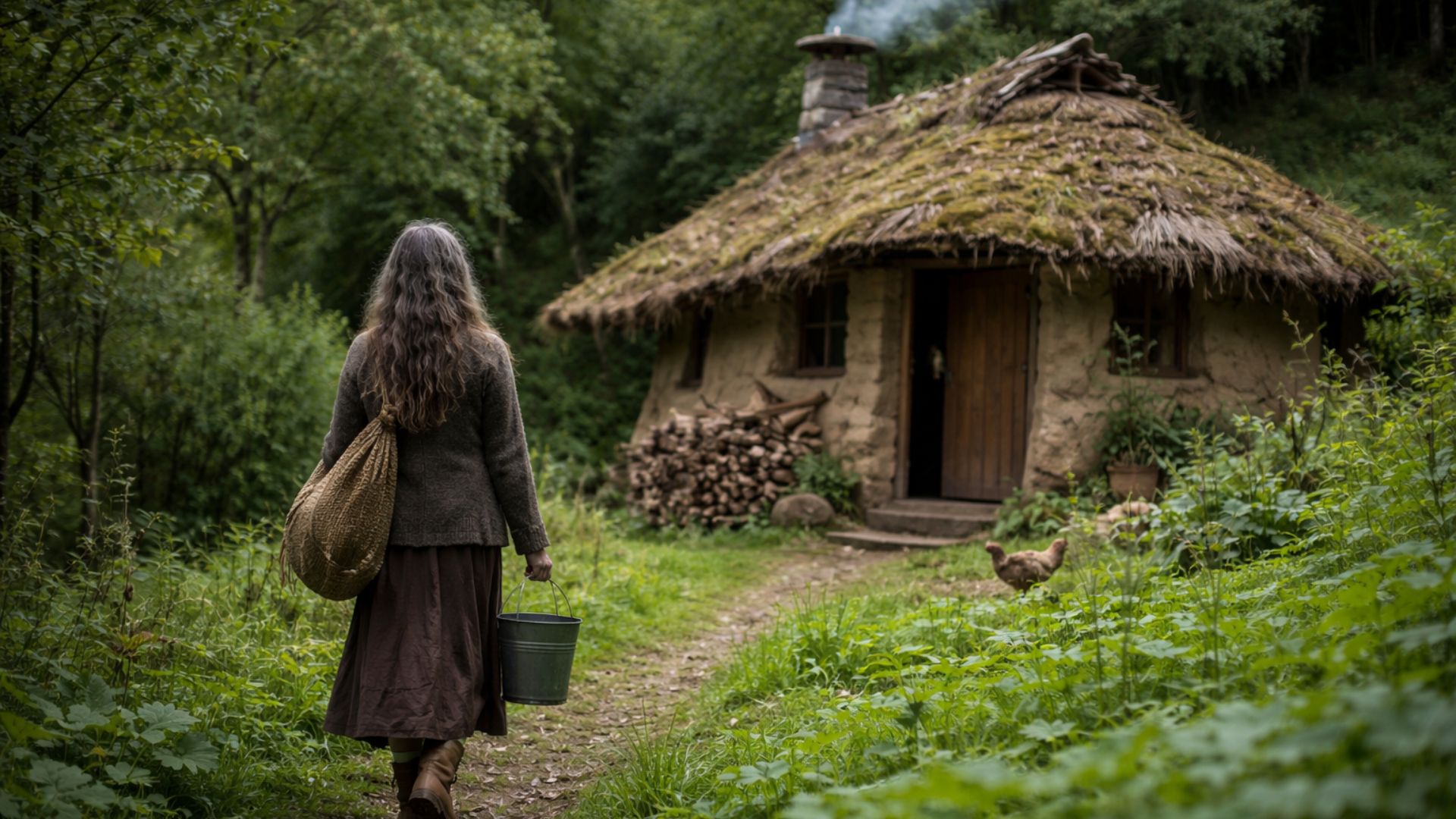
Off-Grid Routine In A Clay Hut In Wales Exposes Low-Impact Housing Choices, Absence Of Basic Services, And Local Debates On Land Use, With Journalistic Records Detailing Daily Logistics And Limitations Of Isolation.
A British woman has drawn attention in the UK following reports and journalistic records about an extended routine in a woodland area in Wales, where she lived without running water and electricity, in a shelter built by her using natural materials and low-impact techniques.
The story is associated with Emma Orbach, noted by various publications as a resident of a clay and straw hut in a rural area of west Wales, living a life marked by few resources and a direct relationship with the environment.
Journalistic Records And Context Of The Story
According to a report from Big Issue, Emma Orbach has been living for decades in clay huts in rural areas of Wales and has been involved, over the years, in debates about low-impact housing and land use amidst disputes and negotiations related to local permissions and policies.
-
Friends have been building a small “town” for 30 years to grow old together, with compact houses, a common area, nature surrounding it, and a collective life project designed for friendship, coexistence, and simplicity.

-
This small town in Germany created its own currency 24 years ago, today it circulates millions per year, is accepted in over 300 stores, and the German government allowed all of this to happen under one condition.

-
Curitiba is shrinking and is expected to lose 97,000 residents by 2050, while inland cities in Paraná such as Sarandi, Araucária, and Toledo are experiencing accelerated growth that is changing the entire state’s map.

-
Tourists were poisoned on Everest in a million-dollar fraud scheme involving helicopters that diverted over $19 million and shocked international authorities.


The outlet describes that she was linked to the formation of an intentional community called Brithdir Mawr in Pembrokeshire and that, at one point in her journey, she began living in simple structures without conventional connections to public services.
Clay Hut And Absence Of Infrastructure

The most recurring mark in the reports about Orbach is the choice for a lifestyle without traditional domestic infrastructure.
A piece by photographer and filmmaker Timothy Allen, published on the Human Planet site, states that she lived in a clay hut in a secluded woodland area in west Wales and that, at that time, she had already been there for over 13 years.
The same report describes the absence of electricity and running water, as well as the use of a composting dry toilet located outside, and the need to fetch water from a nearby stream.
The “Five-Year” Snapshot And What The Sources Confirm
Although the title of this piece highlights a five-year period, the public sources consulted indicate that the described lifestyle has extended for a longer time, exceeding a decade, through different phases.
In this context, the “five-year” snapshot appears as a minimum temporal reference compatible with what has been published.
The duration without electricity and running water has persisted for at least that period, according to journalistic records that situate the experience within a longer timeline.
Press Mentions And Participation In A TV Show
The characterization of the shelter is also consistent across reports.
The Human Planet describes the construction as a “mud hut,” clay hut, in a woodland area, associated with a routine without electricity or running water.
The newspaper The Independent, commenting on an episode of the British program “Ben Fogle: New Lives in the Wild,” mentions Emma Orbach living in Pembrokeshire, in a clay hut in the rural environment, and reproduces statements attributed to her about discomfort with electricity.
The Independent’s text also indicates that, in addition to geographical isolation, there was an active choice to reduce contact with conventional lifestyles.
Daily Logistics Off The Grid

In Timothy Allen’s accounts, daily logistics are tied to repetitive tasks and dependent on local resources.
The author describes walks to collect water from a stream, the presence of fire as a source of heat and food preparation, and a dry toilet located near the hut.
The text also mentions that Orbach kept animals and cultivated food on a small scale, referencing chickens, goats, and a garden, in addition to occasional trips to the nearest village for resupply and other needs.
This part is important because it defines the scope of the term “isolation.”
The body of publications describes a life with low integration into modern infrastructure but does not establish that she remained completely without any contact with other people during the entire period.
“Social Contact” And Limits Of Isolation
The very notion of “social contact,” in this case, appears more as a restriction of daily coexistence than as an absolute disappearance.
The Human Planet states that there were relatively frequent trips to a village and visits to her mother at a certain pace, indicating some degree of interaction.
Still, the descriptions emphasize the fact that the residence was located in a woodland area and that the domestic routine was organized off the grid, with tasks undertaken without support from urban services.
Community, Local Policies, And Housing Debate
Big Issue contextualizes Orbach’s story more broadly, linking the lifestyle in simple structures to disputes and changes related to sustainable housing in Wales.
The publication claims that she lives in Celtic-style houses made from natural materials and that her journey has become connected to discussions about low-impact settlements.
The text also situates her experience within a community environment in Pembrokeshire, originating in the 1990s, and describes a series of events involving land ownership and different forms of occupation.

Why The Case Gained Repercussion
This background helps to understand why the case gained attention beyond the individual aspect.
Although the story is often presented as one of a woman who “left everything” to live in the woods, the records indicate that the experience is part of a local context of alternative living initiatives and attempts to regularize unconventional constructions.
The Human Planet, for instance, mentions that there was a lengthy process with local authorities after the community was discovered in the late 1990s, and that a more favorable policy towards sustainability may have influenced subsequent decisions about permissions.
What The Records Reinforce Consistently
Over time, the story has also circulated through audiovisual products.
The Independent describes her participation in a television program and highlights that she lived in a clay hut in Pembrokeshire, with a set of choices that rejected the presence of common domestic technology.
In this type of record, the routine in a rural environment appears associated with personal decisions, but practical details, such as the absence of electricity and running water, are reiterated as a central feature of the case.









-

-

4 pessoas reagiram a isso.