





 Portuguese
  English
  Spanish
  3 min of reading
  7 comments


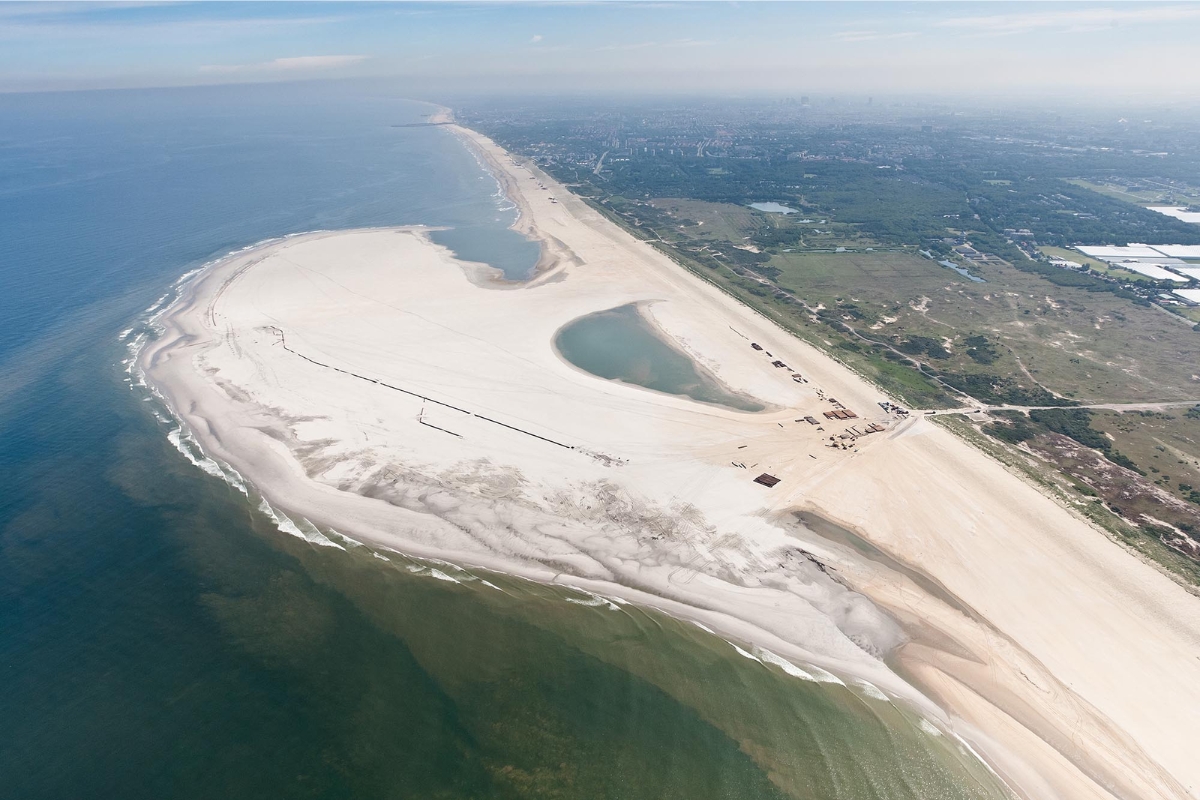


A Project From 2011 Concentrated 21.5 Million M³ of Sand in Delfland So That Waves and Wind Spread the Material and Reinforced the Coastal Strip Over Time
The Netherlands decided to test an unusual approach to protect the coast. In 2011, an artificial peninsula emerged along the coastline with a clear goal: to place a lot of sand in one spot and let the sea redistribute it.
The project became known as Sand Motor, also called Zandmotor. The idea drew attention because it uses the natural movement of the ocean as part of its operation.
Instead of rigid structures along the coast, the strategy concentrates the effort. The practical impact is simple to understand: sand tends to spread gradually, helping to sustain beaches and nourish dunes.
-
Man builds functional 5-meter submarine in his garage using gas cylinders, PVC pipes, and a refrigerator motor, and navigates with the vessel on a lake in Colombia.
-
Millions of people have been eating yam for centuries without knowing that this humble tuber contains a compound called diosgenin, which scientists have now discovered can improve memory and help control blood sugar levels.

-
Scientists from an international project drill 1,800 meters of ice in Antarctica using hot water and discover details about one of the most intriguing places on planet Earth.
-
Seen from space, a colossal volcano nearly 5,000 meters high in Russia has released 1,600 km of smoke over the Pacific, forming “devil’s horns” of lava and revealing the brutal force of the Ring of Fire.


What Happened and Why It Drew Attention
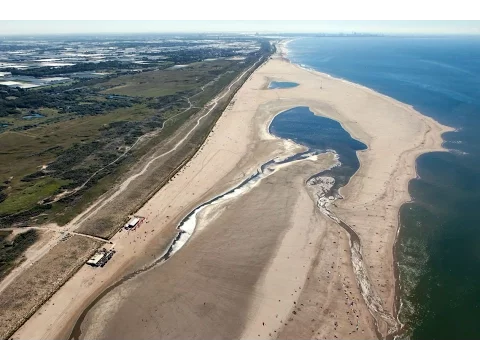
The Sand Motor was constructed as a sand peninsula shaped like a hook. The volume placed at the location was 21.5 million m³, a number that by itself explains why the project gained fame.
The intervention took place in the Delfland region, near The Hague, between Kijkduin and Ter Heijde. The location was chosen to allow currents, tides, and winds to do the redistribution work.
The design was conceived to evolve over time. The peninsula advanced about 1 km into the sea and occupied approximately 2 km along the coast.

How the Idea of Letting the Sea Do the Work Works
The principle is straightforward: the sea moves sand all the time. Waves and currents carry sediments, while the wind helps to push some of this material to form and reinforce dunes.
The project exploits this behavior on a large scale. The deposited sand remains exposed to coastal dynamics, gradually changing shape without relying on constant reshaping with machinery.
This type of solution falls under nature-based actions. In practice, the ocean ceases to be just a threat and instead acts as a distribution agent.
Where the Sand Was Placed and How the Work Was Done
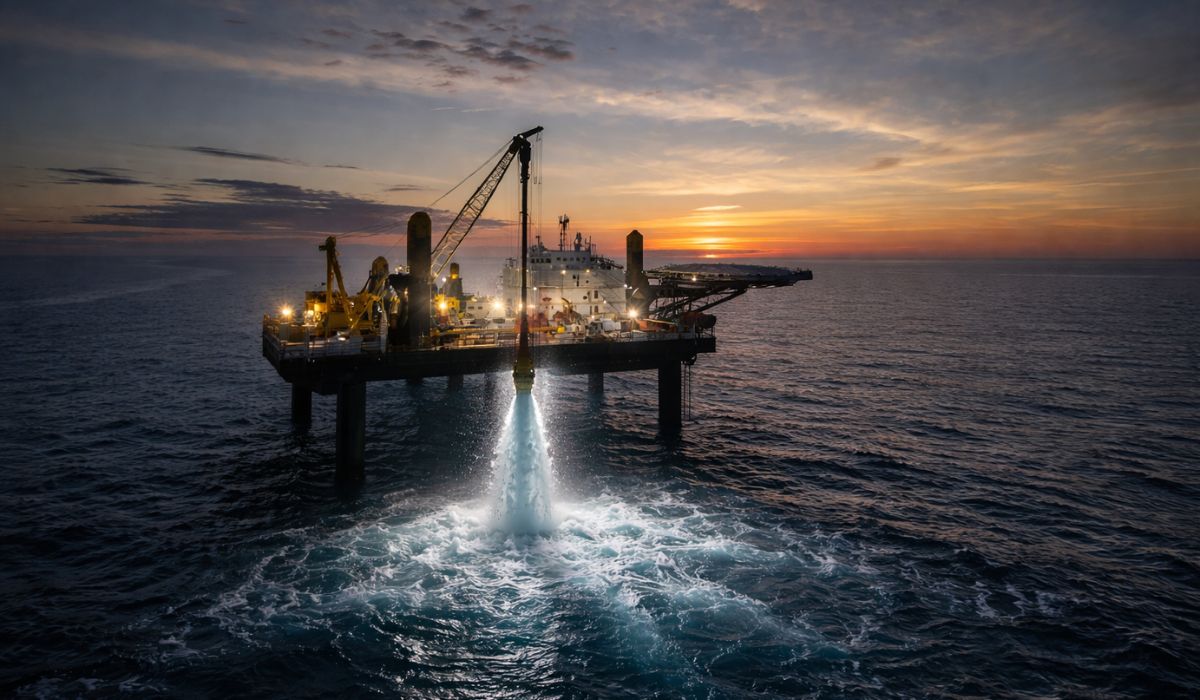
The sand used in the Sand Motor was dredged about 10 km from the coast and deposited near the beach. The concentrated volume creates a kind of reserve that can be gradually spread.
The initial result was a new stretch of land advancing over the sea. Over time, the expectation is that this material will redistribute along neighboring stretches of the coast.
The proposal also opened up opportunities for recreational use. The location gained features of a wide beach, with a striking landscape and a large area open to the public.
Why the Sand Motor Became an International Benchmark
The project became a showcase for combining coastal protection, natural dynamics, and rare scale. The work was not designed to remain in the same shape but to change over the years.
This continuous change helps to test a concept that is of interest to various countries. The idea of concentrating sand and allowing the sea to distribute it can reduce repeated interventions at multiple points.
The Sand Motor also became a monitoring laboratory. Programs like NatureCoast tracked the evolution of the site and its effects on the coast.

What Could Happen From Now On
The central point of the Sand Motor is that it is an evolving project. The peninsula tends to continue changing, with sand redistribution over time.
This behavior keeps the project on the radar for many years. The coast does not stay static, and monitoring helps to understand what works best in real situations.
The experiment reinforced a clear message: in certain scenarios, working with nature can be more efficient than trying to control it.
The Netherlands created an artificial peninsula with 21.5 million m³ of sand for the sea to spread the material and help sustain the coast. The project was born in 2011 and gained prominence for being designed to change over time.
With the Sand Motor, coastal protection increasingly relies less on constant interventions and more on the natural dynamics of the ocean, with continuous monitoring and effects still being observed.





Legal né!
Mas no brasil, têm os brasileiros…
Na Holanda, os holandeses.
Ideia genial.
Veja os vídeos para entender o antes e o depois do projeto