





 Portuguese
  English
  Spanish
  7 min of reading
  0 comments


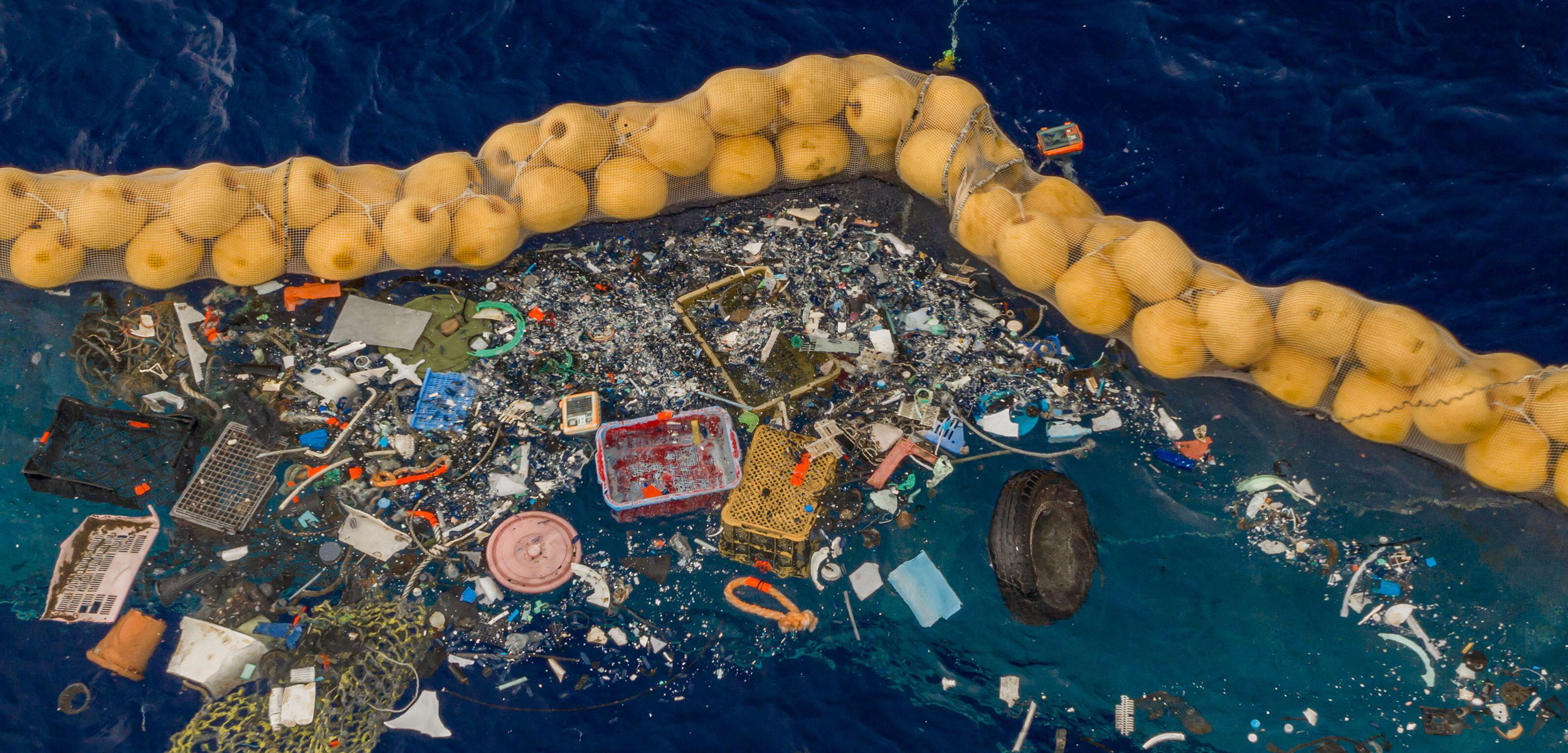
16-Year-Old Boy Shocked by Plastic in the Ocean Creates The Ocean Cleanup and Develops Technology That Uses Ocean Currents to Remove Waste from the Oceans.
Boyan Slat was 16 years old when he dove in Greece in 2011 expecting to see colorful reefs and fish. Instead, he found more plastic bags than marine life. The image shocked him so much that he wondered: why isn’t anyone cleaning this up? The answer was simple. Conventional methods using ships and nets would take 79,000 years and billions of dollars to clean the oceans. Plastic constantly moves with currents. Trying to catch it by sailing behind it is a lost cause from the start.
But Slat had a revolutionary insight at 18. If plastic moves with currents, why not use those same currents to concentrate it? Instead of chasing the waste, let it come to you. Where others saw an impossible problem, he saw an ingenious solution.
He presented the concept in a TEDx talk in 2012 that went viral worldwide. He raised €90,000 in initial funding for a feasibility study. He dropped out of aerospace engineering at TU Delft to dedicate himself fully to the project. He founded the nonprofit organization The Ocean Cleanup in 2013 at just 18 years old.
-
Motorola launched the Signature with a gold seal from DxOMark, tying with the iPhone 17 Pro in camera performance, Snapdragon 8 Gen 5 that surpassed 3 million in benchmarks, and a zoom that impresses even at night.

-
Satellites reveal beneath the Sahara a giant river buried for thousands of kilometers: study shows that the largest hot desert on the planet was once traversed by a river system comparable to the largest on Earth.

-
Scientists have captured something never seen in space: newly born stars are creating gigantic rings of light a thousand times larger than the distance between the Earth and the Sun, and this changes everything we knew about stellar birth.

-
Geologists find traces of a continent that disappeared 155 million years ago after separating from Australia and reveal that it did not sink, but broke into fragments scattered across Southeast Asia.

Subsequent crowdfunding raised €2.2 million from over 40,000 donors in 160 countries. There was no disagreement that the problem needed to be solved. Entrepreneurs from Silicon Valley and Europe contributed tens of millions more, including Marc Benioff, CEO of Salesforce.
Great Pacific Garbage Patch
The initial target was the Great Pacific Garbage Patch (GPGP) between Hawaii and California. It’s the largest concentration of plastic on the planet. Its area is estimated at 1.6 million km² — three times the size of France.
It is not a solid island of trash as many imagine. It is a swirling soup of debris. Ocean currents called gyres trap floating plastics, keeping them circulating in a massive vortex.
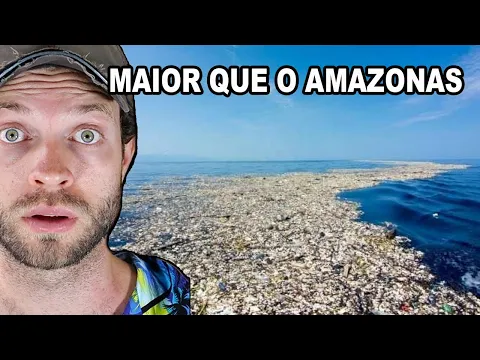

About 80,000 tons of plastic are estimated to be floating in just this patch. More than 1.8 trillion pieces, from microplastics to giant fishing nets. At least 46% of the mass is made up of abandoned fishing nets or “ghost nets” that entangle marine life.
Debris makes 180 times more plastic than marine life at the surface. Animals inevitably ingest plastic along with toxic chemicals. It’s easy to confuse it with food based on size and color. Oceanic plastic makes up 74% of the diet of sea turtles in the patch.
Humans also face risks. Plastic and chemicals ingested by marine life eventually contaminate the human food chain. The problem affects everyone, not just the ocean.
Passive System Using Currents
Slat designed a U-shaped floating barrier that drifts with currents, acting as an artificial coast to collect plastics. The system moves slower than plastic, allowing debris to accumulate.
The initial concept consisted of long barriers anchored to the seabed connected to a central platform shaped like a ray for stability. The barriers would direct floating plastic to the central platform, which would remove it from the water.

The design evolved dramatically over the years. In 2014, they replaced the central platform with a tower detached from the floating barriers that would collect plastic using a conveyor belt. The proposed floating barrier was 100 km long.
The system consists of a giant tube made of durable plastic and a nylon net that does not capture fish. The net can trap small waste up to 1 cm in diameter. A maritime anchor slows the system to create a speed difference between the barrier and plastic.
Years of Failures and Learning
The path to progress was not a straight line. Slat calls the problems “unplanned learning opportunities.” And he had many.
System 001 launched in October 2018 faced difficulties retaining collected plastic. The system captured debris but soon lost it because the barrier did not maintain a consistent speed through the water. In December, mechanical stress caused an 18-meter section to detach. They towed it back to Hawaii for inspection and repair. During two months of operation, it captured only 2 tons.
In June 2019, after four months of analysis and redesign, they launched System 001/B, with a water parachute to slow the system and an extended cork line to hold the net in place. It successfully captured smaller plastics. They reduced the size of the barrier by two-thirds, and it was easier to adjust at sea. However, it still did not adequately capture and retain debris.
The first complete mission (both systems) returned only 60 bags of trash. Many skeptics said it wouldn’t work. But Slat persevered.
July 2021 brought a new design called System 002 nicknamed “Jenny.” Instead of drifting passively, it was actively towed by two ships. In October, they announced that the system had captured 28,000 kg of waste. Real progress at last.
System 03: 2.5 km Barrier
May 2023 marked a definitive turning point. They launched System 03, measuring 2.25 km in length. It includes a retention zone where material is held before being removed from the water, with the mesh size of the net increased from 10 to 15 mm.

The system demonstrated dramatic effectiveness. By 2021, they had collected a total of 7,000 kg. An amount they now collect in a day and a half from the Great Pacific Garbage Patch.
Each system can capture thousands of kilograms of debris in a single operation. Collected plastic includes fishing nets, bottles, boxes, office chairs, plastic forks, and even car tires.
They periodically extract debris and send it back to land for recycling. Collected plastic is not simply discarded. It is recycled into new products, including sunglasses, accessories for electric vehicles, and even the latest vinyl from Coldplay. The products fund the continuation of the cleanup efforts.
50 Million kg Removed
In January 2026, Ocean Cleanup surpassed the verified milestone of 50 million kilograms of waste removed from oceans and rivers worldwide. Approximately the same weight as the Eiffel Tower.
To complete their mission of freeing oceans from plastic, they use a dual strategy. Clean the Great Pacific Garbage Patch to remove plastic already floating, and stop the flow of plastic from the world’s most polluting rivers before it reaches the ocean.
By May 2024, they had removed 10 million kg, equivalent to 10% of the plastic in the Great Patch. The acceleration is dramatic. From 7,000 kg total until 2021 to 50 million by January 2026.
“After many difficult years of trial and error, it’s incredible to see our work starting to pay off, and I am proud of the team that got us to this point,” said Slat. “Although we still have a long way to go, our recent successes fill us with renewed confidence that the oceans can be cleaned.”
Interceptors in Rivers
Research by Ocean Cleanup itself showed that just 1,000 of the most polluted rivers in the world are responsible for about 80% of the plastic that enters the oceans. In fact, only 1% of the world’s rivers are responsible for 80% of ocean plastic pollution.
They found that coastal cities in middle-income countries are primarily responsible. People in these areas have enough wealth to buy things packaged in plastic, but governments cannot afford robust waste management infrastructure.
Slat expanded operations to target key rivers polluting the sea. He developed smaller systems called Interceptors, which are boats deployed in rivers to prevent plastics from reaching oceans.
AI cameras attached to bridges measure the flow of waste in dozens of rivers around the world, creating the first global model to predict where plastic is entering the oceans.
The network of Interceptors currently covers rivers in eight countries, with more deployments scheduled. Combined operations in rivers and oceans demonstrate that Ocean Cleanup is truly doing what its name suggests.
Goal: Clean Everything in 5 Years
Recent successes have led to increasingly ambitious projections. In September 2024, Ocean Cleanup predicted that the patch would be cleaned in 10 years. In April 2025, during a TED talk, Slat updated the estimate.
“This fleet of systems can clean the Great Pacific Garbage Patch in just five years,” he announced. The next step of the project is to use drones to target areas of the ocean with the highest plastic concentration to maximize efficiency.
The ultimate goal is to remove 90% of floating ocean plastic by 2040. This will require a fleet of these systems targeting other garbage patches beyond the Pacific. There are four other similar patches in ocean gyres around the world.
But even that does not stop the problem of new plastic flowing into the ocean. An estimated 14 million tons of plastic ends up in the oceans every year. Projections indicate that the amount entering the oceans could double by 2060 if current trends continue.
“It’s definitely much wiser to prevent it from going into the ocean than to deal with the subsequent consequences,” Slat acknowledges. Work in rivers is as important as ocean cleanup. It’s like draining a bathtub with a leak — you need to turn off the faucet and remove the water.
Slat hopes to see a day when reduced plastic use makes his efforts unnecessary. But he is committed to keeping plastic out of the oceans until that day arrives.
“I believe that in the not-so-distant future we can have cleaned the ocean. And we will look back in dismay today, wondering how we allowed all this plastic to flow into the ocean uninterrupted for so long.”








-

2 pessoas reagiram a isso.