





 Portuguese
  English
  Spanish
  4 min of reading
  9 comments


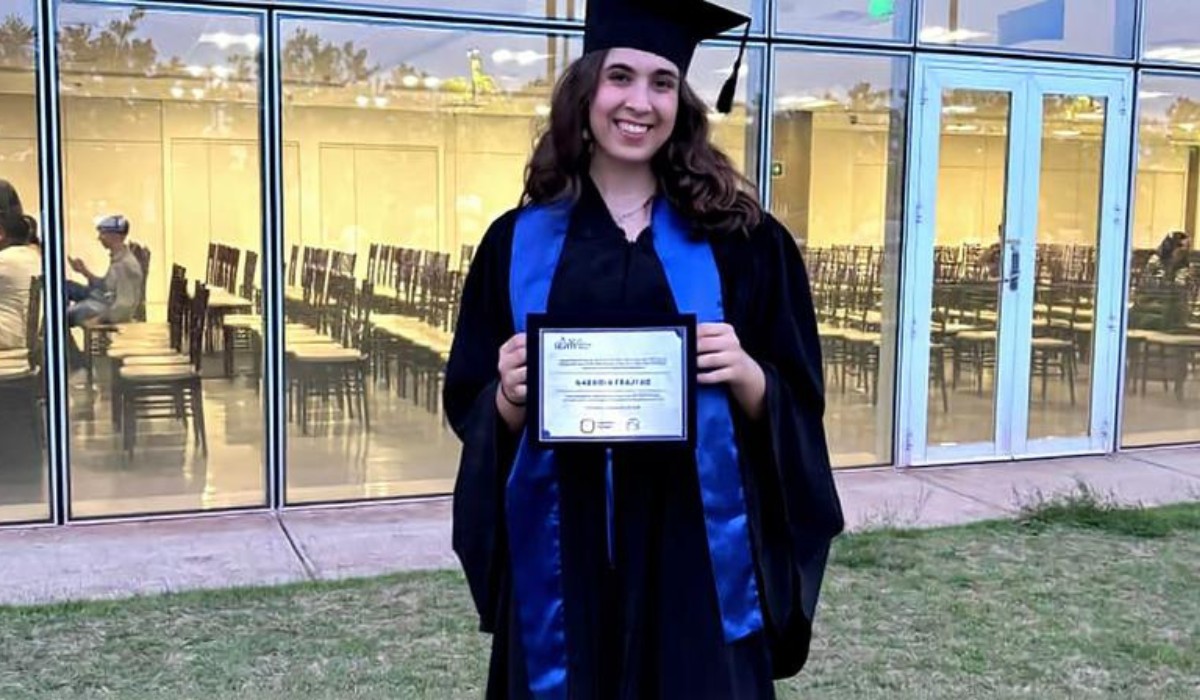


International Recognition Places Brazilian Student at the Center of a Debate That Unites Physics and Biology, with Awards in Dollars and Global Competition of Scientific Essays, While Researchers Try to Measure the Role of Quantum Phenomena in Living Processes.
The carioca student Gabriela Frajtag, 20 years old, was one of the winners of an international competition for scientific articles on Quantum Biology, a field that investigates whether quantum physics phenomena can play a role in processes of living systems.
Recently graduated from Ilum, a college linked to the National Center for Energy and Materials Research (CNPEM), she was the only Brazilian among the winners announced by the organizers.
Promoted by the Foundational Questions Institute (FQxI), in partnership with the Paradox Science Institute and supported by the Pioneering Science program from IDOR, the contest received 97 texts from participants across six continents, including academics, doctors, scientists, and students.
-
Motorola launched the Signature with a gold seal from DxOMark, tying with the iPhone 17 Pro in camera performance, Snapdragon 8 Gen 5 that surpassed 3 million in benchmarks, and a zoom that impresses even at night.

-
Satellites reveal beneath the Sahara a giant river buried for thousands of kilometers: study shows that the largest hot desert on the planet was once traversed by a river system comparable to the largest on Earth.

-
Scientists have captured something never seen in space: newly born stars are creating gigantic rings of light a thousand times larger than the distance between the Earth and the Sun, and this changes everything we knew about stellar birth.

-
Geologists find traces of a continent that disappeared 155 million years ago after separating from Australia and reveal that it did not sink, but broke into fragments scattered across Southeast Asia.
In total, eight authors were awarded and shared US$ 53 thousand, an amount that has been cited as equivalent to about R$ 300 thousand.
Gabriela received the Special Graduation Award, worth US$ 3 thousand, reserved for those who submitted work while still in their undergraduate studies.
According to the organization, the top three winners accounted for 80% of the total amount distributed in this edition.
What the Brazilian Essay Says
Gabriela’s awarded article is titled “The Quantum of Biology: History and Future.”
In the text, she presents a historical overview of the debate on quantum biology and discusses paths indicated in the literature for advancing the field.
One of the central ideas of the essay is what the author calls “quantum of biology.”
She describes the concept as the minimum set of quantum resources that a living system would need to generate or exploit to gain some adaptive advantage, within a theoretical approach.

In institutional material released by CNPEM, Gabriela stated that she did not expect to win and commented on the impact of the result on her trajectory.
“Winning an international award was a big surprise. It is something that will not only add to my career but also makes me believe more in my capacity as a scientist,” she said.
The Debate on Quantum Biology and the Questions of the Field
Quantum biology brings together hypotheses and studies that seek to verify whether quantum effects, such as those observed at atomic and subatomic scales, can influence biological processes.
Researchers working on the subject discuss, among other points, which conditions would allow certain effects to persist in biological environments, marked by temperature, interactions, and noise.
The competition itself was presented by the organizers as an initiative to gather proposals and interpretations regarding the question that guided this edition: “How Quantum is Life?”, framed in English as the theme of the contest.
According to FQxI’s scientific director, David Sloan, the awarded texts help to map approaches and indicate questions that still depend on investigation.
Within this scope, Gabriela’s essay was recognized in the category aimed at undergraduates and was included in the list of winners alongside authors affiliated with institutions and professional activities in various countries.
From Schrödinger’s Influence to the International Year of Quantum
The connection between physics and biology gained an important reference in 1944 when Austrian physicist Erwin Schrödinger published the book “What Is Life? The Physical Aspect of the Living Cell.”
The work is known for discussing how principles of physics could help to think about fundamental characteristics of life during a time when modern genetics was still being formed.
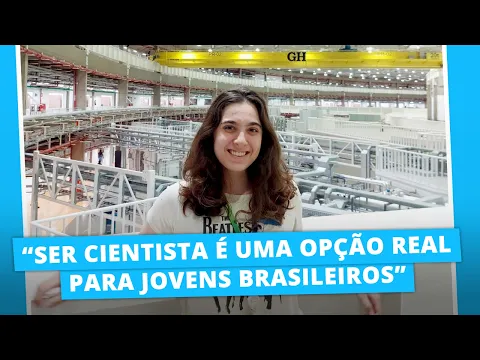

Schrödinger is one of the names associated with the development of quantum mechanics and formulated the equation that bears his name in 1926.
The debate around a possible role of quantum phenomena in living systems has gained attention at various points throughout the twentieth century and continues as an interdisciplinary research agenda.
In this context, 2025 was declared by the UN, under the auspices of UNESCO, as the International Year of Quantum Science and Technology, in reference to the centenary of milestones associated with the development of quantum theory.
Who Organizes the Award and Who Came Out on Top
The Foundational Questions Institute was created in 2006 by physicists Max Tegmark and Anthony Aguirre.
According to the institute itself, the organization funds exploratory research on fundamental topics in physical sciences and states that it has granted over US$ 29 million in support and scholarships for projects in different areas.
In the main award of the competition, there was a tie for first place.
The winners were Samuel Morriss, a doctor in Australia, and Connor Thompson, a PhD student at the University of British Columbia in Canada, according to the list disclosed on the official competition page.
In addition to the top winners, the organization announced other awardees with second and third places and honorable mentions.
The selected authors shared the total amount allocated for this edition, with differentiated distribution among categories.
Gabriela, in turn, completed her degree in Science and Technology at Ilum in December 2025, according to the institution, and participated in the competition as an undergraduate student.
With the result, she became a winner in an international competition that gathers participants from different profiles and fields.







Ah? È para Ingles ver!!!
Não querendo se meter onde não fui chamado, mas Erwin Schrödinger, vinculou a física quântica a biologia em uma proposta mental, seria a mesma coisa que eu ter um sensor de ondas gravitacionais e se ela captasse uma movimentação de um buraco negro ligasse uma bomba em Nova Iorque assim que explodisse poderia matar um monte de gente, fenômenos quânticos afetaria a biologia.
Esse assunto é tão difícil, que até agora não entendi o que ela descobriu! Preciso de desenho!!!!