





 Portuguese
  English
  Spanish
  4 min of reading
  0 comments


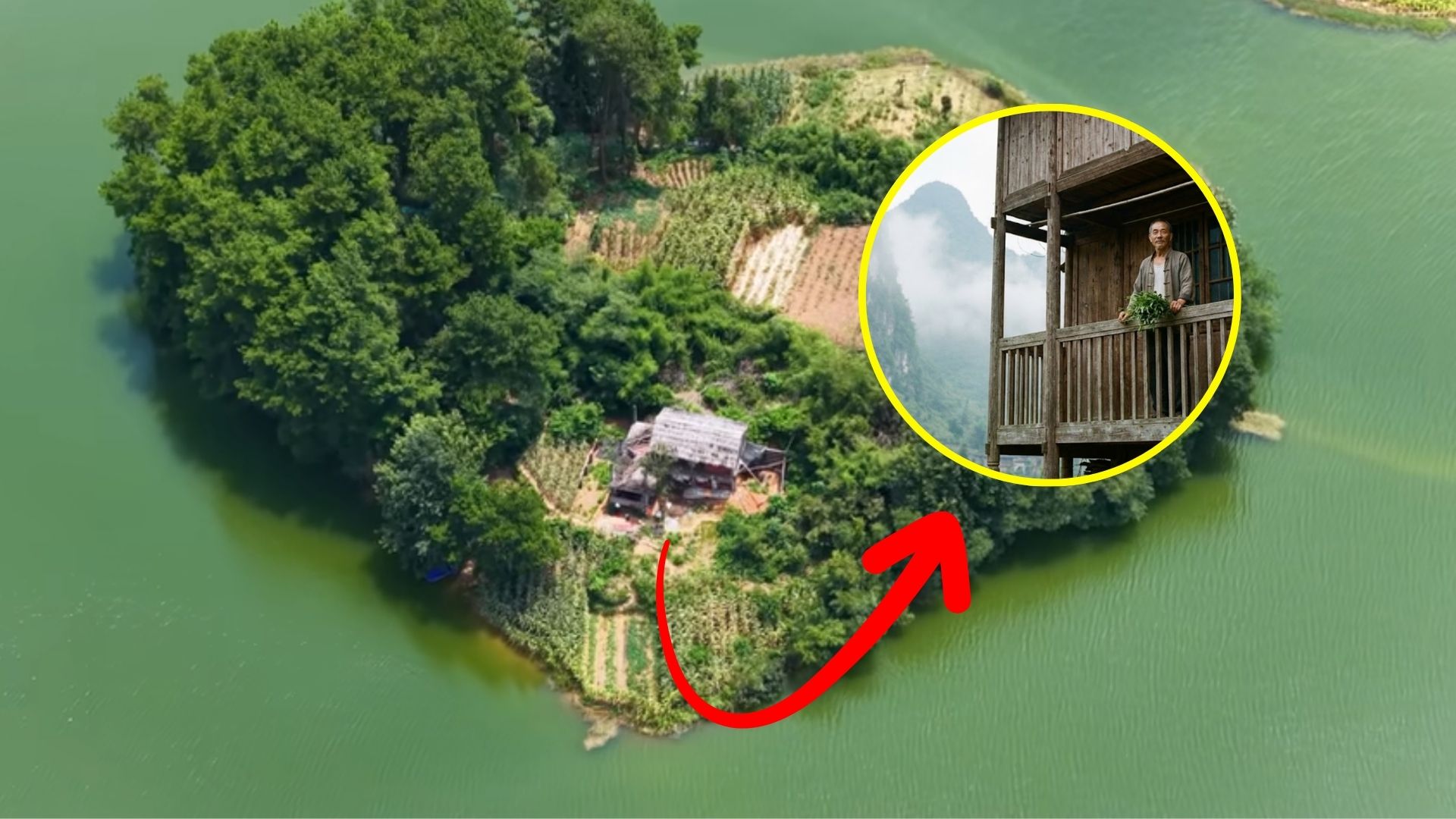
Lonely Life on Guizhou Island Reveals Self-Sufficiency Routine, Cultivation of Rare Herbs and Animal Breeding in Reservoir Protected by Strict Environmental Rules in China.
A 62-year-old farmer, known as Uncle Wu, lives alone on a small island in a reservoir in Guizhou province, in southwestern China, where, according to recently published reports, he maintains a routine of planting, raising animals, and rowing due to restrictions on motor usage.
The same publications describe that the island is about 5,300 m² and is surrounded by waters that reach approximately 10 meters deep, which makes daily logistics slower and physically demanding, especially when he needs to fetch supplies from the shore.
Although the texts indicate a ban on motorized boats in the area, the information fits into existing rules in Guizhou for source protection areas, where the use of fuel-powered boats may be prohibited to reduce the risk of water contamination.
-
Friends have been building a small “town” for 30 years to grow old together, with compact houses, a common area, nature surrounding it, and a collective life project designed for friendship, coexistence, and simplicity.

-
This small town in Germany created its own currency 24 years ago, today it circulates millions per year, is accepted in over 300 stores, and the German government allowed all of this to happen under one condition.

-
Curitiba is shrinking and is expected to lose 97,000 residents by 2050, while inland cities in Paraná such as Sarandi, Araucária, and Toledo are experiencing accelerated growth that is changing the entire state’s map.

-
Tourists were poisoned on Everest in a million-dollar fraud scheme involving helicopters that diverted over $19 million and shocked international authorities.


Adapted Housing on Isolated Island in China

According to the descriptions, the resident found an abandoned house and transformed it into a functional two-story building, adapted to store tools, keep part of the harvest, and maintain a stove fueled by wood collected from the area.
Similarly, the reports indicate that he organizes his time between maintenance tasks of the house, soil care, and water management around, utilizing local resources to reduce waste and depend less on frequent trips to the mainland.
Cultivation of Food and Medicinal Herbs in Guizhou
The agricultural routine described includes the cultivation of corn, beans, pumpkin, and sweet potatoes, items used both for consumption and as feed for the animals, which helps sustain the production cycle during longer periods of stay.
In addition to these crops, the publications mention seasonal harvests, such as watermelon and bamboo shoots, identified as foods that are included in the diet when available, alongside other plants maintained in beds and cultivation strips near the house.
However, the main difference narrated lies in the medicinal herbs, treated as a future income axis, with mentions of species and products valued in regional markets, although the texts do not detail production volume or marketing channels.

Among the items mentioned is cordyceps, along with other plants referred to by common names or transliterations, and the described process involves collection, separation, and manual preparation, done according to the availability of time and raw materials throughout the year.
Breeding Pigs and Birds as Sustenance
In animal husbandry, reports state that he keeps three local black pigs, fed with a mix prepared from corn and cooked grass, as well as a group of more than 20 birds, including ducks and geese, free on the shore.
Chickens are also mentioned, used for egg and meat production, which complements food and reduces the need for purchases, and the described routine requires daily preparation of feed and constant surveillance to prevent losses.
Meanwhile, the freedom of movement for the animals is presented as part of the management, with the reservoir functioning as a natural barrier, although the texts do not inform whether there are fences, specific shelters for inclement weather, or occasional veterinary assistance.
Rowing and Environmental Restrictions


To move around, the story highlights that the resident rows long distances by oar, carrying supplies and tools on the boat, a direct consequence of the limitations on motor use and the need to maintain periodic contact with the shore.
The reference to the restriction gains context because local regulations may prohibit fuel-powered vessels in water protection areas intended for consumption, seeking to reduce leaks and pollution, although each reservoir has its own rules.
In the daily life of the house, the use of a small lamp or solar panel to charge the cellphone is described, with unstable signal, which would allow watching short videos and maintaining occasional contact with family members in another city.
On the other hand, publications point out that the absence of modern infrastructure imposes simple choices, such as always cooking with firewood and adapting work schedules to daylight, without detailing, however, access to medical care, treated drinking water, or regular waste collection.
Isolation, Natural Risks and Future Plans
Isolation, according to the reports, includes attention to natural risks, such as the presence of snakes on nearby islands and caution when navigating in deep waters, in addition to a preference for the milder climate of the region, noted as a comfort factor.
Still, the planning described goes beyond immediate survival, as he intends to replace common trees with fruit-bearing species to increase productivity over time, seeking to diversify harvests and reduce external dependence.
With this scenario in mind, what kind of conversation can this story open about aging, rural work, and housing choices when a man decides to organize his life around self-sufficiency and isolation in a reservoir?









-

-

-

9 pessoas reagiram a isso.