





 Portuguese
  English
  Spanish
  5 min of reading
  3 comments


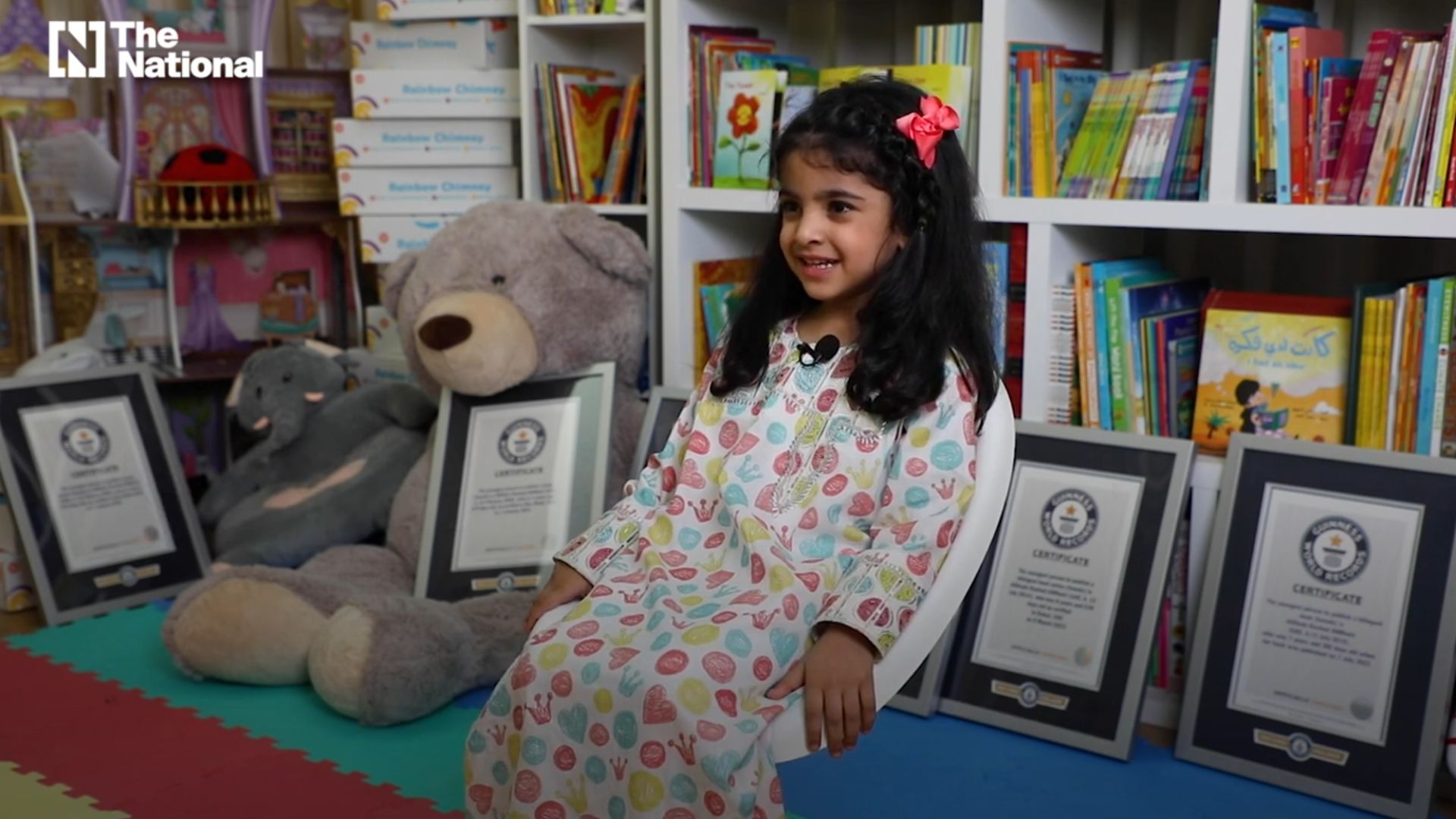


Registered Mark in the United States Put a 3-Year-Old in the Guinness World Records After Publication of 42-Page Children’s Book and Expanded Discussions About Precocious Talent, Digital Exposure and Limits of Public Visibility in Early Childhood.
A three-year-old girl in the United States entered the Guinness World Records after having a book published, thus becoming the youngest holder of the title in the female category, a milestone that once again brought the issue of child exposure on social media into the spotlight.
The recognition is attributed to Sarvia Hasan, listed by Guinness as the “Youngest Person to Publish a Book (Female),” with an age recorded as “3 years and 63 days” at the time the achievement was officially verified.
The validation was recorded in Springfield, Illinois, and Guinness points out that the date associated with the record is November 10, 2025, emphasizing that the category is linked to the act of publishing a work, not to a medical or pedagogical assessment.
-
Friends have been building a small “town” for 30 years to grow old together, with compact houses, a common area, nature surrounding it, and a collective life project designed for friendship, coexistence, and simplicity.

-
This small town in Germany created its own currency 24 years ago, today it circulates millions per year, is accepted in over 300 stores, and the German government allowed all of this to happen under one condition.

-
Curitiba is shrinking and is expected to lose 97,000 residents by 2050, while inland cities in Paraná such as Sarandi, Araucária, and Toledo are experiencing accelerated growth that is changing the entire state’s map.

-
Tourists were poisoned on Everest in a million-dollar fraud scheme involving helicopters that diverted over $19 million and shocked international authorities.


42-Page Children’s Book Published in Springfield
The publication mentioned in the record appears with the title “Sarvia and Her Little World” and is presented in sale and bibliographic catalogs as a children’s book with 42 pages, linked to the label “Sarvia Books.”
In the description of the volume, the work is presented as a collection of stories and illustrations aimed at young readers, featuring elements such as family, friendship, nature, animals, and everyday situations, along with typical imaginary characters of this type of narrative.

As often happens in viral cases, the existence of a concrete object, with a cover, name, and editorial data, helps to transform the record into easily shareable content, from social media snippets to articles on local websites.
Guinness World Records and Validation Criteria
In the introductory text from Guinness, Sarvia is described as a child born prematurely, and the organization associates the recognition with traits such as imagination and verbal and creative skills, in a brief profile that usually accompanies this type of title.
According to this introduction, the family reports that they see the achievement as a way to inspire others, a narrative that often appears in early childhood records by combining overcoming challenges, public curiosity, and a milestone with institutional endorsement.
This “stamp” is central to the repercussion because Guinness serves as a certificate of authenticity for many readers, accelerating the circulation of the case in different countries, even when the complete context is lost in the speed of sharing.
Precocious Talent and Development in Early Childhood
The biography associated with the record mentions that Sarvia began creating stories before turning three, presenting the child as a bilingual narrator, referencing Bangla and English in accounts made at home.
When these details enter the public narrative, they often broaden the subject’s reach by adding cultural and linguistic layers, but they can also induce hasty comparisons, as if a record equates to a universal standard of development.
Educators and early childhood specialists, in turn, often remind us that learning and well-being are linked to daily interactions, emotional security, and appropriate stimuli, rather than to an isolated performance milestone, no matter how extraordinary it may seem.

At the same time, stories of “precocious talent” tend to shift the focus onto performance and the rarity of the achievement, while the child’s everyday life, with play, rest, and routine, may take a back seat in the way the case is consumed.
Right to Play and Limits of Public Exposure
In discussions about childhood and exposure, the reminder that the Convention on the Rights of the Child recognizes the right to rest, leisure, and age-appropriate play, as well as participation in cultural and artistic activities, often comes up.
This point is often cited to reinforce that public recognition and preservation of childhood can coexist, as long as the environment avoids turning a one-time achievement into a permanent agenda of commitments, appearances, and expectations.
When an achievement becomes global news, the interest in interviews and new content can grow rapidly, especially on platforms that reward frequency and novelty, and it is in this transition that debates about limits and protection arise.
Digital Footprint of Children and Debate on Sharenting
The viral nature of records involving children almost always comes with images, videos, and personal data that start circulating on a large scale and, often, remain accessible for an indefinite period, even when public interest declines.
UNICEF treats “sharenting” as the practice of parents and guardians sharing content about their children on the internet and warns of the need for conscious decisions that consider privacy, safety, and respect for the child’s perspective regarding what should or shouldn’t be exposed.
In guidelines from pediatric organizations in the United States, recommendations often include family conversations about media, defining household rules, and creating usage plans, with attention to the long-term impact of digital presence.

The logic behind these guidelines is that online identity is not neutral, it accumulates records over time and can generate future consequences that the child did not choose, which makes exposure especially sensitive when they are not yet in a position to consent.
Recognition, Opportunities, and Family Responsibility
The case of Sarvia Hasan combines very young age, official title, and a cultural product available to the public, a combination that can open legitimate opportunities in the editorial and educational fields, provided that the interest is managed carefully.
The line that separates celebration from pressure tends to become thinner when external attention begins to dictate pace, set expectations, and stimulate a cycle of “next achievement,” fueled by engagement and the constant search for novelty.
Even with the endorsement of Guinness confirming the record, the organization does not define how the story should be told nor how long the child needs to remain in the spotlight, shifting the responsibility to the family, school, and support networks.
If public curiosity tends to be immediate and intense, digital marks can be lasting, and the question that arises is: what should be the practical limit to celebrate a real achievement without turning childhood into a continuous and irreversible showcase?









Kkkkk
Ué!… Não era um menino de 4 anos que tinha acabado de realizar esse mesmo feito?
Esse categoria (não sei quanto às outras), que seleciona o mais jovem a publicar um livro de sua autoria, é separada pelo sexo (homem ou mulher). Pode ler a matéria novamente que nela está especificado esse detalhe.