





 Portuguese
  English
  Spanish
  7 min of reading
  0 comments



Sample From Asteroid Bennu Brought Back By OSIRIS-REx Mission Reveals Minerals And Compounds That May Explain How Water Arrived In Earth’s Oceans Billions Of Years Ago.
In September 2023, a capsule from the NASA mission OSIRIS-REx fell parachuting into the Utah desert at 43,450 kilometers per hour. During reentry into the atmosphere, the capsule’s heat shield reached around 2,900 °C over 13 minutes of descent. Inside, packaged in vacuum conditions to avoid any earthly contamination, were 121.6 grams of material collected seven years earlier from the surface of asteroid Bennu, located about 330 million kilometers from Earth.
The capsule brought back the largest sample ever collected from a carbon-rich asteroid in the history of space exploration. The material was immediately transported to specialized laboratories in the United States, where scientists began to analyze its mineral and chemical composition. What they found inside the capsule changed the way researchers interpret Bennu — and also raised new hypotheses about the origin of water in Earth’s oceans.
Asteroid Bennu And The Potential Impact Risk With Earth
The asteroid Bennu is approximately 565 meters in diameter and has an orbit that regularly crosses Earth’s orbital path. For this reason, it is classified by NASA as a potentially hazardous object, although the actual risk of impact is very small.
-
ZCC 11000 crane lands at the port of Vitória and heads to Ceará in a convoy with 64 trailers: Zoomlion, founded in 1992, builds a monster that lifts over 600 compact cars to 93 m.

-
The biggest drama of being born on Mars is not breathing: Rice biologist says that colonists’ children may cease to be Homo sapiens, shaped by low gravity, radiation, and isolation that divides humanity.

-
With no separate outdoor unit and designed to fit in the window, monoblock air conditioners used in Japan emerge as an alternative for those who cannot install a split system in a rented apartment.

-
China prepares a 78,000-ton pilotable floating island for deep-sea research: it accommodates 240 people for months, withstands category 17 typhoons and 9-meter waves, and uses metamaterials that dissipate nuclear explosions.


Orbital models indicate a collision probability of about 1 in 2,700 between the years 2175 and 2199. Although this probability is low, Bennu remains among the most monitored asteroids in the Solar System.
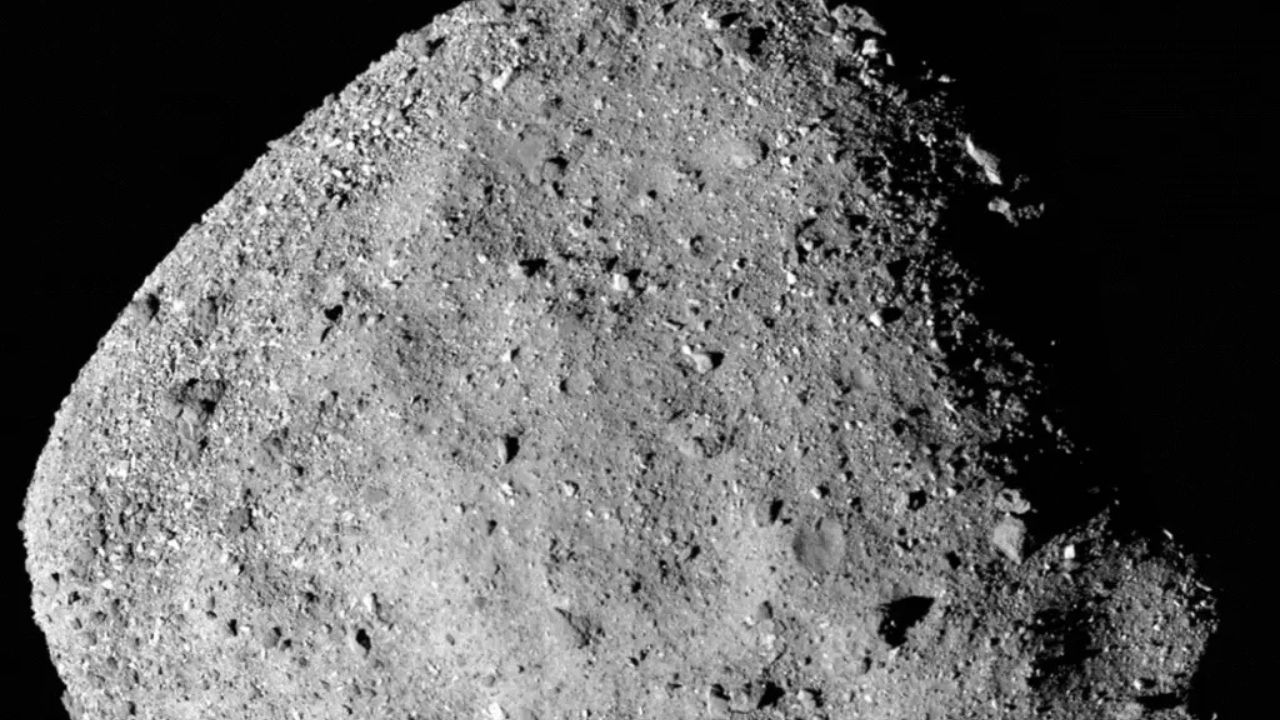
The OSIRIS-REx mission was launched with two main objectives: to study in detail the structure and chemical composition of the asteroid and to collect material directly from its surface for analysis on Earth. By better understanding the composition of these celestial bodies, scientists can develop more effective strategies for future asteroid deflection missions.
The spacecraft traveled approximately 6.2 billion kilometers over the course of the mission, arrived at Bennu in 2018, and spent about two years mapping the asteroid’s surface with high-precision instruments. In October 2020, the spacecraft conducted a brief collection operation: it fired gas nitrogen against the asteroid’s surface, lifting particles that were sucked into the collection mechanism.
When the capsule returned to Earth and was opened at the Johnson Space Center in Houston, scientists had their first surprise. There was so much material trapped in the collection system that the removal process took weeks. In the words of the mission curator, it was “the best problem to have”. But the biggest surprise was yet to come.
Clay Minerals Found In Bennu Indicate Ancient Presence Of Water
The initial analysis revealed that the sample from Bennu is composed mainly of clay minerals. This result was not unexpected. Carbonaceous asteroids of type C, the category to which Bennu belongs, often exhibit clays formed by the reaction between water and silicates. What surprised researchers was the specific type of clay found.
Among the identified minerals is serpentine, a compound that forms when water reacts with rocks from the interior of planetary bodies. On Earth, this process occurs mainly at mid-ocean ridges, submerged mountain ranges that stretch across the ocean floor where mantle rocks come into contact with seawater.
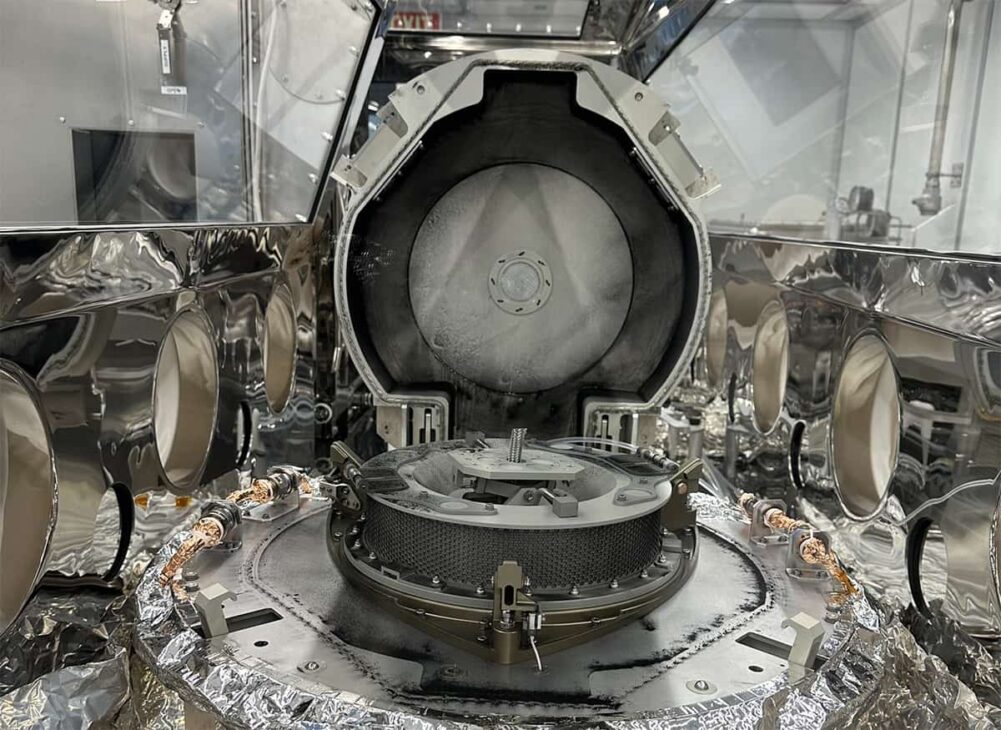
Serpentine constitutes a significant portion of Earth’s oceanic crust. Finding this mineral in a relatively small asteroid like Bennu raised an immediate question: how could a body only 565 meters in diameter have developed the necessary temperature and pressure conditions to form this mineral?
The most plausible hypothesis is that Bennu is not a primary asteroid, but rather a fragment of a much larger body. Researcher Dante Lauretta, scientific lead of the OSIRIS-REx mission and professor at the University of Arizona, summarized the interpretation succinctly: Bennu “may have been part of a much wetter world” in the past.
Phosphates Found In Bennu Suggest An Ancient Aqueous Environment
The most unexpected discovery emerged during more detailed analyses of the chemical composition of the sample. Researchers identified magnesium and sodium phosphate, compounds that had not been previously detected by remote observations made by the spacecraft in orbit.
Phosphates are minerals that typically form in environments with abundant liquid water and in chemical equilibrium with rocks over long periods. On Earth, these compounds are present in oceanic environments and are fundamental to the biochemistry of life. Phosphate-based molecules are part of essential structures such as DNA, RNA, cell membranes, and ATP, the molecule responsible for transporting energy within cells.
The presence of magnesium and sodium phosphates in Bennu’s rocks — in larger and purer crystals than those found in the asteroid Ryugu by the Japanese mission Hayabusa 2 — suggests that the material formed in a relatively stable aqueous environment.
This reinforces the hypothesis that Bennu may be a fragment of the crust of an ancient water-rich planetary body, possibly destroyed by collisions about 4.5 billion years ago, during the early stages of the Solar System’s formation.
Samples From Asteroid Ryugu Reinforce Evidence Of Water In Primitive Bodies
While American laboratories were analyzing samples from Bennu, Japanese scientists had already studied material collected by the Hayabusa 2 mission from asteroid Ryugu. Ryugu is about 900 meters in diameter and also has an orbit that crosses Earth’s path. The Japanese mission brought back 5.4 grams of material, collected in 2019 and delivered to Earth in December 2020.

The analyses revealed clays, complex organic molecules, amino acids, and compounds formed in the presence of liquid water.
A study published in Nature in September 2025 brought an even more surprising discovery. By analyzing radioactive isotopes of lutetium and hafnium in the rocks of Ryugu, researchers concluded that liquid water circulated within the parent body of the asteroid for much longer than previously thought.
According to the proposed model, an impact with a larger body fractured the rocks and melted ice within the asteroid. The released liquid water began circulating within the body for at least one billion years after the formation of the Solar System. This finding contradicts earlier models that suggested water in asteroids would have existed only in the early moments of the Solar System’s formation and evaporated quickly.
Researcher Tsuyoshi Iizuka, one of the study’s authors, explained that the discovery alters the understanding of the fate of water in these celestial bodies. According to him, water may have remained active within asteroids for much longer periods than previously thought.
Complex Organic Compounds Found In The Bennu Sample
In addition to water-bearing minerals, the Bennu sample revealed a chemical composition rich in organic compounds. Carbon accounts for nearly 5% of the total mass of the sample, present in both mineral and organic forms. Researchers also found abundant ammonia, amino acids, and simple sugars, molecules considered fundamental for the metabolic processes of life.
Another curious material identified was a polymer rich in nitrogen, carbon, and oxygen, informally nicknamed by scientists “space gum”. This compound appears to have initially been soft and hardened over time, possibly formed by chemical reactions between ammonia and carbon dioxide under intense space radiation.
Evaporitic minerals, which form when highly saline water evaporates, were also identified. These minerals are extremely rare in meteorites found on Earth because they typically dissolve or degrade during atmospheric entry and contact with the terrestrial environment.
Scientist Bethany Ehlmann from the University of Colorado highlighted that some of these minerals had never been observed in meteorites, which was only made possible thanks to direct collection in space and transport under completely controlled conditions by the OSIRIS-REx mission.
What The Bennu Samples Reveal About The Origin Of Water On Earth
The hypothesis that part of Earth’s water was delivered by asteroids and comets has existed for decades. The new analyses of the Bennu and Ryugu samples offer direct evidence that reinforces this theory.
Earth formed relatively close to the Sun, in a region where initial temperatures were too high to allow the accumulation of large amounts of water. Many models indicate that the planet began its history relatively dry.
The water that today covers more than 70% of Earth’s surface likely arrived later, transported by bodies coming from cooler regions of the Solar System, beyond the so-called snow line, where temperatures allow water to exist in solid form. Carbonaceous asteroids like Bennu and Ryugu formed in these outer regions and were subsequently pushed into more inner orbits by gravitational disturbances.
During the so-called late heavy bombardment period, about 3.9 billion years ago, these bodies impacted the Earth in large numbers, bringing not only water but also complex organic molecules.
According to Dante Lauretta, Earth’s habitability is directly linked to this process. The water present today in oceans, lakes, and rivers may have been partially delivered by carbon-rich asteroids like Bennu.
The Analysis Of The Bennu Samples Is Still Just Beginning
NASA has decided to preserve about 70% of the sample collected from Bennu for future analyses, following a practice initiated during the Apollo missions, which brought back rocks from the Moon.
New laboratory techniques are constantly emerging, and preserving part of the material allows scientists in the coming decades to study these samples with even more advanced technologies. The next steps include direct comparisons between the Bennu and Ryugu samples, using high-resolution X-ray instruments at the Brookhaven National Laboratory.
Researchers also intend to accurately determine the age of the phosphates found in the rocks and search for additional evidence of the ancient aqueous environment that may have existed in the planetary body that originated Bennu.
Each gram of this material represents a chemical record preserved for 4.5 billion years. For scientists, analyzing these particles is like deciphering extremely ancient messages about the formation of the Solar System and possibly about the very origin of life on Earth.








Seja o primeiro a reagir!