





 Portuguese
  English
  Spanish
  4 min of reading
  0 comments


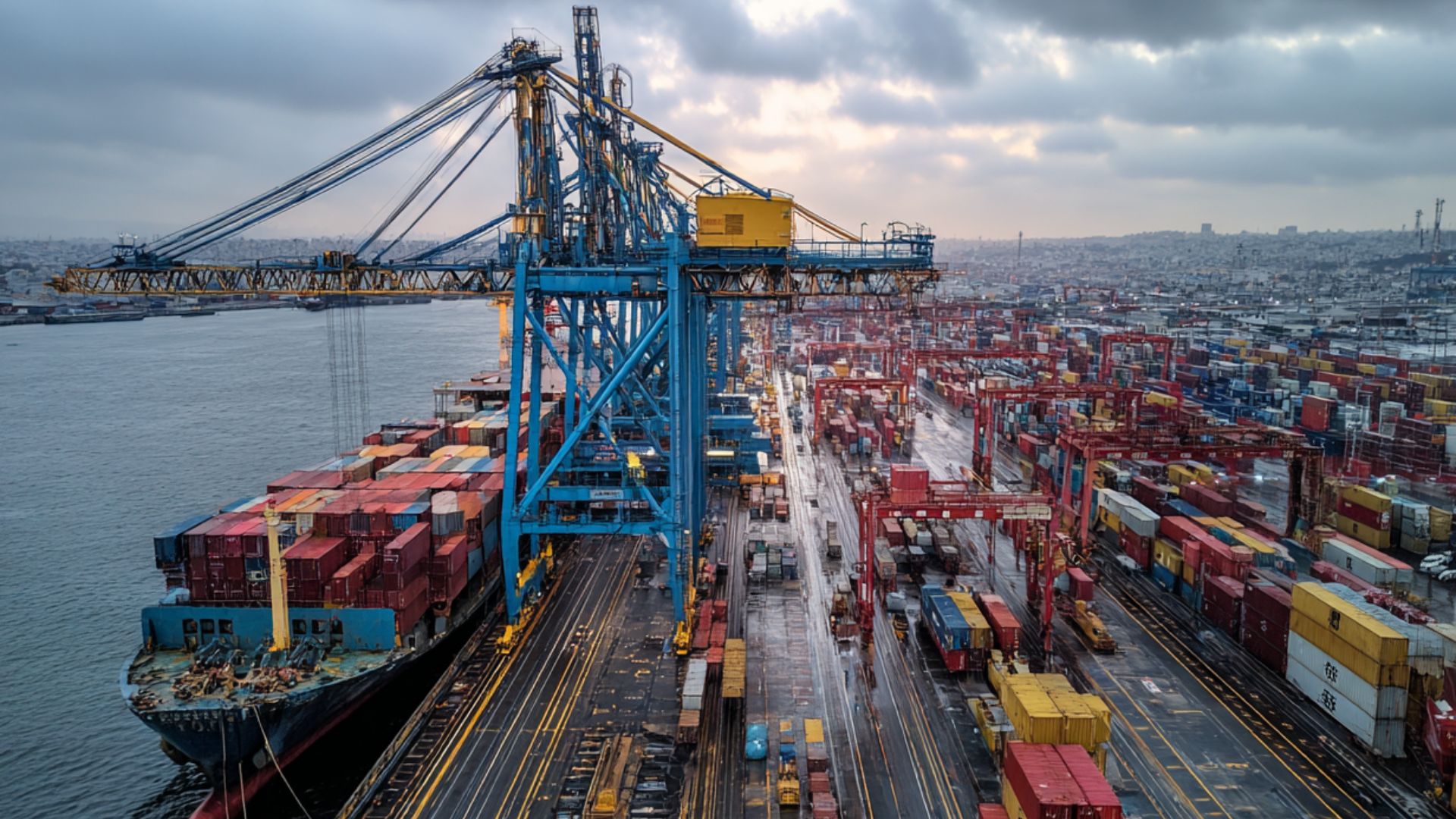
Economic Movement Gains Momentum with Record Exports and Plan to Double GDP. The Advancement of Industrial Exports, Strategy to Double GDP, and Bet on Cheap Energy Reposition Paraguay on the Regional Economic Map.
Paraguay has circulated an official narrative of economic acceleration in recent months, anchored in two milestones: the record of US$ 1.309 billion in maquila exports in 2025 and the launch of the Paraguay 2X plan, which aims to double GDP in a decade.
This advancement, however, does not refer to the total exported by the country, but rather to a specific segment: the external sales of industries operating under the maquila regime, a model focused on exports with its own rules and management monitored by agencies linked to the Ministry of Industry and Commerce.
In practice, the government is trying to transform this sector performance into a showcase to attract foreign direct investment, expand the productive base, and reduce logistical bottlenecks, relying on the cost of energy and its location among the major markets of the Southern Cone.
-
The government requests the Federal Revenue Service for a new system to automate the income tax declaration, reducing errors, time, and bureaucracy for millions of Brazilians.

-
Pix in installments, international Pix, and contactless payment without internet: the Central Bank revealed the new features coming to the tool that is already used by almost every adult in Brazil.

-
Mercado Livre has just started selling medications with delivery in up to three hours to your door, and this move could completely change the way Brazilians buy medicines on a daily basis.

-
In Dubai, rising tensions from the war in the Middle East are causing super-rich individuals to leave the Gulf and direct their fortunes to a new financial refuge in Asia.


At the same time, the ambition of Paraguay 2X has been presented to different international interlocutors, such as companies and trade representatives, with promises of industrial diversification and strengthening of export chains beyond the traditional profile of the Paraguayan economy.
Maquila Exports Set Record
The figure of US$ 1.309 billion appears in official reports on the closure of 2025, when maquila exports reached this total and set a historical record for the program.
According to publications that reported the sector’s numbers, the result is attributed to a combination of factors, such as new external orders, expansion of already established plants, and the entry of projects focused on industrial production aimed at the regional market.
Within this universe, exports do not distribute homogeneously, and the composition helps to explain why the government insists on the discourse of industrialization, even when the Paraguayan economy is still strongly marked by primary activities.
Information disseminated by Paraguayan media citing industry data indicates that auto parts lead the maquila agenda, with about 34%, followed by apparel at around 17%, along with aluminum and food with relevant shares.
This concentration in manufacturing, although restricted to the regime, has a practical effect on the country’s image to investors, as it signals the capacity to meet deadlines, industrial requirements, and foreign customer standards, especially in automotive and textile chains.
Paraguay 2X and the Goal to Double GDP in Ten Years
The Paraguay 2X plan is described as a state policy to accelerate growth, focusing on exports and productive transformation, aiming to elevate the annual pace and create conditions for a leap in scale in the economy.
In presentations made by Paraguay’s investment and export network, the government has insisted on the idea of attracting capital to industrial and forestry segments, bringing the country closer to global value chains and more complex buyers.
In addition to the goal of doubling GDP, the official discourse links the program to an agenda of reforms and process simplification, aiming to reduce operational costs and provide regulatory predictability, factors frequently cited by companies when choosing where to produce.
Still, the public documents seen so far mostly describe objectives and action axes without detailing, at the same level of clarity, what mechanisms, deadlines, and metrics will be used to ensure the complete fulfillment of promises throughout the decade.
Energy, Logistics, and Industrial Strategy
One of the pillars repeated in government communications is the utilization of available energy in the country to make industrial production more competitive, an argument that tends to gain strength in electricity-intensive sectors and in cost-sensitive markets.
In the logistical field, Paraguay insists on advantages related to transportation via waterways and access to neighboring markets, although real competitiveness depends, in practice, on port efficiency, storage capacity, and integration with highways and borders.
To support the narrative of diversification, authorities also cite the integration of sectors such as food and metalworking, as well as initiatives aimed at technology, but the concrete advancement of these fronts usually occurs at different paces according to investments, labor, and external demand.
Investments and the Strategic Weight of the Maquila
The maquila, in itself, has become a kind of thermometer of the project, as it concentrates part of the effort to attract exporting industries, and the government presents the regime as a tool to expand formal employment and distribute productive chains.
Paraguayan news reports that tracked the closure of 2025 express expectations of continued growth, sustained by legal adjustments and new projects, indicating that the sector is trying to convert the record into a trend, rather than just a one-time result.
The plan is also connected to announcements of investments in the protein sector and in other industrial fronts, cited as part of the strategies for attracting capital and increasing exports in specific areas.
For the Brazilian audience, the movement often attracts attention because some companies operating in Paraguay have ties to the Brazilian market, either through regional production chains or through location decisions considering taxes, costs, and geographical proximity.
When observing the published numbers, the most accurate picture is that of a country trying to scale an industrial hub within a specific regime while selling the strategy as a path toward broader transformation, still in the consolidation phase.








-

-

-

8 pessoas reagiram a isso.