





 Portuguese
  English
  Spanish
  5 min of reading
  0 comments


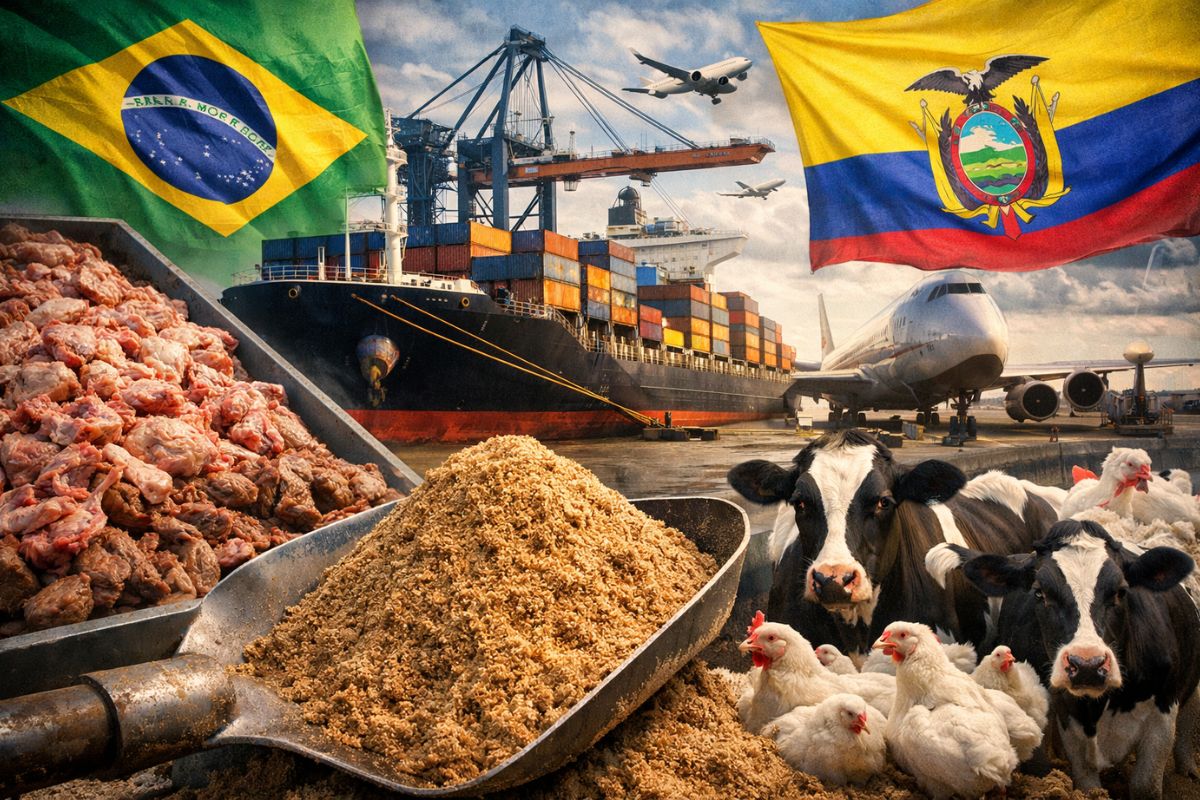
With the export of poultry by-product meal and bovine blood meal authorized for Ecuador, Brazil transforms waste into economic asset, creates additional revenue for slaughterhouses, reduces disposal costs, strengthens bilateral trade, and expands the external presence of agribusiness with new international access since 2023.
The export authorized by the Ministry of Agriculture and Livestock to Ecuador, announced on Friday (13), changes the position of poultry and bovine by-products within the Brazilian agribusiness chain: what was an operational cost now becomes a commercial opportunity for external markets.
In practice, the measure connects the meat industry, animal nutrition, and international trade in a single movement. The expected result combines additional revenue generation, improved utilization of raw materials, and market expansion for higher value-added products within Brazilian agribusiness.
What Changes with Authorization for Ecuador
Leading this opening is the MAPA, in negotiation with Ecuadorian authorities, by authorizing the shipment of poultry by-product meal and bovine blood meal for use in animal feed.
-
The sugar-energy sector advances with agricultural technology, but agricultural productivity still raises concerns.
-
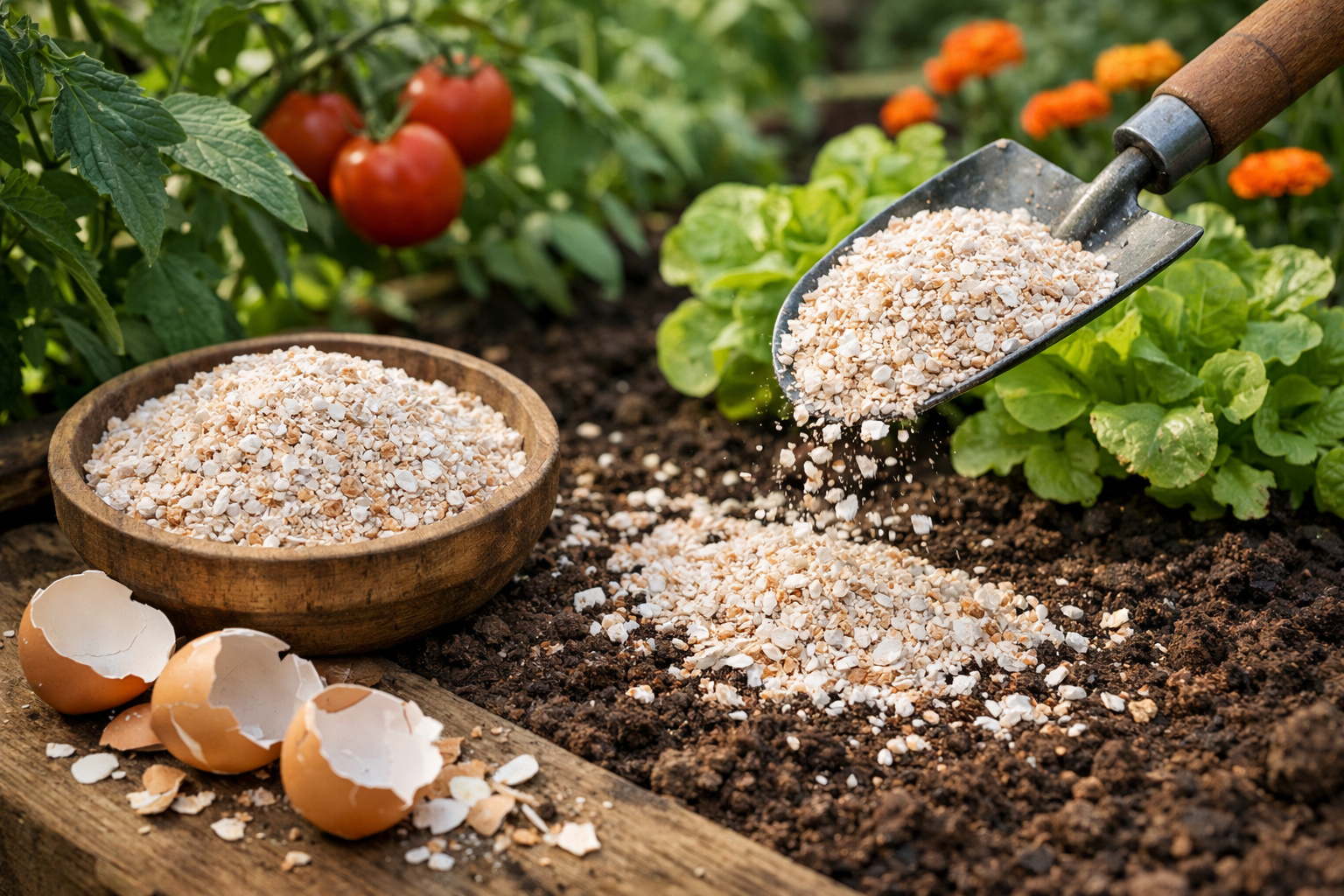
The eggshell that almost everyone throws away is made up of about 95% calcium carbonate and can help enrich the soil when crushed, slowly releasing nutrients and being reused in home gardens and vegetable patches.
-
This farm in the United States does not use sunlight, does not use soil, and produces 500 times more food per square meter than traditional agriculture: the secret lies in 42,000 LEDs, hydroponics, and a system that recycles even the heat from the lamps.

-
The water that almost everyone throws away after cooking potatoes carries nutrients released during the preparation and can be reused to help in the development of plants when used correctly at the base of gardens and pots, at no additional cost and without changing the routine.


This is not just a bureaucratic act of trade: it is an operational change with a direct impact on how the industry organizes production, logistics, and the destination of by-products.
The most immediate effect of the export is to remove these items from the category of liability and place them in the category of goods with demand.
When a by-product finds an external market, the chain reduces waste, improves revenue predictability, and gains space for more efficient medium-term planning, especially in sectors pressured by industrial costs.
How Waste Becomes Product and Why This Alters the Industrial Account
Poultry by-product meal, produced from processing waste, is already used in the formulation of feeds for pigs, poultry, fish, and pets due to its high protein content and energy value. The innovation is the international commercial channel approved with Ecuador, which expands the reach of a raw material already technically consolidated in animal nutrition.
In the case of bovine blood meal, the logic is similar: what was previously a cost for disposal now becomes part of an industrial monetization strategy. Comprehensive utilization of raw materials means less pressure on operational costs and more return on each stage of slaughter and processing, without being solely dependent on the main product to sustain profit margins.
This redesign is significant because it alters the economic logic of slaughterhouses. Instead of focusing solely on the sale of final protein, the industry begins to capture value also in fractions of the process that previously had less commercial weight. Export, in this context, becomes a tool for efficiency, not just volume.
How Much Ecuador Represents and Where the Agreement Fits in Foreign Trade
In 2025, Brazilian exports to Ecuador surpassed US$ 346 million in agricultural products, with highlights in paper, cereals, and coffee. This figure helps to size the existing commercial relationship and shows that the authorization of new items can act as a deepening of a business flow that was already active.
Geographically, the movement focuses on the Brazil–Ecuador axis within South America, but its effects surpass the immediate destination. When Brazil opens a channel for new products in a regional partner, it signals regulatory and commercial adaptability capacity for other markets with similar profiles. Where there is sanitary validation and demand for raw materials, there is room for model replication.
Beyond direct financial value, there is a positioning effect: the country demonstrates the capacity to offer not only traditional commodities but also industrial animal nutrition raw materials with an international destination. This strengthens the perception of a complete production chain, from raw material to technical product.
Why the New Export Reinforces the International Strategy of Agribusiness
The opening to Ecuador adds to a bigger picture: Brazilian agribusiness has achieved 537 new accesses to international markets since the beginning of 2023. This cumulative total indicates a continuous policy of commercial expansion, built through the articulation between agriculture and the federal government’s foreign relations.
The central point is the “why” of this strategy: to diversify destinations, expand the exportable portfolio, and reduce dependency on a few products and a few buyers. The more varied the export map, the greater the resilience of the sector in the face of demand fluctuations, prices, and market barriers.
In the specific case of animal-origin meals, there is also an industrial competitiveness component. The sector gains traction when it can transform disposal costs into additional revenue and integrate this revenue into the business structure. This improves investment capacity and creates a basis for expansion with greater predictability.
Practical Impacts for Slaughterhouses, Feed Chain, and Bilateral Trade
For slaughterhouses, the gain is in two simultaneous fronts: extra revenue and reduced costs with waste disposal. This dual improvement in results tends to influence decisions on internal efficiency, logistics contracts, and prioritization of lines with better economic utilization.
For the animal feed chain, the agreement increases the circulation of raw materials with relevant nutritional functions, which can strengthen commercial relationships between Brazilian suppliers and Ecuadorian buyers. It is not just about selling more; it is about selling with greater technical density and a clear fit in productive demand.
In bilateral trade, the authorization adds depth to the already existing relationship. Instead of maintaining a focus on a few product groups, the exchange gains new layers and more possibilities for evolution. Strong bilateralism does not depend solely on volume, but on diversity and continuity in operations.
The authorization of the export of poultry by-product meal and bovine blood meal to Ecuador summarizes an important change in the Brazilian agro: transforming waste into business, increasing industrial revenue, and consolidating international presence based on productive efficiency and market opening.
From your point of view, should this type of export of by-products become a permanent priority in agribusiness commercial policy? And, looking ahead, what other items from the poultry and bovine chain do you think Brazil should position in the external market to increase competitiveness and added value?










-

-

-

-

14 pessoas reagiram a isso.