





 Portuguese
  English
  Spanish
  5 min of reading
  0 comments


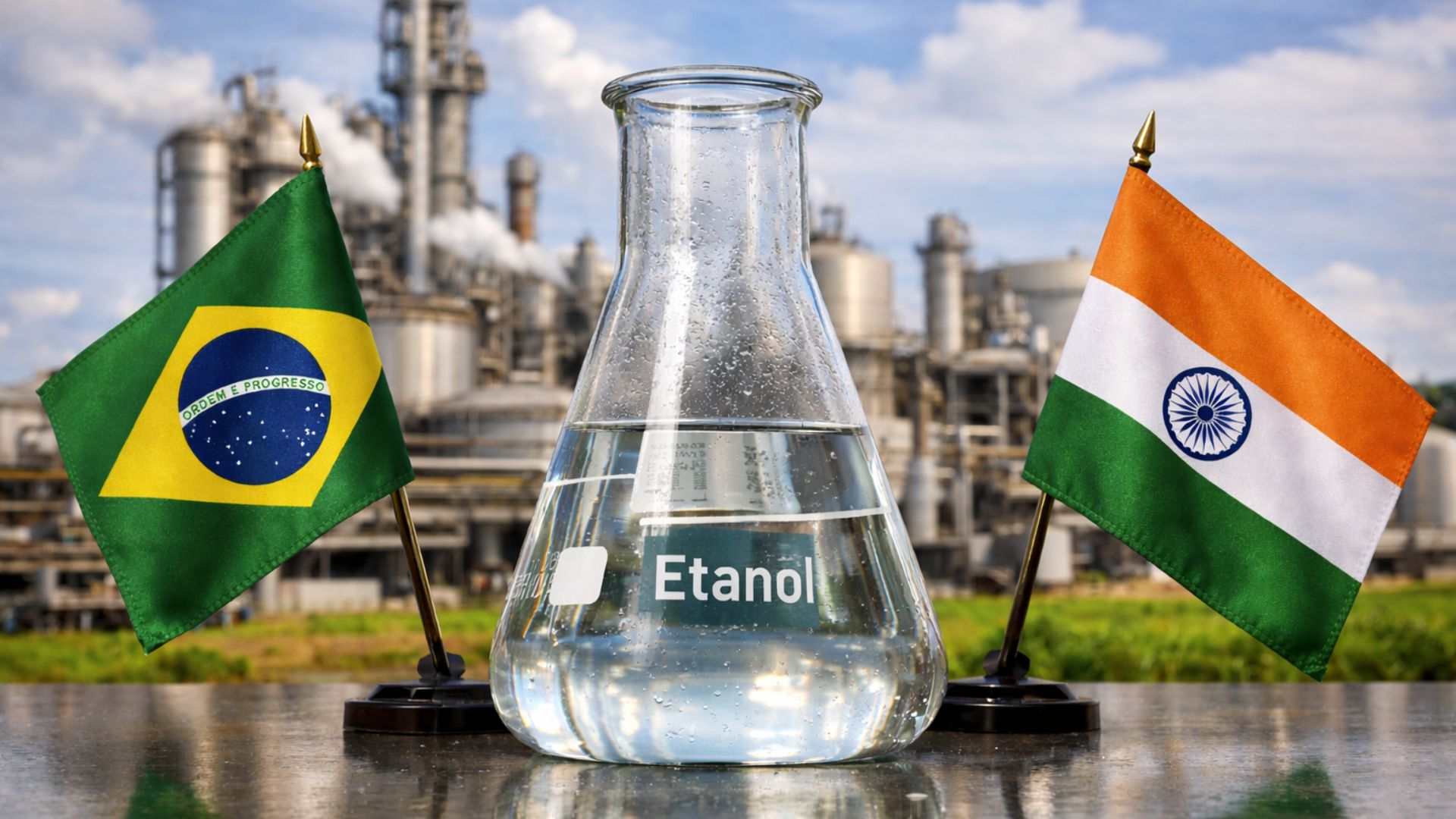
Agreement Between Ethanol Plants in Brazil and India Strengthens Renewable Energy, Expands Technological Cooperation, and May Boost Investments in the Biofuels Sector.
The ethanol plants in Brazil and India have advanced to a new stage of international cooperation with the signing of a memorandum of understanding between the Union of Sugarcane Industry and Bioenergy (Unica) and the Indian Sugar & Bio-Energy Manufacturers Association (Isma).
According to a report published by Globo Rural this Monday (23), the agreement was formalized during the India-Brazil Business Forum, promoted by ApexBrasil, and establishes a framework for technical and institutional collaboration between the sugar-energy sectors of both countries.
The partnership comes at a time of growing use of biofuels worldwide and the search for less polluting energy alternatives. Brazil and India are among the leading global producers of ethanol and are already jointly engaged in international initiatives aimed at expanding renewable fuels.
-
Brazil accelerates hydrogen and biofuel projects to consolidate the fuel of the future and reduce dependence on oil by 2026.
-
CNPE strengthens policy and prevents imported biodiesel from being mixed with diesel, aiming to strengthen the Brazilian industry and protect jobs by reducing external dependence amid tensions in the global market.

-
Revolution in public transport: Goiânia puts into circulation the first articulated buses powered by biomethane in Brazil and promises to drastically reduce pollution on the Anhanguera Corridor.

-
From the field to the pipelines: Mato Grosso do Sul accelerates the energy transition and consolidates a new axis in renewable energy with the arrival of a giant biogas plant.


Ethanol Plants in Brazil and India Establish a Foundation for Regulatory and Technological Integration
The initiative seeks to enhance knowledge exchange, develop technological solutions, and strengthen the competitiveness of biofuels in the global renewable energy landscape. The cooperation also aims to align the regulatory frameworks of both countries, especially regarding carbon emissions accounting systems associated with ethanol production.
The cooperation between ethanol plants in Brazil and India establishes a permanent platform for technical collaboration between the two sugar-energy industries. The memorandum provides for information exchange, joint development of biofuel initiatives, and coordination in international forums.
One of the main objectives of the agreement is to deepen regulatory cooperation between the countries. The proposal includes working on the harmonization of carbon accounting mechanisms used in ethanol production chains.
According to Unica, this regulatory alignment can enhance predictability for investments and facilitate integration between markets. The standardization of environmental criteria is considered essential to strengthen the confidence of international investors and buyers of biofuels. Additionally, the partnership aims to stimulate innovation projects that enhance productive efficiency and reduce industrial costs.
RenovaBio Inspires Renewable Energy Incentive Models
Brazil has a consolidated policy of incentivizing ethanol through the RenovaBio program, which compensates biofuel producers based on the volume of emissions avoided compared to fossil fuels.
The system utilizes a methodology developed by Embrapa called RenovaCalc, which calculates the environmental performance of biofuels throughout the entire production cycle. This mechanism determines the amount of Decarbonization Credits issued by each producer.
The Brazilian model is considered an international reference and may serve as a basis for future incentive policies in India. The existence of clear environmental certification mechanisms is viewed as a decisive factor in attracting investments and increasing the share of biofuels in the energy matrix.
The regulatory harmonization discussed in the agreement may facilitate international recognition of these environmental certifications and expand commercial opportunities.


Ethanol Plants Drive Market Growth Between Brazil and India
The advancement of ethanol plants in Brazil and India is linked to the recent growth in biofuel consumption, especially in the Asian market.
India has been rapidly increasing the use of ethanol as fuel. Currently, the country blends about 20% of ethanol into gasoline, a percentage that has increased by 18 percentage points over a decade. This growth has been driven by incentive policies and increased domestic production.
A significant portion of Indian ethanol is derived from sugarcane molasses, but the country also uses grains such as corn and rice as feedstocks. This diversity of sources allows for greater supply and reduces scarcity risks.
Brazil, in turn, has a highly developed production chain based on sugarcane. Brazilian technology is internationally recognized for its energy efficiency and for producing ethanol with lower carbon intensity. Cooperation between the two countries can accelerate technological development and improve the productive performance of the plants.
Technological Cooperation Enhances Competitiveness of Ethanol Plants
The agreement establishes a collaboration platform aimed at the exchange of technical knowledge between the sugar-energy industries of both countries.
This collaboration includes joint project development, sharing of industrial experiences, and technological cooperation in production processes. The goal is to enhance efficiency and reduce costs throughout the ethanol production chain.
The partnership also envisions coordination in international forums related to the biofuels sector. This joint action may strengthen the position of both countries in global negotiations on sustainable fuels.
Brazil and India are already cooperating within the Global Biofuels Alliance, an international initiative aimed at expanding the use of sustainable biofuels. Joint participation reinforces the role of both countries as protagonists in the sector.
Furthermore, both are signatories of the Belém Commitment, which sets the goal of quadrupling the sustainable use of renewable fuels by 2030.
Brazil and India Expand Global Leadership in Renewable Energy
The strengthening of relations between ethanol plants in Brazil and India occurs within a context of global energy transition. Governments and businesses are seeking alternatives that reduce carbon emissions without compromising energy security.
Ethanol is considered one of the most viable biofuels to partially replace fossil fuels, especially in road transport. The use of this fuel can significantly reduce emissions compared to gasoline.
Brazil and India have complementary characteristics in this sector. Brazil stands out for its advanced technology and accumulated experience in producing sugarcane ethanol. India, on the other hand, presents a rapidly expanding market and strong growth in energy demand.
This combination creates favorable conditions for long-term cooperation between the two countries. The harmonization of regulatory standards may facilitate exports and enhance the international competitiveness of ethanol produced in both markets.

Strategic Partnership May Redefine the Future of Ethanol
The signing of the memorandum between Unica and Isma represents a significant step towards strengthening the international sugar-energy sector. The creation of a permanent technical cooperation platform can accelerate the development of new technologies and enhance productive efficiency.
Regulatory integration may provide greater predictability for investors and facilitate international trade in biofuels. This factor is considered essential to consolidate ethanol as a competitive energy alternative.
The growth of ethanol blending in India and Brazil’s technological expertise create a favorable scenario for the sector’s expansion in the coming years. Cooperation between the two countries can help increase sustainable production and strengthen the role of biofuels in the global energy system.
By uniting technical knowledge, public policies, and productive capacity, Brazil and India enhance their leadership conditions in developing solutions based on clean energy. The agreement indicates that international cooperation is likely to be one of the main growth drivers for the ethanol sector in the coming decades.









-

-

2 pessoas reagiram a isso.