





 Portuguese
  English
  Spanish
  3 min of reading
  0 comments


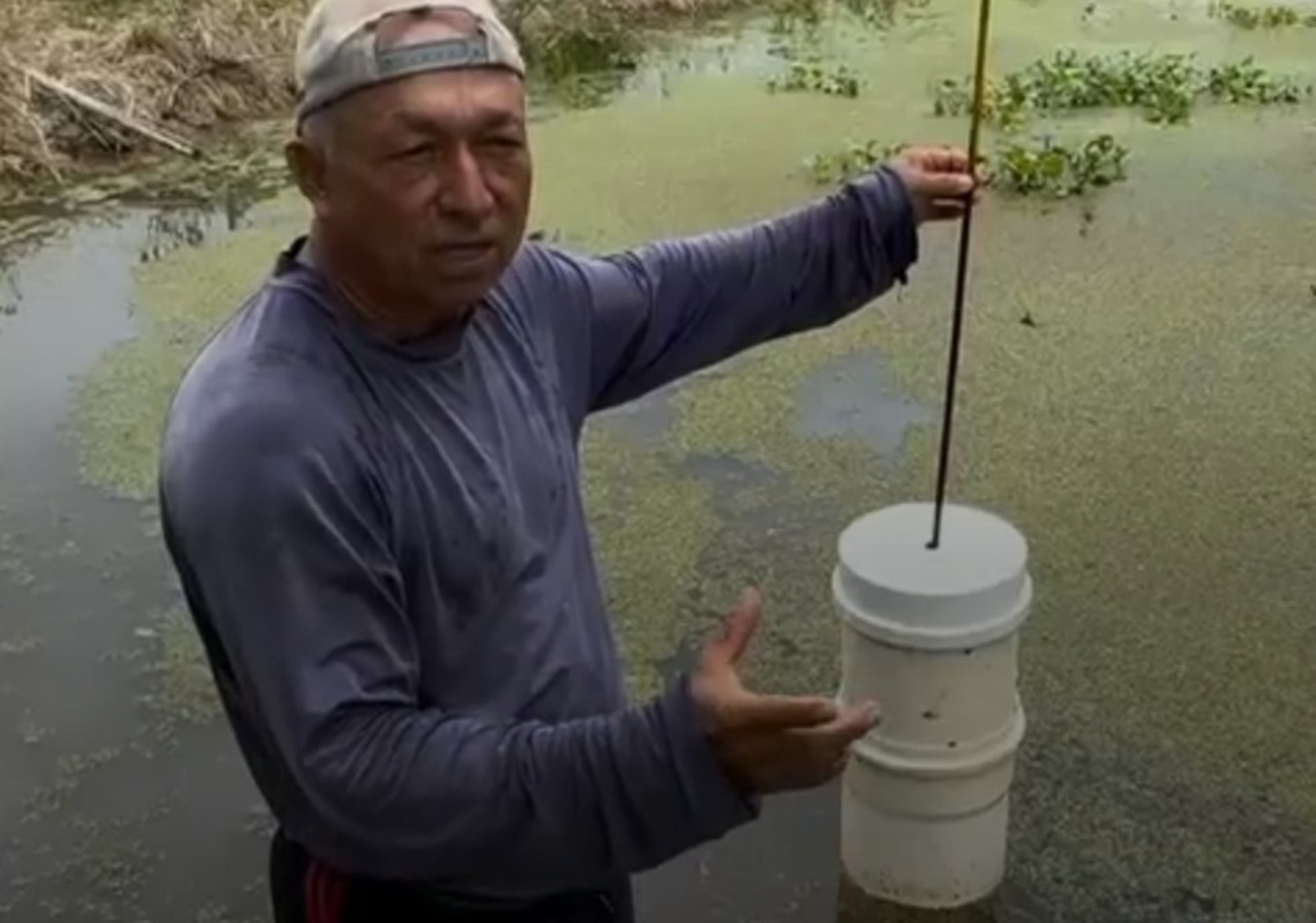
Itaocara Resident Registers 252 Millimeters in February with Homemade Rain Gauge Created 3 Years Ago and Reports Highest Rainfall in 15 Years of Continuous Monitoring in the Bocaina District
An Itaocara resident, in the Northwest Fluminense region, registered 252 millimeters in February with a homemade rain gauge created 3 years ago in Bocaina and stated it is the highest volume in 15 years of systematic monitoring, reinforcing local rainfall observation.
Celso Alves de Oliveira, a resident of the Bocaina area, independently developed a homemade rain gauge to track precipitation volumes and water behavior during rainstorms. The system has been operational for about three years.
Despite the recent installation of the equipment, he claims to have been monitoring the rains for 15 years. According to him, he had never observed a February with such a high index as recorded this month.
-
Friends have been building a small “town” for 30 years to grow old together, with compact houses, a common area, nature surrounding it, and a collective life project designed for friendship, coexistence, and simplicity.

-
This small town in Germany created its own currency 24 years ago, today it circulates millions per year, is accepted in over 300 stores, and the German government allowed all of this to happen under one condition.

-
Curitiba is shrinking and is expected to lose 97,000 residents by 2050, while inland cities in Paraná such as Sarandi, Araucária, and Toledo are experiencing accelerated growth that is changing the entire state’s map.

-
Tourists were poisoned on Everest in a million-dollar fraud scheme involving helicopters that diverted over $19 million and shocked international authorities.


“Just this month I have already recorded 252 millimeters of rain until the last measurement. Within these 15 years of monitoring, it is the rainiest February I have ever observed. I take measurements of the rain gauges every day and close the measurement at six o’clock in the morning,” he reported.
Homemade Rain Gauge Records Rainiest February in 15 Years
According to Celso, daily monitoring allows for assessing rainfall evolution and anticipating potential impacts.
He explained that he takes measurements every morning, maintaining a systematic record of precipitation over the years.
The record of 252 millimeters until the last measurement marked the highest volume he had observed in a month of February since he started monitoring. This data has become a reference for comparison with previous years.
For the retiree, the homemade rain gauge not only measures rain but also helps to inform residents about higher-risk situations.
Hydraulic System Monitors Water Level
In addition to measuring in millimeters, Celso implemented a hydraulic mechanism connected to what is called the Caxias balloon, an area that concentrates a large volume of water from a basin formed by the Morro Alto and Caeté regions.
Pipes connect the drainage point to a pond built on his property. The reservoir serves as a visual indicator of rising water levels during periods of heavy rain.
A valve installed in the system reacts to pressure as the volume increases. This feature allows for identifying different flooding stages and observing water behavior in real-time.
Markers Defined Based on Historical Records
The markers used in the mechanism were established based on comparative measurements taken over the years.
Celso correlated the water height in the reservoir with historically recorded levels in the area.
The model, low-cost and developed independently, has become a complementary observation tool.
According to him, the initiative helps both residents and local authorities avoid unnecessary alarms.
For Celso, continuous monitoring allows the community to have time to organize in the face of heavy rainfall. He expressed satisfaction in being able to assist the community.
His interest in the subject began in childhood. He reported that at 9 or 10 years old, he already showed curiosity in understanding how rainfall measurement worked and the behavior of water in the region.
Today, the homemade rain gauge remains a central monitoring instrument, reinforcing community participation in disaster prevention and local precipitation tracking, even being a simple, low-cost system created independently.
With information from G1.









-

-

-

-

10 pessoas reagiram a isso.