





 Portuguese
  English
  Spanish
  8 min of reading
  0 comments


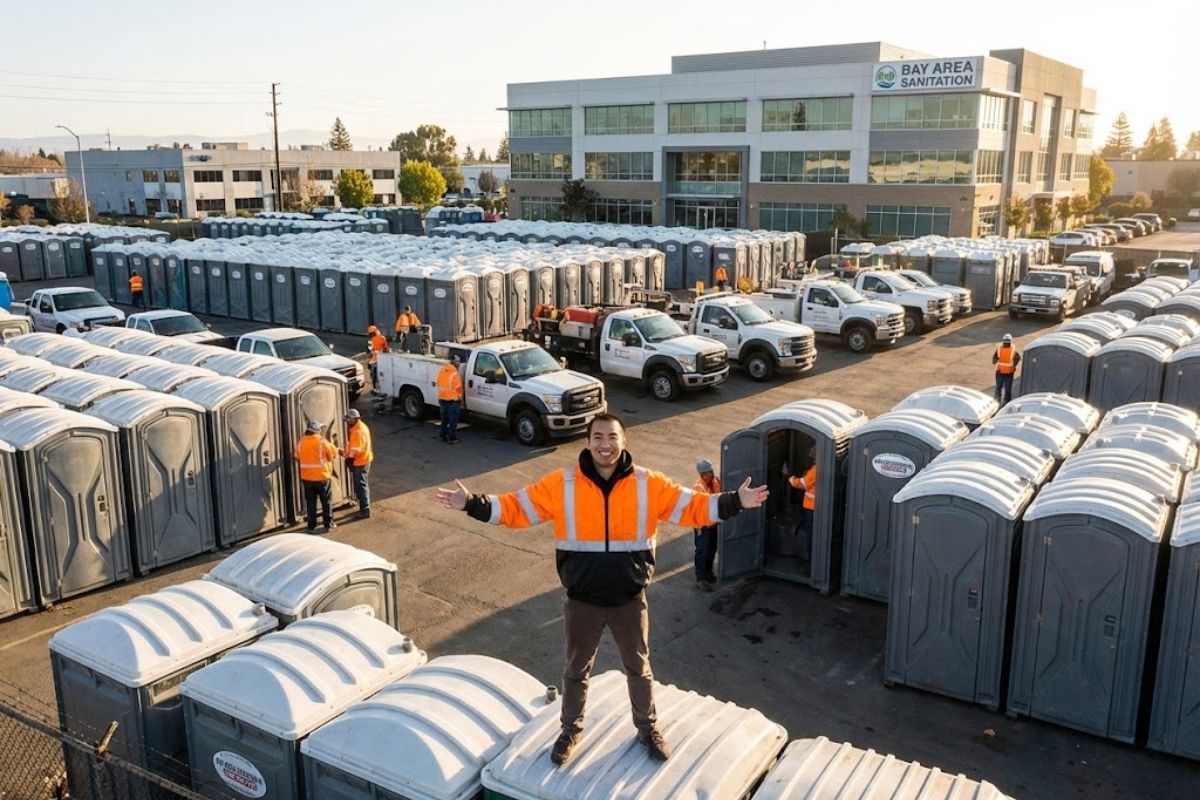
At The Forefront Of A Portable Toilet Company In The San Francisco Bay Area, Daniel Tom Reports How He Went From One Truck And 100 Units To 12 Trucks And Nearly 2,000, With Long-Term Contracts In Construction, A Net Margin Of 22%, And Constant Reinvestment To Grow Without Depending On Trends
In popular imagination, portable toilets are often only remembered when there’s a big event or an inevitable line. For Daniel Tom, 31 years old, they have become the backbone of a business that, according to him, is projected to earn just over US$ 4 million in 2025, supported by a simple, repeatable, and always necessary service.
His company operates in the San Francisco Bay Area, California, near corporate hubs like Google, Apple, and Nvidia, but with a logic very far from technological glamour: logistics, maintenance, a team in the field, and standardization. The product is basic; execution defines profit.
A Service That No One “Celebrates”, But No One Dispenses

Daniel describes a curious contrast: when he explains what he does, he perceives reactions of strangeness and even repulsion, but the conversation changes when numbers, contracts, and scale come into play. There’s an entire market that operates behind the scenes, where demand does not depend on trends and almost always arises from the same silent question: “Where will people use the bathroom?”
-
Friends have been building a small “town” for 30 years to grow old together, with compact houses, a common area, nature surrounding it, and a collective life project designed for friendship, coexistence, and simplicity.

-
This small town in Germany created its own currency 24 years ago, today it circulates millions per year, is accepted in over 300 stores, and the German government allowed all of this to happen under one condition.

-
Curitiba is shrinking and is expected to lose 97,000 residents by 2050, while inland cities in Paraná such as Sarandi, Araucária, and Toledo are experiencing accelerated growth that is changing the entire state’s map.

-
Tourists were poisoned on Everest in a million-dollar fraud scheme involving helicopters that diverted over $19 million and shocked international authorities.


In practice, the need spreads across very different situations. There are events, of course, but there are also places without basic infrastructure, properties without running water, small rural operations, and primarily, construction sites.
When there is no available bathroom, the routine halts, productivity drops, and the job site becomes a management problem. This predictability helps explain why he calls the sector “low technology,” yet resistant to rapid changes.
Another point that sustains this stability is that the service is recurring: it is not enough to deliver the unit and leave. There are cleaning, supply replenishment, transportation, proper disposal, and an operation that needs to meet an agreed frequency. The revenue is not just in the rental; it’s in the complete service cycle.
Where The Money Appears: Construction More Than Events

Many people associate portable toilets with shows and festivals, but Daniel claims that most of the revenue comes from construction projects.
Construction projects tend to last months or years, creating longer contracts, fixed schedules, and predictable revenue. In a concrete example, he mentions a job with eight units serviced twice a week.

Each unit in this contract generates US$ 60 per week. Maintaining the operation over approximately two and a half years, the total amounts to nearly US$ 7,800 (approximately R$40,761.24) per bathroom for the period, an amount that demonstrates how the “weekly rental” transforms into a consistent cash flow when summed over time and quantity. The secret is not a high ticket; it’s repetition with low operational default.
On the other side of the bay, he describes the current scale as almost 2,000 units distributed across more than 1,500 work locations.
This completely changes the type of company formed: it stops being “a rental company” and becomes a field operation, with routing, priorities, preventive maintenance, and a team capable of maintaining standards across many different addresses.
The Cost of Growth: Expensive Equipment, But With Asset Logic

Behind the “simple service,” there is a significant barrier to entry. Daniel recommends that anyone wanting to enter the field have at least US$ 250,000 available, as the structure requires expensive assets and a minimum base to serve clients reliably. A new portable toilet, according to him, costs around US$ 800. A new vacuum truck can range between US$ 130,000 and US$ 160,000.
He also describes his own expansion trajectory: he started with one truck and about 100 portable toilets, and by the third year of activity, he was already operating 12 trucks and nearly 2,000 units. This curve usually does not happen on impulse, but through reinvestment and the ability to deliver quality at scale.
The storage yard is part of fixed costs and operational discipline. Daniel mentions a space of just over an acre, shared with others, with a lease portion of around US$ 7,000 per month. It is there that the trucks, the units when not in use, and the basic infrastructure for cleaning, organization, and quick departure at dawn are located.
Routine, Team, and Standardization: The Business Starts Before Daybreak
The image of the entrepreneur “in the office” does not match the routine he describes. There is early movement, monitoring of tank levels, hose preparation, equipment checks, and then execution of routes.
In vacuum truck operations, one configuration detail becomes a significant risk: if the equipment is not adjusted for the correct function, a spill and contamination incident can occur, leading to losses and safety impacts.
This reality helps explain why labor costs weigh on the budget. Daniel states that the largest expense is personnel, at around 30% of gross revenue.
In total, he says he has 19 employees, with 14 drivers, three people in the yard, and administrative support. In an operation distributed across many points, a driver is not just a “operator”: they represent the company to the client, execute procedures, record services, and maintain standards.
Other costs enter the spreadsheet as items that may seem small but add up: fuels account for about 8% of revenue, and paper products about 5%. It’s a margin business, so waste of supplies and poorly executed routes show up in profits at the end of the month.
Million-Dollar Revenue With A 22% Margin: Where The Money Goes
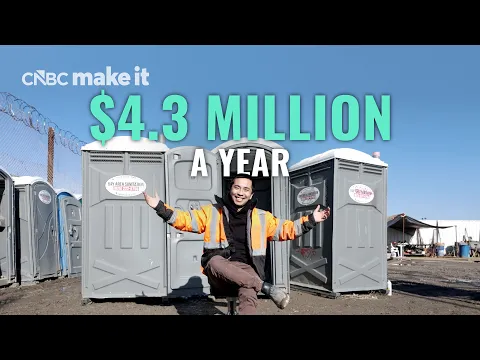
Daniel states that, in 2024, revenue was approximately US$ 3.1 million and that for 2025, the projection exceeds US$ 4 million, reaching nearly US$ 4.3 million per year in operation. He estimates a net profit margin of approximately 22%, a significant level for a physical service that is labor-intensive when well controlled.
Curiously, he says he takes home about US$ 120,000 a year, despite the company’s volume. The choice, according to his own account, is to reinvest almost all the remaining amount to buy trucks and more portable toilets, expanding capacity and occupying the market.
Not every million-dollar business “enriches” its owner in the short term; sometimes, they are financing their own growth.
This decision changes the pace of the business: more assets allow for more contracts, which require more people, which demands more standardization and, ultimately, more quality control.
It’s a cycle that can accelerate if the company maintains its reputation and does not fail in the basics, because for the client, a portable toilet is not “an extra”; it is part of the operation.
Disposal, Compliance, and Trust: What Sustains Reputation
There is a stage that almost never appears in public conversations but is central to the credibility of the service: the proper disposal of waste. Daniel describes going to a wastewater treatment facility to unload the collected contents, monitoring tank levels, and a process that, in large trucks, can take about ten minutes to complete.
This point is important for two reasons. First, because it shows that the operation does not end with the client; it needs to close the cycle correctly.
Second, because any shortcut during this phase turns into environmental risk, regulatory risk, and reputational risk. In markets with many contracts, trust is an asset as valuable as the fleet.
Daniel also reports that the worst situation he has ever seen occurred in a public park after a weekend event when the number of units was insufficient, and demand exceeded capacity. The lesson is direct: incorrect sizing leads to discomfort for the public, overburden for the team, and a visible problem for everyone. In this sector, mistakes do not remain hidden.
Why It’s “Crisis-Proof” And “AI-Proof” In Practice

When Daniel calls the business “AI-proof,” the sense is not technological; it’s operational. Demand is physical, constant, and tied to basic human needs, as well as infrastructure requirements at construction sites and locations without plumbing. Even with the digitalization of processes, the final delivery relies on trucks, teams, and execution.
There’s also an anti-cyclical component: during expansion phases, construction and events grow. In difficult phases, consumption may fall in various sectors, but work does not stop just because the scenario tightens, and the need for minimum conditions continues to exist in job sites, temporary services, and operations without fixed bathrooms.
The combination of predictability, recurrence, and long contracts helps explain why he sees so much space to gain market share in the San Francisco Bay Area. He cites the number of construction projects and events as fuel for demand and states that there’s still plenty of opportunity available to those who deliver quality work.
The Next Goal: 5,000 Units And US$ 10 Million In Revenue
On the horizon, Daniel talks about reaching 5,000 portable toilets for rental and achieving at least US$ 10 million in revenue, something he considers possible in the area where he operates. To support this plan, he mentions signing a new lease contract for a “brand new” property, with a fully paved storage yard and space to nearly double the number of trucks.
The strategy, by his account, does not seem to depend on an “invention” or a miraculous leap but rather on repeating what has worked: reinvest, expand the fleet, maintain quality, and occupy more service points. It’s growth through discipline, with a type of service that rarely becomes a topic of conversation but is hardly ever unnecessary.
In the end, what stands out is not just the size of the revenue but how a business that many people avoid discussing can be structured as a robust operation, with margin, team, assets, and a long-term vision.
Daniel has created a path where portable toilets have ceased to be “a detail” and have become a cog in long contracts, heavy routine, and scale, with numbers exceeding US$ 4 million per year and a clear logic of reinvestment to grow.
Now I want to hear your experience, truly: in construction sites, events, or travels, what matters most to you when evaluating portable toilets: cleanliness, available quantity, location, maintenance throughout the day, or does “getting the basics right” suffice? And if you have ever seen situations where planning was lacking, what should have been done differently to avoid the problem?










-

-

-

-

6 pessoas reagiram a isso.