





 Portuguese
  English
  Spanish
  5 min of reading
  3 comments


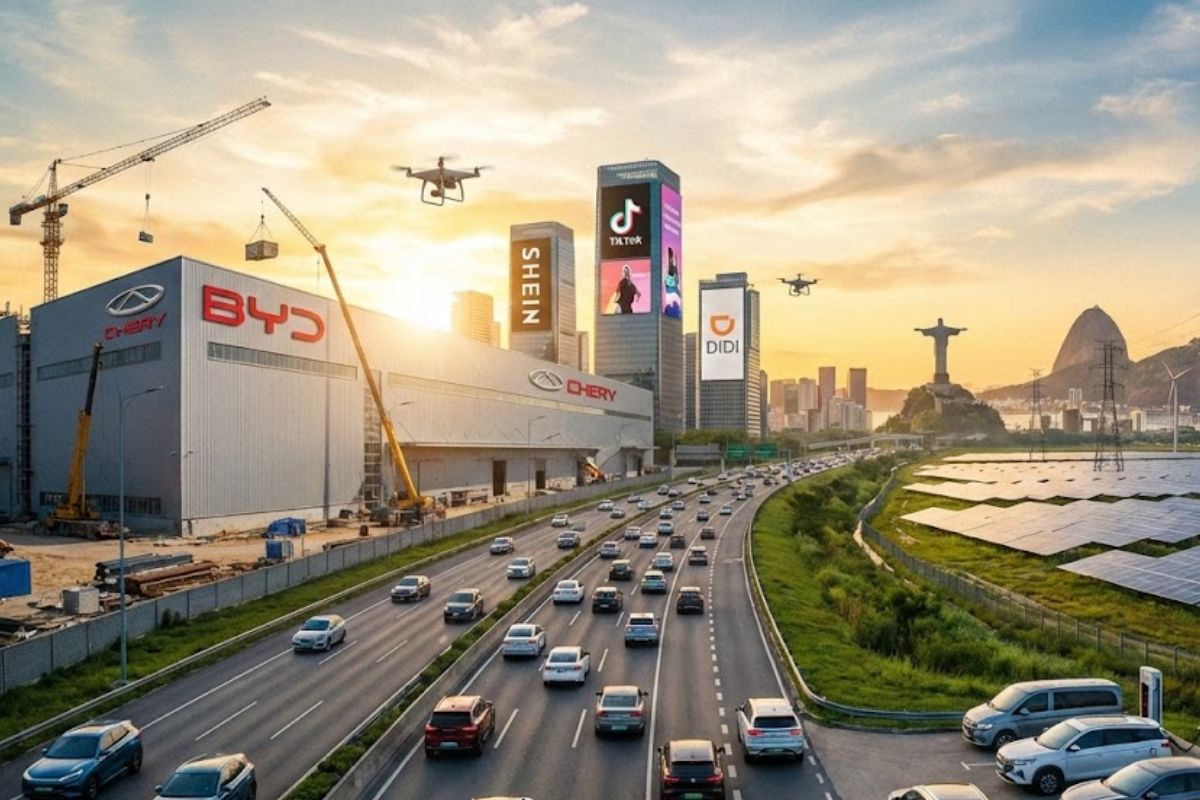


With New Industrial Plants, Entry into Premium Segments, Advancement in Urban Mobility via Apps, and Consolidation in Generation and Transmission of Electricity, Chinese Giants Accelerate Presence in the Country and Replace the Logic of Exporting with Operating Locally, Targeting Consumption, Scale, and Lasting Economic Influence in Brazil in the Coming Decades.
The Chinese giants have begun to treat Brazil as a platform for continuous operation, and not just as a destination for exports. The movement appears in different but connected sectors: automotive industry, digital services, infrastructure, and energy. The strategy combines physical presence, commercial scale, and long-term market building.
In recent years, this advancement has ceased to be a promise to become execution. The country received factories in already existing industrial structures, launched new brands targeting higher value niches, and saw Chinese services expand competition for urban users. The axis of the relationship has shifted: less commercial showcase, more productive and institutional rooting.
From Importation to Local Production: Where the Strategy Gained Strength
The most visible turn is in the industry. In 2022, BYD took a decisive step by enhancing its commitment to the Brazilian market; four years later, it reinforced the bet with the launch of the luxury brand Denza. The opening of a plant in Camaçari, Bahia, in an area previously occupied by Ford symbolizes the change in scale. It is not just about selling cars in the country, but about structuring operations to remain.
-
Friends have been building a small “town” for 30 years to grow old together, with compact houses, a common area, nature surrounding it, and a collective life project designed for friendship, coexistence, and simplicity.

-
This small town in Germany created its own currency 24 years ago, today it circulates millions per year, is accepted in over 300 stores, and the German government allowed all of this to happen under one condition.

-
Curitiba is shrinking and is expected to lose 97,000 residents by 2050, while inland cities in Paraná such as Sarandi, Araucária, and Toledo are experiencing accelerated growth that is changing the entire state’s map.

-
Tourists were poisoned on Everest in a million-dollar fraud scheme involving helicopters that diverted over $19 million and shocked international authorities.

GWM followed a similar trajectory by inaugurating a factory in a facility formerly belonging to Mercedes. This use of existing industrial assets reduces entry time, accelerates logistical adaptation, and allows for rapid testing of market responses. When two automakers advance with local production in structures of this size, the signal is of a long-cycle commitment, not opportunistic presence.
Electric Mobility as a Technological Showcase and Commercial Gateway
Electric mobility has been the most public face of this new cycle. In the last two years, it has concentrated the attention of consumers, investors, and the traditional automotive sector. At recent events, such as the São Paulo Motor Show, other Chinese companies also showcased products and expansion plans. The sector has become a laboratory for brand positioning, technology, and pricing.
At the same time, the premium segment gained relevance. The entry of a high-end brand into the country indicates that the strategy is not limited to affordable vehicles or mass energy transition; there is also a competition for reputation, margin, and long-term loyalty. The combination of volume and value is one of the central points to understand why Brazil has become a priority.
Digital Services and Platforms: The Daily Competition for Consumers
The advancement has not been limited to heavy industry. In the services sector, Didi’s expansion under the 99 brand has reinforced competition for urban mobility and digital presence in everyday life. Simultaneously, the arrival of a new Chinese delivery platform, Keeta, has broadened the competition for frequency of use and participation in local markets. Whoever controls the interface with daily users gains consumer intelligence and scale power.
This movement repositions the economic debate: it is not just about physical products but about service ecosystems. Ride-hailing and delivery apps operate as invisible commercial infrastructure, connecting payments, logistics, and urban habits. When industry and platform grow simultaneously, the impact on the domestic market tends to be deeper and more lasting.
Energy and Infrastructure: The Silent Base Supporting the Advancement
In infrastructure, the Chinese presence was already consolidated, especially in generation and transmission of electricity. Among the main players, CTG treats Brazil as a strategic priority and claims to have been operating in the country for over ten years, adapting to the local regulatory and institutional environment. This history reduces uncertainties and strengthens the capacity for expansion in new cycles.
Energy serves as a structural layer for all other sectors. Without a robust network and operational predictability, industrial expansion itself loses pace.
Therefore, the combination of investment in electricity and advancement in consumer goods is not casual. There is a logic of chaining: infrastructure provides support, industry generates scale, services capture recurring usage.
Why Brazil Holds This Role in Long-Term Planning
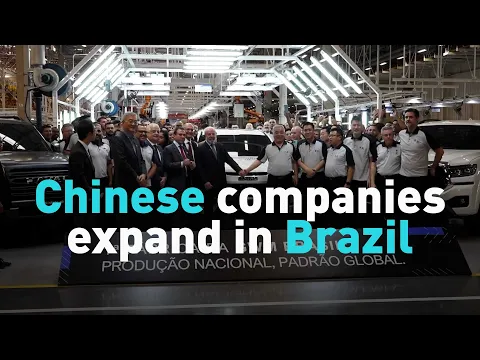

The strategic reading presented by executives is clear: China tends to think in long horizons, and Brazil is seen as a market with growth potential for decades.
The perception is that, as the Brazilian economy strengthens, the consumer market will also advance. Today, according to this view, about one-third of the population would be fully engaged in this potential market. This suggests still open expansion space.
This diagnosis helps explain the “how much” involved, even when specific numbers are not publicly detailed at each stage.
The investment is treated as billion-dollar because it is not limited to a single factory or isolated app: it spreads across industry, energy, telecommunications, and services. The thesis is to occupy complementary positions, reducing dependence on a single sector and increasing long-term resilience.
What Changes for Brazilian Industry and the Consumer
For the national industry, the advancement of the Chinese giants creates competitive pressure and, at the same time, accelerates standards of innovation. Local companies now compete with integrated business models, greater launch speed, and robust financial capacity.
The effect can be dual: greater competition in the short term and a need for strategic repositioning in the medium term.
For consumers, the impacts appear in more product options, increased competition among platforms, and potential rearrangements of prices and services in different regions.
But the effects are not uniform: each city feels this transformation differently, depending on income, infrastructure, and demand profile. It is precisely in this regional difference that public debate gains real importance.
In your state or city, where have you already noticed this change most strongly: in electric cars on the streets, in mobility and delivery apps, or in energy infrastructure? And, in your view, which Brazilian sector needs to react first to avoid losing ground in the coming years?










Enquanto os EUA fazem protecionismo par defender suas indústrias, o Brasil abre as pernas. Pouca gente ganhará muito ee muitos ganharão pouco
O tal país gigante eternamente deitado em berço esplêndido!
Brasil sempre de quatro para novas potências.
Somos subservientes, fornecedores de matérias primas, compradores de lixo industrializado
, fomentadores de novos ricos e novos imperialistas.