





 Portuguese
  English
  Spanish
  4 min of reading
  0 comments


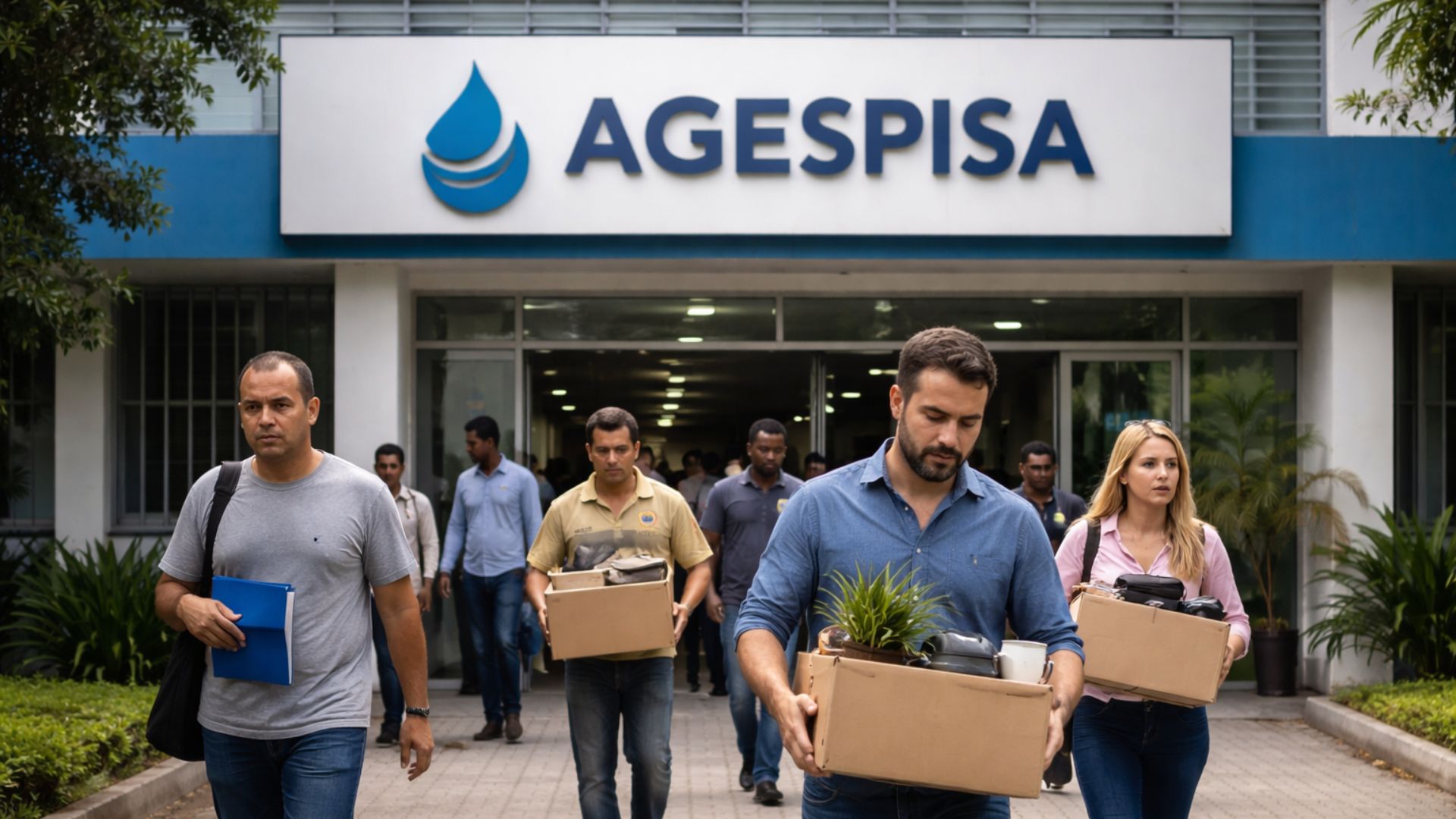
Official Decrees Formalize Dismissals at Agespisa, Affect 236 Workers, and Spark Legal and Union Disputes Amid the Liquidation of the State Company and the Transition of Sanitation in Piauí.
Decrees published in the Official Gazette of Piauí formalized the termination of contracts at Agespisa and accelerated the end of the employment relationship of workers under the labor laws, amid the liquidation process of the water and sewage state company and the transfer of operations to another concessionaire.
In a statement, the Union of Urban Workers of Piauí stated that the measure affected the entire staff of 236 workers and classified the dismissals as illegal mass layoffs, alleging a lack of prior negotiation and questioning the dismissal of union leaders, health-related absences, and workers with health issues.
According to the entity, the formalization of the terminations was associated with a decision attributed to Governor Rafael Fonteles and published in a supplementary edition of the State Official Gazette dated February 6, 2026, a point that intensified tensions regarding the definitive closure of the company.
-
The government requests the Federal Revenue Service for a new system to automate the income tax declaration, reducing errors, time, and bureaucracy for millions of Brazilians.

-
Pix in installments, international Pix, and contactless payment without internet: the Central Bank revealed the new features coming to the tool that is already used by almost every adult in Brazil.

-
Mercado Livre has just started selling medications with delivery in up to three hours to your door, and this move could completely change the way Brazilians buy medicines on a daily basis.

-
In Dubai, rising tensions from the war in the Middle East are causing super-rich individuals to leave the Gulf and direct their fortunes to a new financial refuge in Asia.


Termination Decrees and Incentivized Leave Program
The controversy gained traction as administrative acts began to be interpreted as a collective cut, with uncertainties regarding who would be affected and under what conditions, especially among workers who had already completed their notice period or who received indemnified notice.
At the same time, reports and union communications highlighted that part of the dismissals was recorded “at request,” linked to the Incentivized Leave Program, the PAI, included in the planning for the final phase of Agespisa’s activities cessation.

In this modality, the termination is presented as adherence to the program and provides for payment of rights and compensatory advantages described in the rules of the PAI itself, with lists of employees attached to the official publications mentioned by the entities and by local media.
On the other hand, another decree addressed the conclusion of prior notices granted in 2025 and the termination of contracts of employees governed by labor legislation, integrating the measures into the liquidation context and indicating legal-institutional infeasibility to maintain the operational structure.
Furthermore, according to reports on the content of these acts, the Attorney General’s Office of the State reportedly guided the resumption of the count of prior notice periods that had been suspended, indicating continuity “from where they left off,” followed by the adoption of administrative measures to formalize the terminations.
Notice Period, Provisional Stability, and Judicial Decision
With this arrangement, the termination date of each employee’s contract would coincide with the last day of the worked notice period, a milestone used to organize the calendar of dismissals and the internal records linked to the end of employment relationships.
For employees with provisional job security, the formalization of indemnified notice corresponding to 90 days, counted from the grant, was reported, a measure that became another focal point of contention as it involves workers who, theoretically, would have stability.
In the disclosed text, the union argued that the dismissals would be null due to an existing judicial decision claimed to be in force, attributed to the 3rd Labor Court of Teresina, determining the incorporation of Agespisa workers by EMGERPI within 30 days.
National entities in the sector also echoed the case, stating that the discussion is not limited to the formal closure of the company, as recent acts and administrative measures would indicate ongoing fronts of action during the liquidation, which would maintain pressure for a labor solution.

Liquidation of Agespisa and Sanitation Concession in Piauí
The dispute occurs in a broader context of restructuring sanitation in the state, after the Complementary Law No. 319, of July 16, 2025, authorized the liquidation and extinction of Agespisa and established that the process should follow applicable rules for the closure of corporations, led by a liquidator.
In terms of service delivery, the state government signed a concession contract for water supply and sanitary sewage throughout the state of Piauí, involving 224 municipalities, in an arrangement that marks the operational replacement of the former state structure.
The concession was announced by the government as part of an investment package and universalization goals, featuring Aegea through the company Águas do Piauí, while the contract documents detail the delegation of management and operation of the systems included in the granted area.
In this environment, the termination of contracts at Agespisa became a sensitive point because it encompasses recurring themes in labor conflicts in the country, such as the need for negotiation in collective dismissals, preservation of provisional stability, and defining the public authority’s responsibility during transitions in essential services.
While the decrees remain as a reference for dismissals and statements of protest circulate, the uncertainty reported by workers and entities focuses on rights guarantees, the effectiveness of legal protections, and what can be demanded when the state company ceases operations and another company assumes the activity.
If the liquidation of a state company occurs simultaneously with the transfer of operations to a new concessionaire, what should be the most objective rule to ensure rights and reduce disputes over prior negotiation, provisional stability, and absorption of employees in public or private structures?








Seja o primeiro a reagir!