





 Portuguese
  English
  Spanish
  5 min of reading
  0 comments


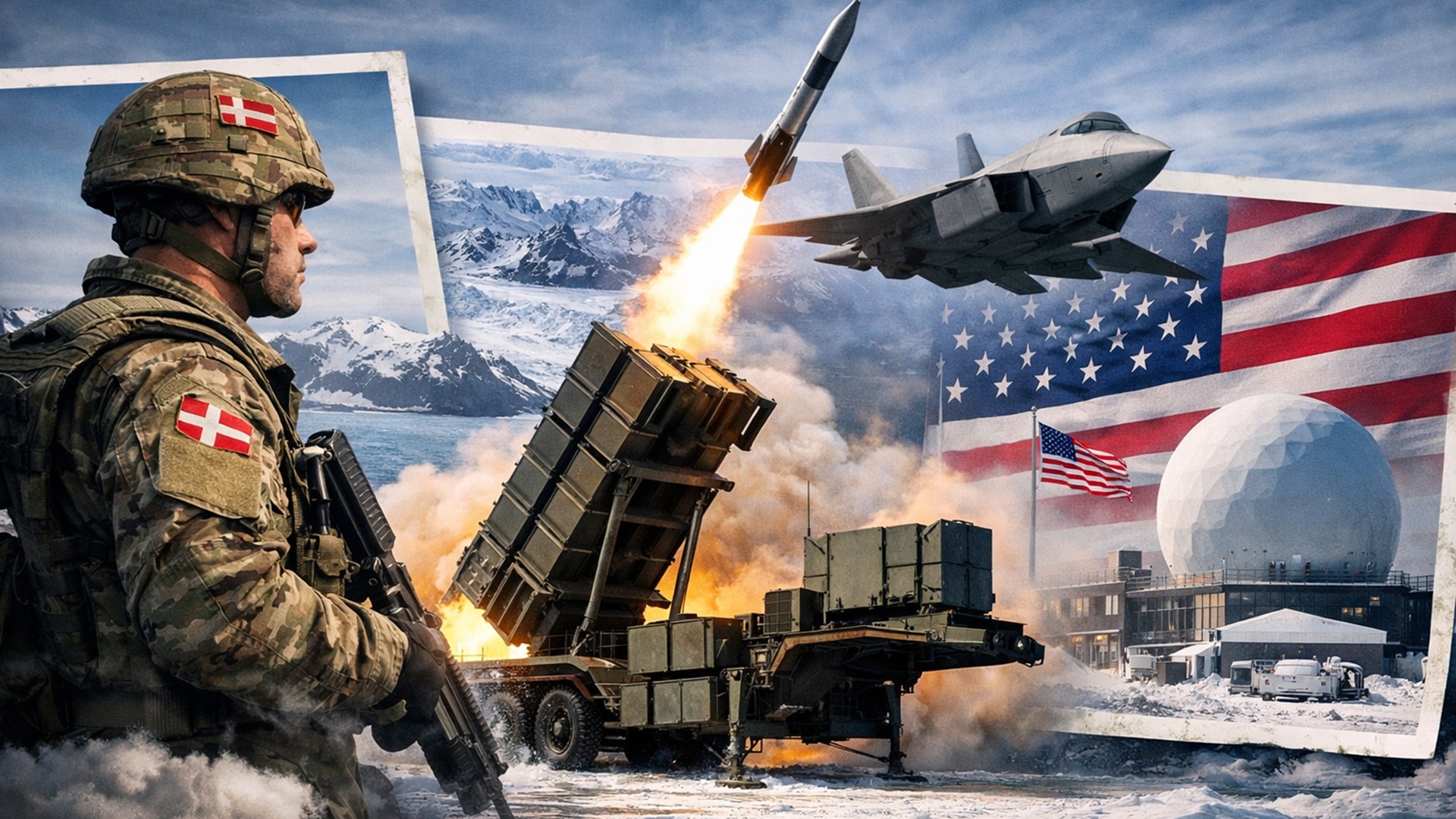
Sale Approved In January 2026 Foresees Up To 100 AGM-114R Hellfire Missiles For Around US$ 45 Million To Strengthen Greenland Defense, While US Government Public Statements On Possible Acquisition Of Territory Increase Political Tension Among NATO Allies
In January 2026, Denmark received approval to purchase American missiles in order to strengthen Greenland’s defense, while the U.S. government publicly advocated for the acquisition of the territory, creating an unusual episode involving Denmark, American missiles, and Greenland.
The authorization was granted under the Foreign Military Sales program. At first glance, it was a routine transaction among NATO allies. The stated goal was to strengthen defensive capabilities and enhance interoperability with U.S. forces.
However, the political context transformed the operation into a singular moment. The same administration that approved the sale spent months arguing that the United States should acquire Greenland for security reasons.
-
Friends have been building a small “town” for 30 years to grow old together, with compact houses, a common area, nature surrounding it, and a collective life project designed for friendship, coexistence, and simplicity.

-
This small town in Germany created its own currency 24 years ago, today it circulates millions per year, is accepted in over 300 stores, and the German government allowed all of this to happen under one condition.

-
Curitiba is shrinking and is expected to lose 97,000 residents by 2050, while inland cities in Paraná such as Sarandi, Araucária, and Toledo are experiencing accelerated growth that is changing the entire state’s map.

-
Tourists were poisoned on Everest in a million-dollar fraud scheme involving helicopters that diverted over $19 million and shocked international authorities.


Denmark, American Missiles, And Greenland At The Center Of An Unusual Moment In Allied Defense
The result was a situation marked by irony. Denmark was purchasing American missiles, in part, to defend Greenland, while President Donald Trump reiterated that the United States needed to control the territory for its own security.
The transaction was neither symbolic nor hypothetical. It was a real sale, certified by the U.S. Defense Security Cooperation Agency, following standard defense export procedures.
The approved package included up to 100 AGM-114R Hellfire missiles, associated launch equipment, training, and logistical support. The estimated value of the operation was around US$ 45 million.
The official justification was straightforward: to enhance Denmark’s ability to meet national and NATO requirements, as well as to improve interoperability with U.S. forces.
The Strategic Importance Of Greenland In The Arctic
Greenland occupies a strategic position in crucial air and maritime routes in the Arctic. The island is situated in the geography of missile alert, space surveillance, and North Atlantic defense.
The United States has maintained a military presence on the island since World War II. This presence remains active today, within a legal framework that guarantees access without transferring sovereignty.
The most visible installation is the Pituffik Space Base, operated by the U.S. Space Force. The base supports missile alert, space situational awareness, and satellite tracking.
The Department of Defense describes the base as a critical component of the defense architecture in the Arctic. The scenario becomes more relevant as polar routes gain strategic accessibility.
Starting in late 2025, President Donald Trump revived his interest in acquiring Greenland. He argued that American possession would be necessary to counter Russian and Chinese activities and support missile defense initiatives.
Legal Structure And Responsibilities Of The Kingdom Of Denmark
The Kingdom of Denmark is responsible for the defense of Greenland, although the territory possesses broad autonomy. American rhetoric created political pressure on this already established structure.
The legal framework governing U.S. military activity on the island grants Washington broad access. This arrangement does not imply the transfer of sovereignty.
The legal basis dates back to a defense agreement from 1951. A report from the Congressional Research Service summarizes that American forces operate in Greenland with Denmark’s consent, and not as owners of the territory.
On October 9, 2025, a NORAD F-16 Fighting Falcon took off from the Pituffik Space Base. The operation illustrated the continuity of the American military presence under existing agreements.
Technical Characteristics Of The AGM-114R Hellfire And Scope Of The Sale
The AGM-114R Hellfire is a short-range guided missile designed for precision. It is commonly employed on helicopters and some fixed-wing aircraft.
The system is aimed at precision strikes, not area saturation. There is no indication of drastic escalation associated with its acquisition.
The State Department’s approval text highlighted that the sale would not alter the regional military balance. The document emphasized that the operation would support Denmark’s ability to contribute to collective defense.
This language is similar to hundreds of previous notifications of Foreign Military Sales. The institutional formality followed established standards over the years.
The irony, therefore, arises from the political context. Denmark is enhancing its capacity to defend Greenland while the President of the United States publicly questions whether the territory should remain under Danish sovereignty.
Alliance Management, Political Rhetoric, And Institutional Tensions
Legally speaking, nothing in the sale contradicts U.S. obligations or NATO norms. The Executive Branch has the authority to approve this type of transaction.
Arms sales among allies occur even in scenarios of diplomatic friction. Institutionally, the operation remained within the norm.
Strategically, however, the episode exposed tension between alliance governance and political communication. NATO operates under the premise of territorial integrity among allies as an established principle.
Publicly suggesting the acquisition of allied territory, even rhetorically, calls that premise into question. The contrast became evident during the negotiation period.
Defense analysts noted that U.S. security objectives in the Arctic do not require sovereignty over Greenland. Existing agreements already allow for radar modernization, base expansion, and missile defense cooperation.
The Danish response was described as measured. Authorities reiterated that Greenland is not for sale while maintaining investments in defensive capabilities and cooperation.
The purchase of American missiles fits into this strategy. It reinforces deterrence, fulfills alliance commitments, and avoids escalation of rhetoric.
The Political Significance Of A Conventional Transaction
The situation combined two parallel realities. On one side, the United States selling weapons to strengthen an ally’s defense. On the other, public statements about a possible acquisition of the same territory.
The contrast created a moment described as absurd in the strict sense. Still, the transaction remained framed within established institutional mechanisms.
Foreign Military Sales aim to signal long-term commitment. The rhetoric questioning the sovereignty of an ally points in the opposite direction, even when it does not translate into a formal change in policy.
Greenland will remain strategic in the Arctic. Polar routes remain relevant, missile alert continues to be essential, and cooperation remains a central instrument of collective defense.
The purchase approved in January 2026 reflects this logic. It treats defense as a shared responsibility, not as a property dispute.
The irony does not lie in the weapons system, but in the discrepancy between institutions that underpin alliances and political discourses that can strain them. Denmark acquiring American missiles to defend Greenland is, in formal terms, normal.
The unusual nature emerges from the fact that this occurs while Washington publicly debates the sovereignty of the territory. The episode exposed the contrast between institutional practice and political rhetoric.
In this scenario, Denmark, American missiles, and Greenland became symbols of a specific moment in the relationship between allies. The sale followed its administrative course, with values, quantities, and objectives formally established.
In the end, the transaction remained within the prevailing norms. The broader debate, however, revealed how public discourses can influence the perception of measures that, in isolation, would be considered routine.










-

Uma pessoa reagiu a isso.