





 Portuguese
  English
  Spanish
  8 min of reading
  1 comment


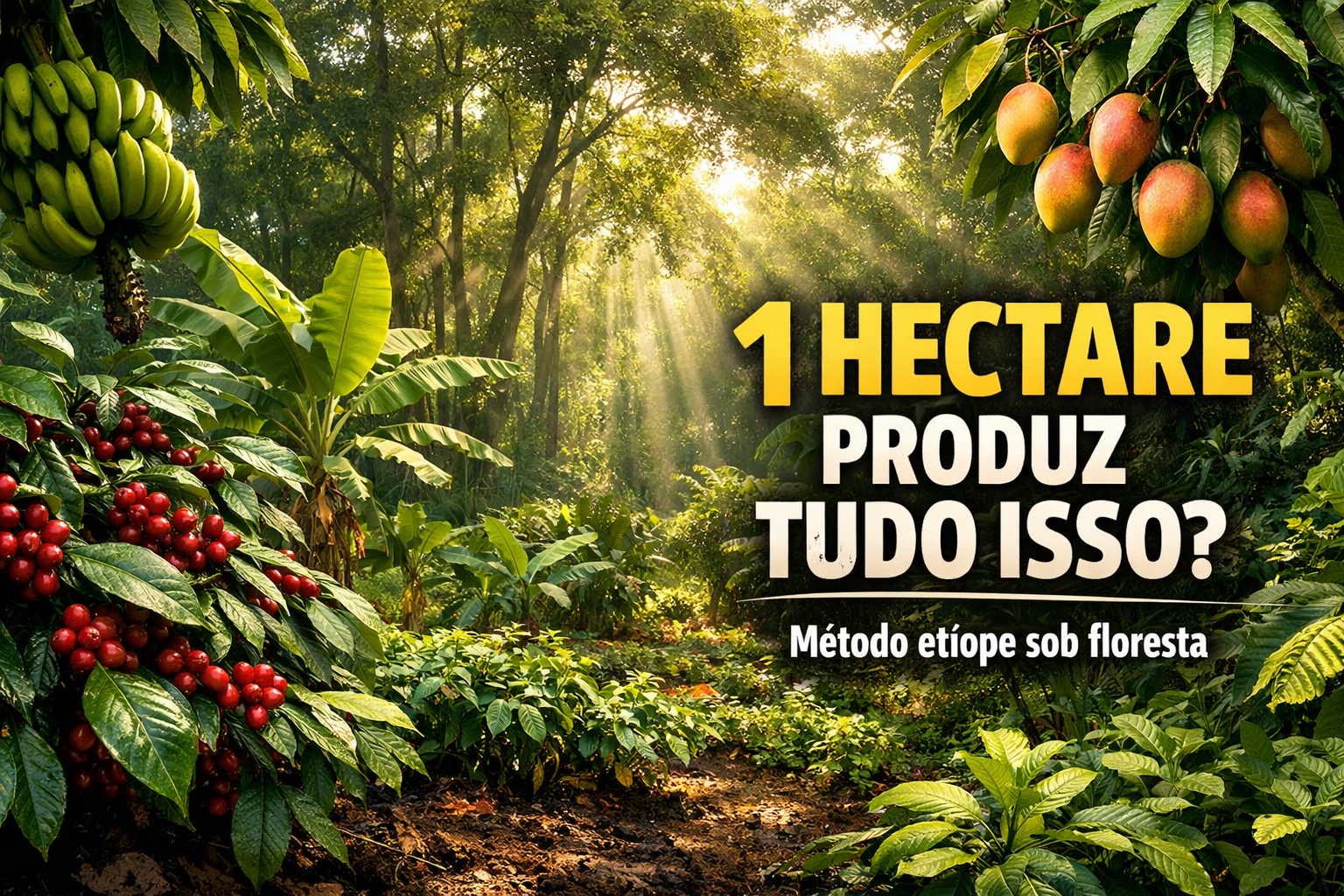


Agroforestry System In Ethiopia Combines Coffee, 20 Species Of Trees And Stores 61.5 T Of Carbon Per Hectare, Generating Continuous Income In Small Farms.
In southwestern Ethiopia, smallholder farmers have developed over centuries an agricultural system that seems to break the rules of modern agriculture: instead of clearing the land and planting a single crop, they grow coffee under a forest of native trees that produce bananas, mangoes, avocados, spices, and timber at the same time. The traditional Ethiopian agroforestry system organizes production into three overlapping vertical layers: large trees at the top, fruit trees and coffee plants in the middle layer, and vegetables, spices, and tubers at ground level.
A single hectare can accommodate up to 20 different species of trees combined with agricultural crops, storing over 61.5 tons of carbon per hectare and generating continuous income throughout the year for families who cultivate plots of less than 2 hectares. The social cost of converting one hectare of this system to monoculture is estimated to be between US$ 2,892 and US$ 4,225 in lost ecosystem services.
The Architecture Of A Productive Forest
The Ethiopian agroforestry system functions as a controlled replica of the natural afromontane forest that covers the country’s highlands.
-
The sugar-energy sector advances with agricultural technology, but agricultural productivity still raises concerns.

-
The eggshell that almost everyone throws away is made up of about 95% calcium carbonate and can help enrich the soil when crushed, slowly releasing nutrients and being reused in home gardens and vegetable patches.

-
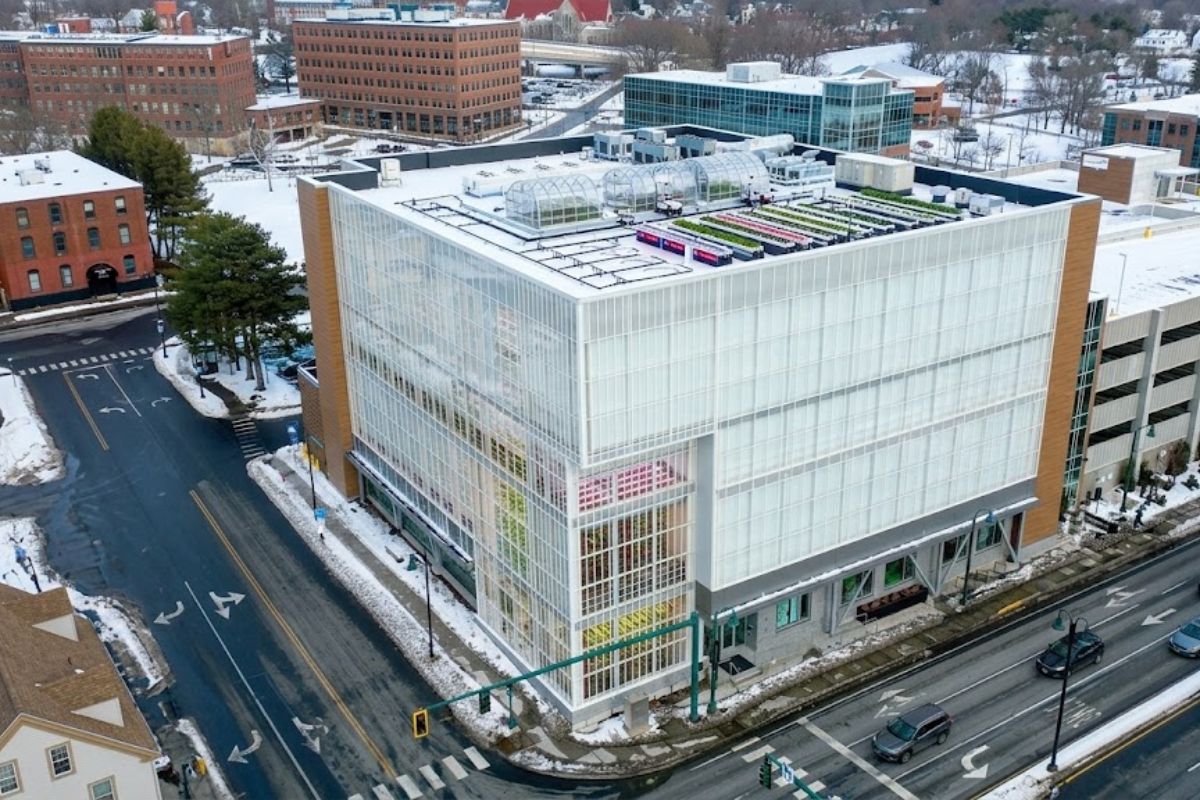
This farm in the United States does not use sunlight, does not use soil, and produces 500 times more food per square meter than traditional agriculture: the secret lies in 42,000 LEDs, hydroponics, and a system that recycles even the heat from the lamps.
-
The water that almost everyone throws away after cooking potatoes carries nutrients released during the preparation and can be reused to help in the development of plants when used correctly at the base of gardens and pots, at no additional cost and without changing the routine.


At the top, large trees such as Cordia africana, Croton macrostachyus, and Millettia ferruginea form the upper canopy, reaching heights of 15 to 25 meters. These trees provide regulated shade for the lower layers, in addition to timber for construction, firewood, and foliage that falls to the ground and decomposes into organic matter.


In the middle layer, between 5 and 12 meters in height, fruit trees such as mango, avocado, papaya, and banana grow intermixed with coffee plants. The Arabica coffee, native to Ethiopian forests, is a shade-tolerant plant that thrives in this partially shaded environment.
Bananas, in addition to producing fruits for consumption and sale, offer an added benefit: their flowers attract a wide diversity of pollinator insects that benefit the entire system, and the banana bunches that rot in the field serve as food for mammals and birds.
At the ground level, the lower layer includes short cycle plants such as corn, spices (ginger, turmeric, korarima), vegetables (kale, cabbage, tomatoes, bell peppers), tubers (taro, yam, sweet potatoes), and ensete, a plant similar to the banana plant whose pseudostem serves as a staple food for about 15 million Ethiopians.
How Trees Improve Coffee Production
For over a century, agricultural researchers have debated whether shade trees benefited or harmed coffee production. The answer found in Ethiopian farms is clear: native trees increase productivity, while exotic trees may reduce it.
A study in India with 113 agroforestry coffee farms found that adding 100 native trees (non-Grevillea) per hectare increased coffee fruit production by 5.6% and bean size by 6.25%. In contrast, exotic trees like Grevillea robusta, often planted for their fast growth, caused losses of up to 1.7% in production.

Preferred native trees among Ethiopian farmers include Albizia gummifera, Acacia abyssinica, Millettia ferruginea, and Cordia africana.
These four species together account for 42% of the carbon stored above ground in coffee agroforestry systems and 12% in natural forests. Farmers choose these trees not by coincidence: they have specific characteristics that benefit coffee.
Millettia ferruginea, for example, fixes nitrogen in the soil through a partnership with bacteria in its roots. Soil analyses show that areas beneath its canopy have higher levels of total nitrogen and total organic carbon compared to open areas. Croton macrostachyus increases soil cation exchange capacity and potassium levels. Albizia gummifera increases available phosphorus levels.
Trees also create a more favorable microclimate. Shade reduces soil temperature, decreases water evaporation, and increases relative humidity in the air. Studies show that shade from trees improves coffee beverage quality, resulting in beans that reach premium prices in the international market. The shaded coffees from Ethiopia, such as Yirgacheffe, Sidamo, Harar, and Limmu, are globally recognized for their superior quality.
Diversified Production In Three Dimensions
The great advantage of the Ethiopian agroforestry system is its ability to generate multiple products simultaneously from the same piece of land. While a coffee monoculture produces only coffee, the agroforestry system offers income flows spread throughout the entire year.
A survey in four zones of southern Ethiopia identified over 30 different crops produced in agroforestry systems: avocado, banana, cabbage, carrot, cassava, chickpeas, common beans, ensete, ginger, kale, korarima (an Ethiopian spice similar to Indian cardamom), corn, mango, papaya, peach, bell pepper, potato, sugar cane, sweet potato, taro, teff, tomato, and yam.
The majority of these crops are consumed by the families themselves, ensuring food security throughout the year. Only a few crops generate income: coffee represents the main cash source for 80% of farmers in Sidama, 92.7% in Gedeo, and 57.5% in Wolayta. Banana is the main source of income in Gamo Goffa, where 60% of farmers sell bananas and only 10% primarily rely on coffee.
Other crops sold include khat, corn, avocado, beans, pigeon peas, taro, teff, cotton, mango, and sweet potatoes.
A study on financial viability compared agroforestry systems with cereal monocultures in northwestern Ethiopia.
The shaded coffee systems showed the highest net present value per hectare: between 193,932 and 296,739 Ethiopian birr (US$ 6,641 to US$ 10,162) over 15 years, compared to 58,642 to 167,105 birr (US$ 2,008 to US$ 5,722) for cereal crops such as teff, corn, and millet. The shaded coffee system was 34.65% more profitable than agroforestry systems with other trees and 26.45% more profitable than home gardens.
Invisible Ecological Services That Sustain Production
In addition to the visible products coming from the farm, the Ethiopian agroforestry system provides essential ecosystem services that conventional agriculture needs to replace with costly inputs.
Carbon storage is impressive. Semi-forested coffee systems in the Jimma highlands store 61.5 ± 25 tons of carbon above the ground per hectare, significantly more than pasturelands, annual crops, or degraded areas.
In higher altitude regions of the humid afromontanas in southern Ethiopia, extensive coffee systems store over 258 ± 39.4 tons of carbon per hectare.

For comparison, natural forests in the same region store slightly more carbon, but agroforestry systems come very close while still producing food and income.
Trees pump nutrients from the deeper layers of the soil to the surface through their extensive roots. When leaves fall and decompose, these nutrients become available for shallower-rooted plants like coffee and vegetables.
The system essentially creates its own organic fertilizer continuously, without the need for transportation or application of external inputs.
Water cycling is another critical benefit. Shade from trees reduces soil evaporation, conserving moisture during dry periods. The deep roots of the trees break up compacted soil layers, allowing better infiltration of rainwater. During intense storms, the tree canopies intercept water, reducing soil erosion.
Biodiversity is extraordinary. Ethiopia hosts 99.8% of the total genetic diversity of Arabica coffee. This genetic diversity is vital for selecting high-quality coffee varieties that are resistant to diseases, pests, and extreme weather. Coffee forests also serve as habitat for large mammal species that have disappeared from areas with intensive agriculture.
Challenges And Threats To The System
Despite its proven benefits, the Ethiopian agroforestry system faces increasing pressures. Ethiopia has lost 90% of its original forest cover. Many of the remnants are semi-forested coffee systems that are now being converted to full-sun coffee plantations or other land uses.
The demand for forest products is causing accelerated deforestation. Farmers remove shade trees to expand coffee production in the short term, unaware that this compromises long-term sustainability. Climate variability caused by global warming is affecting rainfall patterns, increasing the occurrence of droughts and frosts that can cause production losses of up to 70%.
There is also a generational issue. Young Ethiopians see work in agriculture as hard and unprofitable. Many migrate to cities in search of better opportunities, leaving behind the traditional knowledge accumulated over generations about how to manage agroforestry systems.
The European Union Deforestation Regulation (EUDR), implemented in 2023, requires companies importing coffee into EU countries to demonstrate that their products do not contribute to deforestation or forest degradation.
Although the Ethiopian agroforestry system is sustainable and promotes biodiversity, its complexity creates challenges in meeting the strict definitions of the regulation.
Traceability requirements and associated administrative costs may disproportionately affect small farmers, threatening their livelihoods and negatively impacting the Ethiopian economy, which heavily relies on coffee exports.
Policies To Preserve Traditional Knowledge
To protect and expand agroforestry systems, the Ethiopian government and international organizations are implementing various strategies. Certification programs like Fair Trade and Rainforest Alliance offer premium prices for sustainably produced coffee, creating financial incentives to maintain shade trees.
Carbon sequestration projects through the REDD+ mechanism (Reducing Emissions from Deforestation and Forest Degradation) allow farmers to receive payments for keeping forests standing.
The carbon avoided through the non-conversion of agroforestry systems to monocultures can generate emission reduction credits that are traded in international carbon markets.
Agricultural extension services are being strengthened to educate farmers about the long-term economic and ecological benefits of agroforestry systems. Subsidies for seedlings of improved fruit trees and native shade species help reduce initial establishment costs.
Market networks are being developed to connect agroforestry coffee producers directly with international buyers willing to pay premium prices for shade coffee. Accessible credit systems allow farmers to invest in improvements without compromising their immediate food security.
Programs for disease and pest protection help reduce production losses. Improved coffee varieties resistant to diseases are being distributed for free or at subsidized prices.
A Lesson In Natural Efficiency
The Ethiopian agroforestry system challenges the logic of industrial agriculture that dominated the 20th century. Rather than simplifying ecosystems to maximize the production of a single crop, it increases complexity to produce multiple products simultaneously while maintaining the natural processes that sustain long-term production.
About 95% of Ethiopian coffee is produced by approximately 15 million small farmers who on average have less than 2 hectares of total land, of which they cultivate coffee on less than 1 hectare.
For these families, the agroforestry system is not just an agricultural technique but a survival strategy that distributes risks, ensures food year-round, and generates multiple income streams.
In a world facing climate change, biodiversity loss, and food insecurity, Ethiopia’s productive forest offers a model tested over centuries: work with nature, not against it. Plant trees where others cut down. Cultivate diversity where others plant monocultures. And when you need fertilizer, let the leaves fall.










Mas por que a etiopia e um dos paises africanos com mais fome e miseria do mundo? Tem coisa errada ai.