





 Portuguese
  English
  Spanish
  5 min of reading
  0 comments


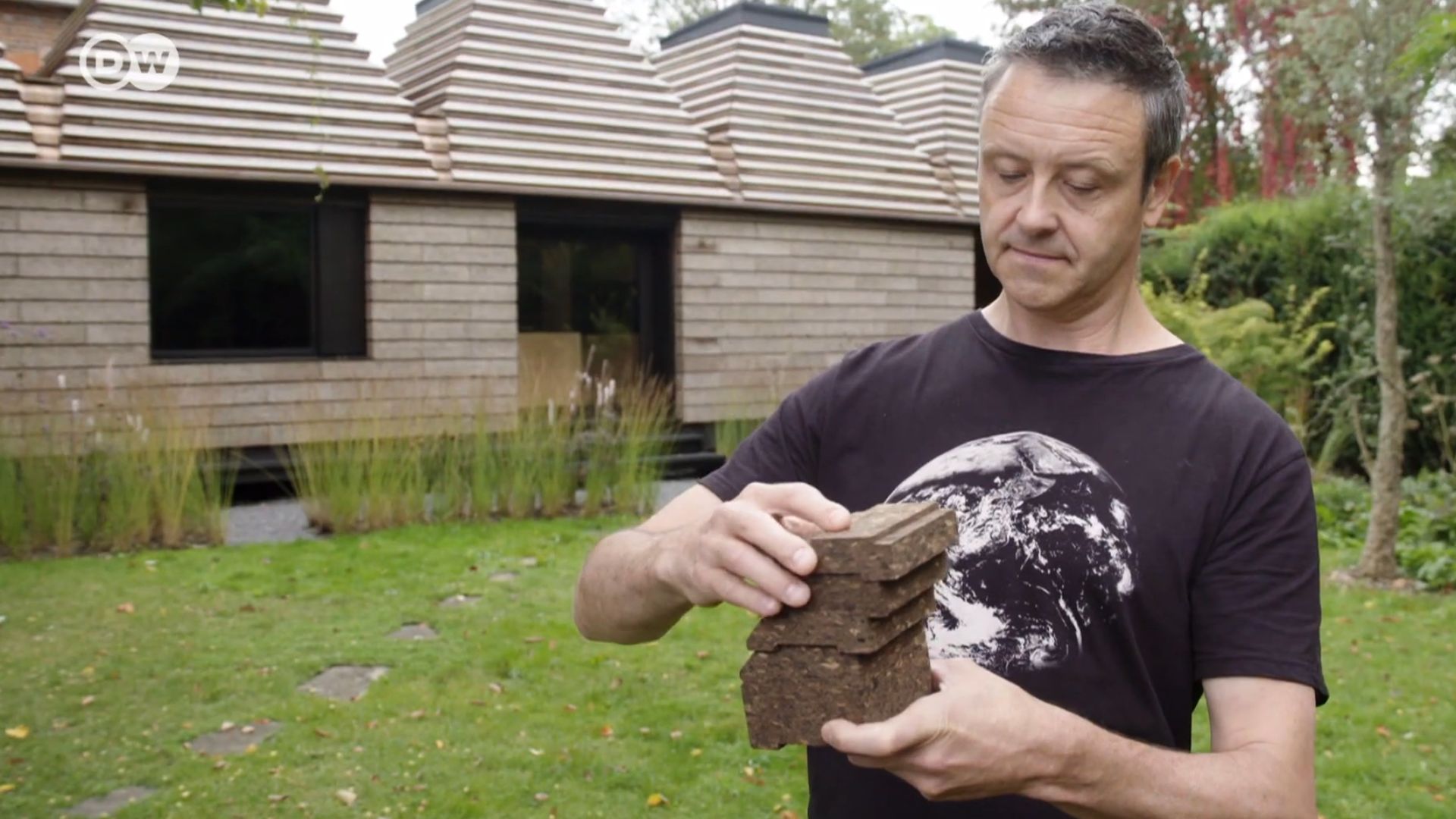
Project in the United Kingdom Bets on Solid Expanded Cork Blocks Joined by Compression to Build House Without Cement, Mortar or Glue, with Manual Assembly and Demountable Structure. System Uses 1,268 Prefabricated Parts and Proposes a Construction Model with Negative Carbon Potential.
A house built in the United Kingdom caught attention for dispensing with cement, mortar, and glue to erect walls and roofing using 1,268 solid expanded cork blocks, manually assembled and stabilized by compression, in a system designed to be dismantled and reused at the end of its life cycle.
Named Cork House, the project was presented as a kit of prefabricated pieces, taken to the construction site for dry assembly, in a method that aims to reduce traditional construction steps and limit the use of materials with a higher carbon footprint, such as binders and adhesives.
Construction Without Mortar and Glue in the United Kingdom

Instead of relying on layers and typical interfaces of conventional envelopes, the proposal concentrates sealing, insulation, and part of the structural logic in a set of repeated blocks, sized to work together when stacked precisely with the weight distributed.
-
Friends have been building a small “town” for 30 years to grow old together, with compact houses, a common area, nature surrounding it, and a collective life project designed for friendship, coexistence, and simplicity.

-
This small town in Germany created its own currency 24 years ago, today it circulates millions per year, is accepted in over 300 stores, and the German government allowed all of this to happen under one condition.

-
Curitiba is shrinking and is expected to lose 97,000 residents by 2050, while inland cities in Paraná such as Sarandi, Araucária, and Toledo are experiencing accelerated growth that is changing the entire state’s map.

-
Tourists were poisoned on Everest in a million-dollar fraud scheme involving helicopters that diverted over $19 million and shocked international authorities.


By eliminating the mortar, the assembly no longer requires the preparation of mixtures on site, reducing water consumption and decreasing dependence on wet processes at the construction site, while facilitating reversibility, since the pieces can be separated without demolishing or contaminating components with glue residue.
Compression System and Joining of Solid Blocks
The stability of the assembly does not come from an isolated element, but from the behavior of the system when the blocks are in the correct position, creating continuous contact between surfaces and generating compression along the joints, in a logic similar to structures that benefit from their own weight to maintain alignment.
In this type of arrangement, small variations in execution become important because the fit tolerance and the regularity of the laying determine the performance of the assembly, requiring detailed design, precise manufacturing, and careful assembly so that the walls function as a single body.
Corbelled Roofing and Connected Volumes
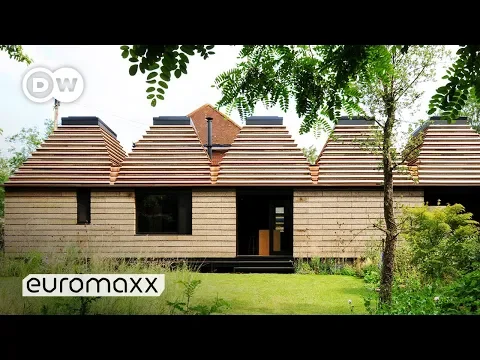

The design of the building reinforces the idea that blocks assume a structural role by adopting corbelled pyramid roofs, a solution that advances rows progressively, distributing loads without relying solely on large continuous beams and valuing the repetition of solid pieces.
Thus, the house combines a contemporary appearance with stacking principles known in the history of construction, where geometry and gradual transfer of forces help keep the assembly stable, as long as the fit preserves continuity and efficient contact between layers.
Origin of Expanded Cork and Production Process
Cork is obtained from the bark of the cork oak, harvested without felling the tree and in periodic cycles, a characteristic that is often pointed out as an environmental advantage by associating production with continuous management, rather than extraction that eliminates the resource at its source.
In the case of expanded cork applied in construction, sources related to the project describe the use of granules and by-products from the cork chain, heated and compressed to form blocks, with bonding promoted by natural components of the material itself, reducing synthetic additives.
Manual Assembly and Industrial Precision

Despite the image of simplicity, the system relies on preparation outside the construction site, because the blocks need to arrive with compatible geometry to lock by interference, a condition that makes the fit repeatable and reduces the need for improvised corrections during assembly.
Execution, on the other hand, relies on manual work as part of the concept since the fit dispenses with mixing tools and gluing processes, concentrating the effort on positioning and controlling alignment so that compression is distributed correctly.
Dismantable House and Material Reuse
Reversibility appears as one of the central arguments of the project because the absence of definitive joints allows blocks to be removed and reconfigured without destroying the material, which changes the common logic of construction traditionally geared towards systems that become waste when dismantled.
By specifying the number of blocks, the project sizes the ambition of the kit, treating the building as a sum of recoverable units, with potential for reuse, recycling or returning to a biological cycle, depending on the state of the material and the fate given after use.
Negative Carbon Potential and Life Cycle

Institutions and authors associated with Cork House describe the building as carbon negative upon completion, attributing this result to the biogenic carbon stored in plant components and to a strategy that prioritizes disassembly and reuse, rather than immediate disposal.
When this accounting is presented, it is often linked to life cycle assessments and technical standards used to measure the impacts of materials and systems, including metrics for embodied carbon and emissions throughout the life cycle, according to declared methodology.
Architectural Experiment with Monomaterial
By taking cork from a role more associated with insulation and finishing to a complete architectural scale, the project highlights an attempt to reduce layers, interfaces, and common points of failure in highly stratified envelopes, betting on a monomaterial solution to simplify the set.
Still, the arrangement itself makes clear that “simplicity” does not eliminate technical demands because it shifts complexity to detailing, manufacturing, and assembly control, in a work that depends on precision to achieve performance and enable disassembly.









-

Uma pessoa reagiu a isso.