Fishermen Tired of Waiting for Help Create Cooperative to Save Mangrove Destroyed by Oil: In 16 Years, They Planted 30,000 Seedlings Using Their Own Technique, Transformed Fishing into Sustainable Tourism, and Generated Income for 5,000 Families Without Relying on Government
Pescadores cansaram de esperar ajuda e criaram cooperativa para salvar mangue destruído por óleo: em 16 anos plantaram 30 mil mudas com técnica própria, transformaram pesca em turismo sustentável e geraram renda para 5 mil famílias sem depender de governo
3 pessoas reagiram a isso.
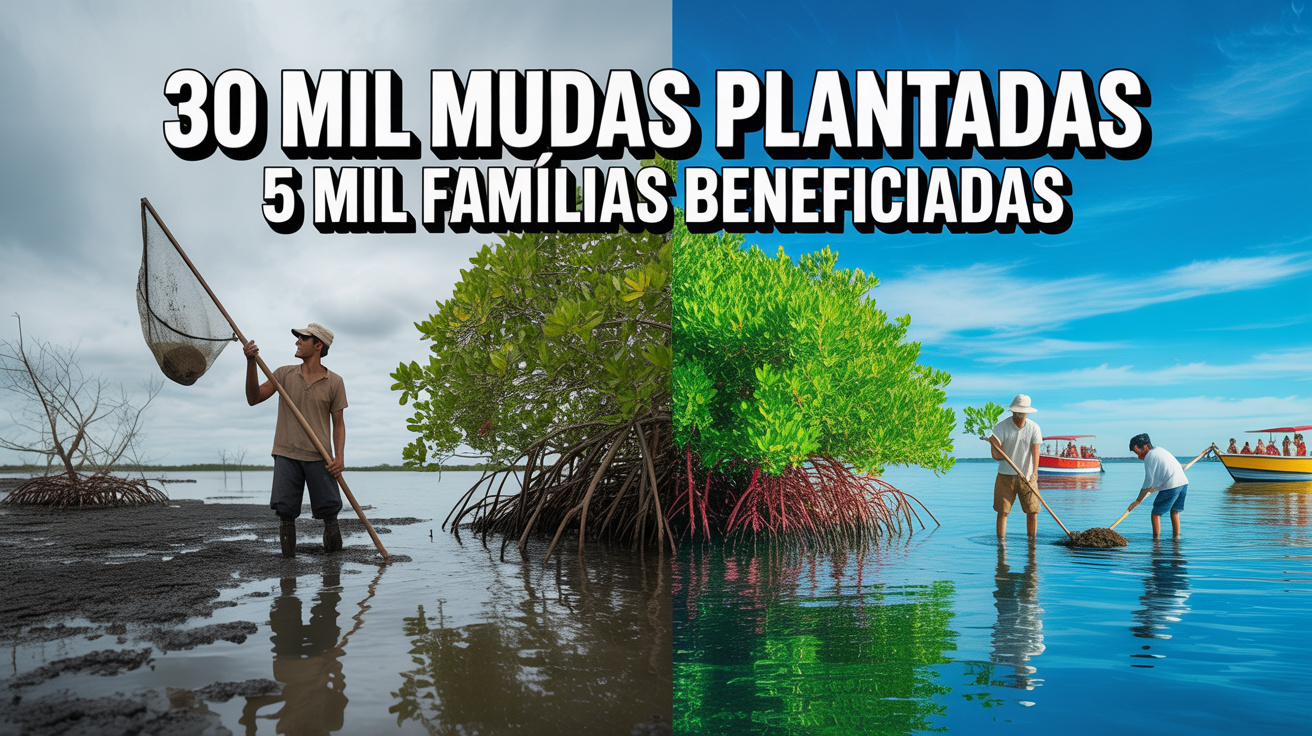
In the early morning of January 18, 2000, 1.3 million liters of oil from Petrobras transformed 40 km² of Guanabara Bay into a black desert. Fishermen who saw their livelihood disappear decided not to wait for promises and rebuilt the mangrove with their own hands.
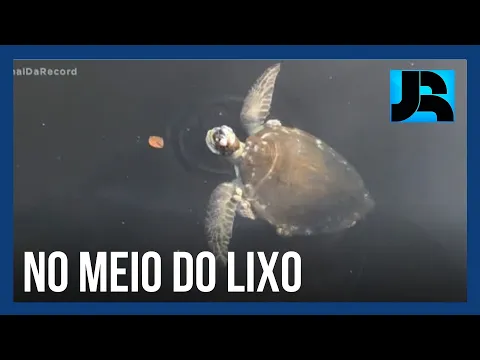
Alaildo Malafaia was 46 years old when he woke up to the news that would change his life forever. A pipeline from Petrobras connecting the Duque de Caxias Refinery to the Ilha d’Água terminal ruptured before dawn, pouring an amount of oil equivalent to four million soda cans directly into the sea. The oil slick spread over 40 km², hitting beaches, islands, and the heart of the Guapimirim mangroves — an environmental protection area that is home to hundreds of species. The incident became known as one of the largest environmental disasters in Brazil’s history.
For the fishermen, it was the end of a world. Until the day of the spill, boats fished an average of 100 kg of shrimp at night. By 2003, the volume did not exceed 30 kg. Images of birds covered in oil circulated the globe. About 12,000 fishermen had their activities harmed.
The Decision That Changed Everything
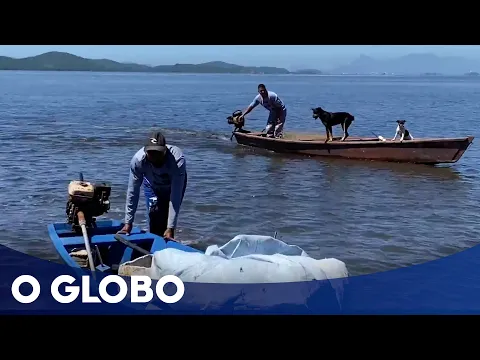
For 45 years, Alaildo Malafaia has worked in fishing in Guanabara Bay. He knows every river bend, every mangrove tree, every behavior of the crab. When he saw outside technicians arriving to “recover” the mangrove without understanding anything about the ecosystem, he made a decision.
“Sometimes, when we manage to secure investment to care for the mangrove, most companies bring in people from outside who don’t know this place”, Malafaia says.
“They are lost or do things that shouldn’t be done. It is necessary to call local people, because we are the ones who live inside the mangrove. We know how to take care of it”.
In 2009, he helped create the Manguezal Fluminense Cooperative, an organization formed by fishermen and crab catchers who decided to take control of the recovery. More than 400 families are part of the cooperative, working in the APA of Guapimirim, in the municipalities of Magé, Guapimirim, Itaboraí, and São Gonçalo.
The Technique That Scientists Did Not Know
The challenge was enormous. Partner NGOs were producing seedlings in nurseries, but when they reached the field, more than 50% of the seedlings were lost.
That’s when the empirical knowledge of the fishermen made a difference.
“In our expertise as fishermen, we began to take the plankton under the mother plant, move it out of the shade and into the light, and they didn’t die”, explains Malafaia.
The technique — called transplanting — reduced seedling mortality to nearly zero.
“When we produced seedlings in the nursery, many were lost. We started to transplant them, taking them out from under the mother plant and bringing them to the sun. This way, we stayed within the loss margin, reaching a maximum of six percent”.
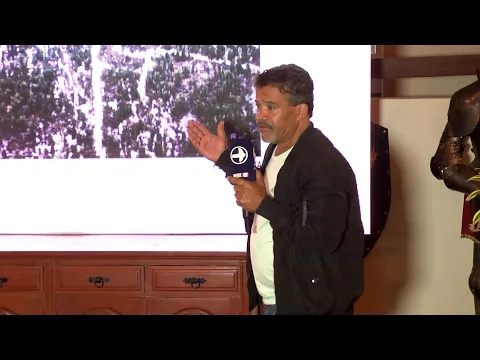
What began as a local solution became a national reference. “Empirical knowledge is fundamental in the natural regeneration of the mangrove”, says Malafaia, who is now invited to give lectures on mangrove restoration throughout Brazil.
“Today we produce knowledge for all of Brazil and even for other countries”, he proudly states.
The Numbers of Recovery
In 16 years of relentless work, the cooperative transformed the landscape:
Recovered Area: The cooperative members have already recovered 150 hectares of mangrove area.
Recent Planting: The Guanabara Verde Project, initiated in 2021, involved the planting of 30,000 seedlings in 12.2 hectares.
Total Seedlings in 2024: Together with the NGO Guardiões do Mar, they planted 57,500 seedlings in 2024 alone.
Biodiversity: The Cooperative, which accounted for about 160 species of birds, now has over 242 species present in the area.
90 of the 116 hectares of the Barão de Mauá Municipal Natural Park have been reforested, with trees about 20 meters tall. Crab populations have rebounded and are distributed among more than ten different species.
From Fisherman to Environmental Entrepreneur
The transformation was not only in the mangrove — it was in the people.
“When I was a fisherman, I lived off natural resources. Today I work to perpetuate the existence of natural resources”, reflects Malafaia, now 62 years old.
The cooperative did not stop at restoration. The fishermen became community-based tourism guides, conducting kayak tours and environmental education.
Nilo Ferreira Filho, 72 years old, a lifelong fisherman, now leads eco-tourists for immersions in the mangroves. “This tourism thing is a novelty, another form of livelihood.”
The fisherwoman Lucimar Machado, founder of the Luthando pela Vida and Remando o Manguezal projects, explains the philosophy: “We preserve and want people to come here and help us spread the word and preserve this environment because we live off this environment.”
The Economic Impact
According to Pedro Belga, founder of the NGO Guardiões do Mar, 650 families are registered in Guanabara Bay as crab catchers and 5,000 rely on fishing, earning an average of just over R$ 2,000 monthly.
“When we plant mangrove, we are generating bioeconomy. When we engage in community-based tourism, we are generating bioeconomy. Through handicrafts, we are generating bioeconomy”, explains Malafaia.
The oceanographer Liziane Alberti emphasizes: “Mangroves are also valuable to the economy — artisanal fishing and tourism are just a few of the activities that benefit from the health of these ecosystems”.
Why Mangroves Matter to the Planet
“When we plant a seedling here, we are planting a seedling for the planet, because the service that the mangrove provides is incredibly important. 60% of marine species depend on mangroves”, explains Pedro Belga.
“There are 1 billion people consuming protein every day, who at some point need the mangrove. They protect the coast; they are biological filters”.
The recovered area became known as the “Pantanal Fluminense”. Dolphins thrive in Guanabara Bay, safeguarded by the water renewal promoted by the mangrove.
Lessons for the World
The story of the Manguezal Fluminense Cooperative proves three fundamental things:
1. Local Knowledge is Essential: “They didn’t know how to plant mangrove, and learned from us. What they learn in the classroom they want to apply here, but that doesn’t apply in the mangrove like that”
2. Communities Can Lead: The cooperative executes projects ranging from environmental education to tourism, including forest restoration — all with local leadership.
3. Autonomy Yields Results: Without relying on direct public funding, using sponsorship from companies and creating their own sources of income, the cooperative demonstrates a sustainable model for environmental recovery.
The Fisherman Who Became a Biologist
Despite lacking an academic degree in Biology, years of collaboration with researchers transformed Malafaia into a “fisherman-biologist.”
This exchange between traditional knowledge and scientific knowledge has become a model. Organizations ensure the mangrove through the exchange between local fishermen’s traditional knowledge and researchers’ scientific knowledge — a movement that also promotes the appreciation of local communities.
“They have even called us ‘stupid’ before”, Malafaia recounts, remembering the initial prejudice. Today, he travels across Brazil sharing techniques, participates in national mangrove congresses, and helps train other communities.
The Work Continues
The 2000 disaster left scars. Compensation to fishermen took nearly 20 years to be paid, and many had died when the agreement was ratified in 2019.
But while justice and companies dragged through processes, the fishermen did not wait. They took shovels, boots, seedlings, and ancestral knowledge — and rebuilt their world.
“Partnerships, friendships, and the joy of doing interesting things not just for the Guapi-Mirim APA were very important. Here we go against the tide of the planet. Here we restore”, celebrates Malafaia.
The Manguezal Fluminense Cooperative is living proof that change does not need to wait for permission — it starts when ordinary people decide to act.
PANTANAL FLUMINENSE IN NUMBERS
14,000 hectares of protected area in the Guapimirim APA
150 hectares recovered by the cooperative
242 species of birds recorded (was 160 before)
5,000 people rely on fishing in the region
650 families registered as crab catchers
400+ families are part of the cooperative
60% of marine species depend on mangroves at some life stage
How to Visit: The Manguezal Fluminense Cooperative offers boat tours and technical visits in the Guapimirim APA. The tours are conducted by the fishermen themselves, who share stories and knowledge about the ecosystem.
Quando você faz login pela primeira vez usando um botão de Login Social, coletamos informações de perfil público de sua conta compartilhadas pelo provedor de Login Social, com base em suas configurações de privacidade. Também obtemos seu endereço de e-mail para criar automaticamente uma conta para você em nosso site. Depois que sua conta for criada, você estará conectado a esta conta.
Não concordoConcordo
Eu concordo em criar minha conta
Quando você faz login pela primeira vez usando um botão de Login Social, coletamos informações de perfil público de sua conta compartilhadas pelo provedor de Login Social, com base em suas configurações de privacidade. Também obtemos seu endereço de e-mail para criar automaticamente uma conta para você em nosso site. Depois que sua conta for criada, você estará conectado a esta conta.
Formado em Jornalismo e Marketing, é autor de mais de 20 mil artigos que já alcançaram milhões de leitores no Brasil e no exterior. Já escreveu para marcas e veículos como 99, Natura, O Boticário, CPG – Click Petróleo e Gás, Agência Raccon e outros. Especialista em Indústria Automotiva, Tecnologia, Carreiras (empregabilidade e cursos), Economia e outros temas. Contato e sugestões de pauta: valdemarmedeiros4@gmail.com. Não aceitamos currículos!





 Portuguese
  English
  Spanish
  6 min of reading
  0 comments


















-

-

3 pessoas reagiram a isso.