





 Portuguese
  English
  Spanish
  5 min of reading
  0 comments


The Golden Ice Cream: The Most Luxurious Dessert on the Planet That Costs US$ 100,000 Appeared on MrBeast. See What Makes This Ice Cream So Expensive, What Ingredients Are on the List, and How Gold Became Part of the Luxury Menu
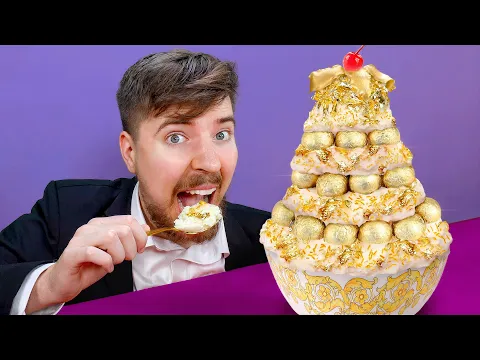
MrBeast – I ate $100,000 golden ice cream: The 100 thousand dollar ice cream did not appear in a display in Dubai, nor was it launched as a limited edition product. It was born within a video. And that’s where the story became a mix of curiosity, incredulity, and a detail that many people overlooked.
The value is not just in what goes into the spoon. The value lies in what happens off-camera, in the type of logistics that resembles an industrial operation, with control, exclusivity, and high costs to reduce risk and maximize impact.

Is There Really a $100,000 Ice Cream, or Was It Just Theatre with Shiny Gold on the Screen?
The title of the video in English, released in 2021 on MrBeast, was straightforward: “I Ate 100,000 Golden Ice Cream.” In Brazil, the popular translation became “I Had the Golden Ice Cream for 100 thousand dollars.”
-
Friends have been building a small “town” for 30 years to grow old together, with compact houses, a common area, nature surrounding it, and a collective life project designed for friendship, coexistence, and simplicity.

-
This small town in Germany created its own currency 24 years ago, today it circulates millions per year, is accepted in over 300 stores, and the German government allowed all of this to happen under one condition.

-
Curitiba is shrinking and is expected to lose 97,000 residents by 2050, while inland cities in Paraná such as Sarandi, Araucária, and Toledo are experiencing accelerated growth that is changing the entire state’s map.

-
Tourists were poisoned on Everest in a million-dollar fraud scheme involving helicopters that diverted over $19 million and shocked international authorities.


However, this does not mean that there is an ice cream sold commercially at that price, with a tag and a line at the door.
What happened was something else: an experience set up for entertainment, with real and expensive ingredients, adding costs until reaching the number that grabs attention and holds the viewer.
This is where the fine line between true luxury and calculated exaggeration comes in. The video is real as a luxury challenge, but the final bill includes items that are not “the golden ice cream,” but rather the structure needed for the scene to exist.
The Secret Behind the Scenes at MrBeast Is Not the Gold; It’s What Makes Any Premium Operation Expensive: Transportation, Time, Dedicated Team, and Quality Control Beyond Standard
The edible gold catches the eye. However, gold leaf alone does not explain the jump to six digits.
What matters is the complete package. According to what circulates about the production, costs include private chefs, logistics, and handling and control requirements that elevate the overall price.
In industry terms, this is when the project ceases to be a “purchase of supplies” and becomes a “complete operation.” The same object, with a more demanding supply chain, changes its level.
There is no official number disclosed by MrBeast, detailing each cost item. And that’s why there is debate.
Part of the audience on MrBeast views it as exaggeration for entertainment, while others point out that rare ingredients, combined with logistics and exclusivity, really make the bill soar.
When Luxury Mimics Industry, a Rare Ingredient Becomes the Culinary Equivalent of a Critical Component: Difficult to Obtain, Difficult to Store, and Too Expensive to Fail
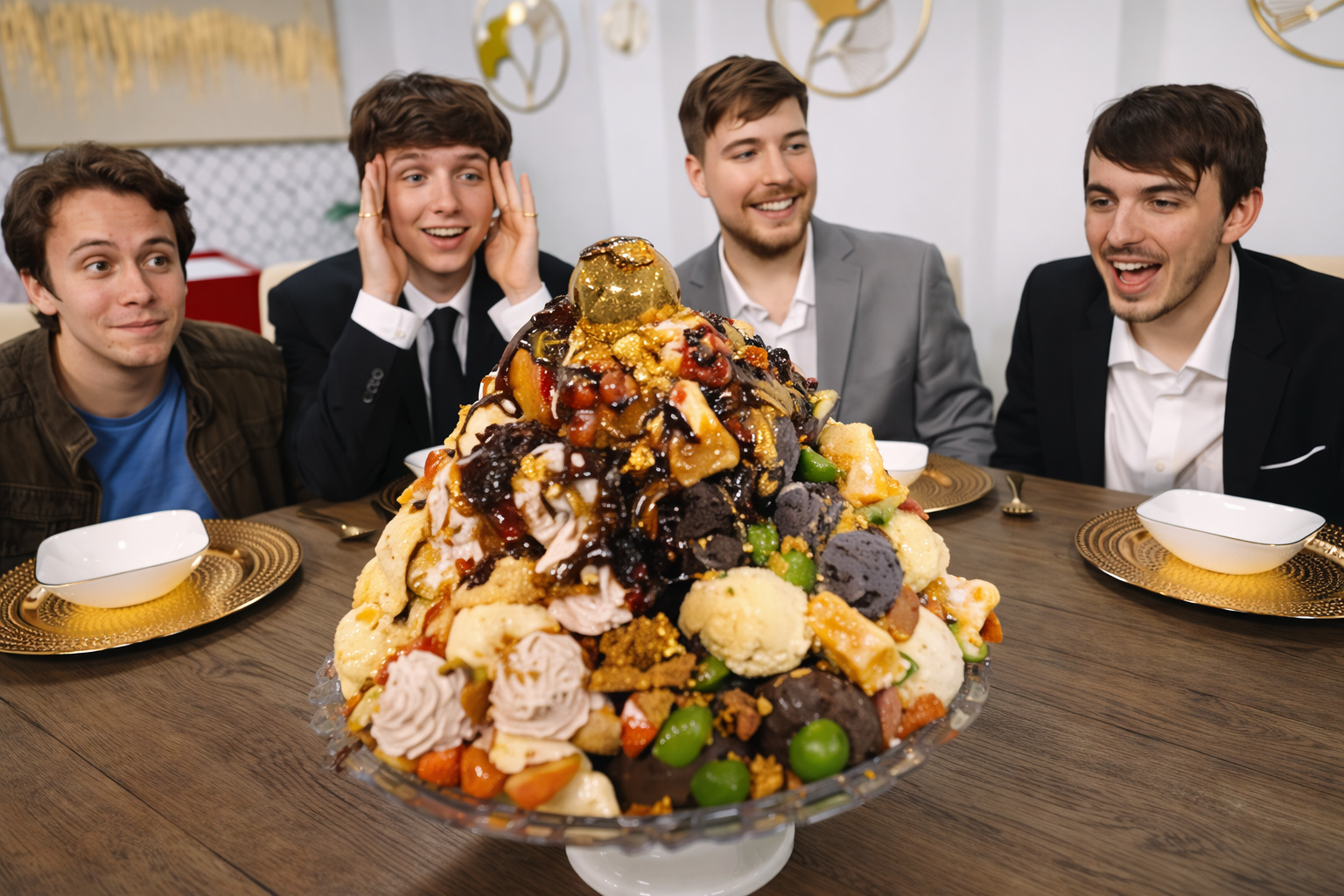
The video shows a progression of expensive dishes leading up to the final sundae. And the mentioned ingredients help, then, to understand the type of market behind it.
The narrative includes items such as Japanese strawberries, caramelized peaches, edible gold, and a sauce associated with extreme aging, described as 99-year-old grape juice.
Even without going into unit prices, one can see the mechanism: rare items do not cost just because they are rare. They cost because they require selection, time, handling, preservation, and delivery with minimal margin for error.
Those who work with energy, oil, and large operations recognize this pattern. A critical component does not only cost for the metal. It costs because, if it fails, it disrupts the entire schedule. In luxury, the logic is similar; failure destroys the experience and the content.
The Rivalry Here Is Not About Flavors; It’s About Business Models: Luxury Sold by Portion Against Luxury Staged as an Audience Spectacle
There are indeed expensive ice creams in the world. However, they exist in a different tier.
There are famous examples, such as the Black Diamond in Dubai, described as a golden ice cream with 23-carat gold and premium ingredients, and the Golden Opulence Sundae in New York, known for its high price and the promise of exclusivity.
These cases represent commercial luxury. You pay and take the experience.
On the other hand, the $100,000 ice cream from the video falls into a different category: luxury as media production. The price does not need to be sustainable for the average consumer. It needs to be convincing on screen and strong enough to generate clicks, reactions, and retention.
It’s a reverse David and Goliath. The restaurant sells for a thousand. The content creator advertises for a hundred thousand and profits at scale, not from the scoop, but from the audience that transforms cost into advertising revenue and relevance.
The Domino Effect That Matters Now: Why This Story Became Recurring News and What It Reveals About Cost, Supply Chain, and Attention Economy
The internet did not latch onto the flavor. It latched onto the number. And there’s a reason for that.
One hundred thousand dollars is an amount that, in the public’s mind, belongs to cars, houses, or investments, not to dessert. This shock creates immediate curiosity, and curiosity holds the scroll.
At the same time, the story exposes a bigger phenomenon: the attention economy can package anything, including food, as if it were a high-cost project, with logistics, teams, and rare materials, to generate value elsewhere.
There is no universally accepted record for the “most expensive ice cream in the world” that closes this discussion definitively, because many of these cases depend on different criteria: portion, context, exclusivity, and verification.
What is known is that the price of the video does not represent a shelf product, but rather a luxury operation built for performance.
In the end, what caught attention was this: it wasn’t just an ice cream with gold; it was a giant number supported by behind-the-scenes elements that resemble industrial logic, where control and exclusivity become part of the cost.
Tell us in the comments: Do you think the $100,000 bill makes sense when logistics, team, and exclusivity are considered, or does it go over the limit and become just a spectacle to grab attention?










-

-

-

-

-

14 pessoas reagiram a isso.