





 Portuguese
  English
  Spanish
  5 min of reading
  0 comments


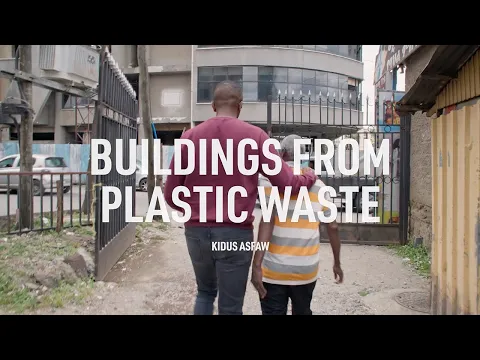
After The Landslide That Killed 116 People At The Koshe Landfill In Addis Ababa, Kidus Asfaw Left International Career In Technology To Confront The Structural Problem Of Urban Waste Management In Ethiopia.
After the landslide that killed 116 people at the Koshe landfill in Addis Ababa, Kidus Asfaw left his international career in technology to tackle the structural problem of urban waste management and plastic recycling in Ethiopia. On March 11, 2017, a Saturday night, a mountain of trash collapsed on a whole neighborhood in Addis Ababa. The landslide at the Koshe landfill, an open dump that had been in use for 50 years, where hundreds of families lived and 500 pickers worked every day — killed 116 people. Most were women and children. Brick houses and shanties were buried together. The Ethiopian government declared three days of national mourning.
At that time, Kidus Asfaw was working for UNICEF in Uganda, six countries away from where he was born. He had spent the last years designing technological solutions applied to humanitarian crises — drones that delivered vaccines to remote areas, data models that tracked the spread of Ebola. It was exactly the kind of work that seemed to make sense: technology applied to real problems, at scale.

But the collapse of Koshe revealed something that no drone can fix: when urban waste management fails, the accumulated trash in cities first affects the most vulnerable populations.
-
Motorola launched the Signature with a gold seal from DxOMark, tying with the iPhone 17 Pro in camera performance, Snapdragon 8 Gen 5 that surpassed 3 million in benchmarks, and a zoom that impresses even at night.

-
Satellites reveal beneath the Sahara a giant river buried for thousands of kilometers: study shows that the largest hot desert on the planet was once traversed by a river system comparable to the largest on Earth.

-
Scientists have captured something never seen in space: newly born stars are creating gigantic rings of light a thousand times larger than the distance between the Earth and the Sun, and this changes everything we knew about stellar birth.

-
Geologists find traces of a continent that disappeared 155 million years ago after separating from Australia and reveal that it did not sink, but broke into fragments scattered across Southeast Asia.

“I grew up in Addis Ababa”, he would later recount. “Living abroad made me see what I didn’t see before. What does it mean to be poor in a city? What are you exposed to? How do you solve at least a piece of it?” The answer, he found, was in the trash.
International Education: From Duke and Princeton To Circular Economy In Africa
Few social entrepreneurs have a resume as unlikely as Kidus’s. Born in the Ethiopian capital, he left the country after high school intending to become a hydroelectric engineer. He graduated in biomedical and electrical engineering from Duke University in 2008.
After that, he earned a master’s degree in Development Economics and International Relations at Princeton in 2014.

Between Duke and Princeton, he spent two years at Accenture as a technology manager. After his master’s, he worked as an innovation consultant at the World Bank. He was then recruited by UNICEF, where he stayed for seven years, first as a global product manager at the Innovation Center in Uganda and then as head of technological partnerships.
Throughout his career, he worked in more than 40 countries and had a stint at Google. It was the kind of trajectory that opens doors in any global market.
That’s why, when he decided to leave everything behind to return to Ethiopia and set up a factory for bricks made from recycled plastic, many took time to understand.
The Plastic Brick Project That Was Born At UNICEF
In 2018, during a conference in Prague, Kidus received a phone call from Aboubacar Kampo, head of UNICEF in Côte d’Ivoire. In Abidjan, the organization was supporting a project that turned plastic waste into interlocking bricks for classroom construction in low-income communities.
The material worked. The model was replicable. But it needed structure to scale. Kidus went there. He helped set up the factory, structured processes, and secured government support to build more than 500 classrooms with the recycled material.
It was there he met Penda Marre, who would become his co-founder. But one question began to trouble him: why doesn’t this type of solution scale?
The answer was simple and uncomfortable: it depended on donations.
“Only a for-profit company can take this where it needs to go”, he concluded. “The issue is not the material. It’s the business model.”
Kubik: Plastic Recycling Transformed Into Sustainable Construction Material – Plastic Brick
In 2021, Kidus and Penda founded Kubik, based in Kenya and with industrial operations in Ethiopia. The proposal: to transform hard-to-recycle plastics — polyethylene, polypropylene, and polystyrene — into construction materials cheaper and faster to install than traditional cement.
Kubik does not create its own collection network. It generates a market for those who already collect urban waste. It purchases precisely the plastics that conventional recyclers refuse because they have no commercial value — the same ones that usually end up in landfills.

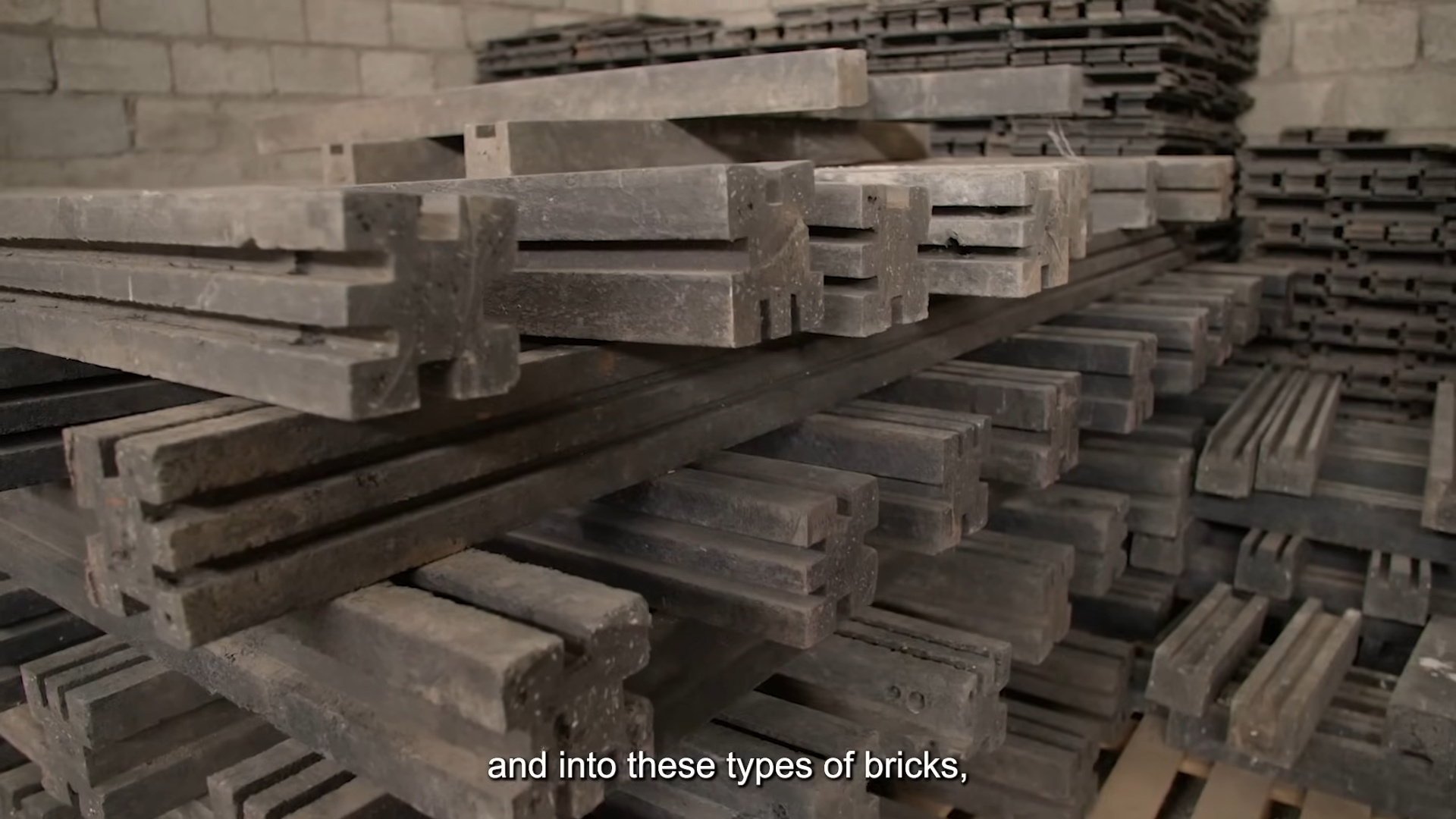
In the factory at the Adama Industrial Park, on the outskirts of Addis Ababa, plastic is separated, washed, converted into pellets, and extruded into interlocking blocks, beams, columns, and lintels.
The current production removes 45 tons of plastic per day from the landfills of the Ethiopian capital.
The final product:
- Costs at least 40% less per square meter
- Is two to three times faster to install
- Emits five times less greenhouse gases
- Has Intertek certification for structural strength and safety
Interestingly, the environmental argument is rarely the main selling point.
“The fact that it is made from recycled plastic is the last detail I mention”, he told African Arguments.
What closes the deal is the price, speed, and durability of our plastic brick.
Investment Rounds And International Recognition
Kubik was born in a difficult scenario for heavy manufacturing. Venture capital has historically favored software. Factories require capital-intensive investment before generating revenue.
Even so, in April 2023, the company won the Global Startup Award as Startup of the Year. Two months later, it raised US$ 3.34 million in a seed round with Plug & Play, Bestseller Foundation, Satgana, and Savannah Fund.

During the same period, Emmanuel Macron personally visited Kubik during a trip to Africa. In 2023, Time magazine named Kidus one of the 100 Most Influential Climate Leaders in the world.
In April 2024, the company raised an additional US$ 5.2 million, becoming the first Ethiopian company to secure multimillion-dollar investment in climate solutions.
Housing Deficit In Ethiopia And The Impact Of Plastic Brick Construction
Ethiopia needs 381,000 new homes per year. It produces only 165,000. The deficit in Addis Ababa has already surpassed 1.2 million units. Conventional cement accounts for up to 40% of the total cost of a construction project. Reducing this cost by 40% completely changes the affordability equation.
The Adama factory can produce enough material to build more than 10,000 houses per year, in addition to 250,000 square meters of wall surface.
Kubik’s strategic plan is not to multiply its own factories but to license the technology to local manufacturers. The global market for affordable housing exceeds US$ 2.2 trillion. And it all begins with plastic that no one wants.

The same plastic that, at the Koshe landfill, killed 116 people on a Saturday night and that is now, at 45 tons per day, being transformed into walls that can reduce the housing deficit in one of the fastest-growing capitals in Africa.








-

-

2 pessoas reagiram a isso.