





 Portuguese
  English
  Spanish
 4 min of reading
  1 comment


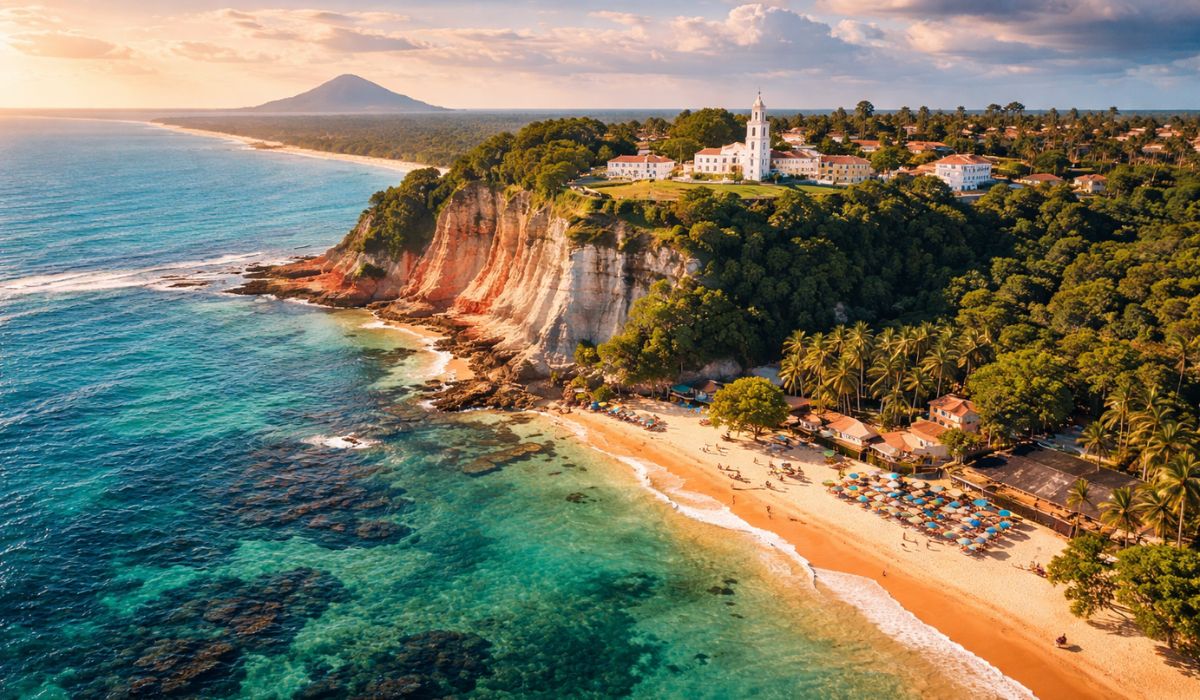


Founded in the Sixteenth Century, Porto Seguro Combines Listed Historical Heritage, UNESCO-Recognized Areas, and a Coastline Marked by Cliffs, Reefs, and Preserved Districts, Maintaining a Central Role in the Narrative About the Beginning of Portuguese Colonization in Brazil.
Porto Seguro, in the far south of Bahia, brings together officially recognized historical heritage and a coastal strip marked by cliffs, reefs, and predominantly calm beaches.
About 700 kilometers from Salvador, the municipality has established itself as one of the main tourist destinations in the Northeast by linking references to the beginning of Portuguese colonization with an infrastructure geared towards sun and beach tourism.
Historical records indicate that the region is linked to the arrival of Pedro Álvares Cabral’s fleet in 1500.
-
Friends have been building a small “town” for 30 years to grow old together, with compact houses, a common area, nature surrounding it, and a collective life project designed for friendship, coexistence, and simplicity.

-
This small town in Germany created its own currency 24 years ago, today it circulates millions per year, is accepted in over 300 stores, and the German government allowed all of this to happen under one condition.

-
Curitiba is shrinking and is expected to lose 97,000 residents by 2050, while inland cities in Paraná such as Sarandi, Araucária, and Toledo are experiencing accelerated growth that is changing the entire state’s map.

-
Tourists were poisoned on Everest in a million-dollar fraud scheme involving helicopters that diverted over $19 million and shocked international authorities.


Currently, the old center located in the so-called Cidade Alta concentrates preserved religious and administrative buildings, while the lower part contains commerce, services, and areas of higher visitor circulation.
Discovery Coast and UNESCO Recognition
The Porto Seguro area is part of the Atlantic Forest Reserves of the Discovery Coast, recognized as World Natural Heritage by the UNESCO in 1999.
The title encompasses a set of conservation units totaling about 112 thousand hectares of remnants of the biome between the south of Bahia and the north of Espírito Santo.

According to the documentation of the international recognition, the region stands out for its biological diversity and the presence of ecosystems associated with the Atlantic Forest, such as restinga, mangroves, and coastal formations.
Along the coastline, the landscape alternates between open beaches, reefs exposed at low tide, and sedimentary cliffs.
Cidade Alta and Protected Historical Heritage
At the highest point of the municipality, Cidade Alta concentrates part of the architectural ensemble protected by the National Institute of Historic and Artistic Heritage (IPHAN).
IPHAN registered the listing of the area in 1968, with an expansion of protection on March 1, 1974, and revalidation in 2000.
The urban configuration follows the pattern observed in other Portuguese colonial cities, with administrative and religious buildings located in the upper part and commercial activities developed near the old port.
From the plateau, it is possible to see the ocean and the Buranhém River, a framing frequently used in tourism promotional materials.
Among the visited points are historical churches and landmarks associated with the first centuries of Portuguese occupation.
Circulation occurs in a relatively compact area, making it easy to walk around.
Taperapuã, Espelho Beaches, and Different Coastal Profiles
Along the shore, different areas present their own characteristics.
In Taperapuã, beach shacks with food, music, and services geared towards visitors are concentrated, especially during peak season.
In other stretches of the coastline, stretches of sand close to cliffs and smaller coves dominate.
In these areas, the dynamics depend on tide conditions and the volume of tourists during the period.
The Praia do Espelho, located in the Curuípe district, is known for the natural pools that form according to the tide.
Access includes unpaved stretches, and conditions vary according to the weather.
Recife de Fora and Tourism in a Marine Park
The Recife de Fora is associated with a municipal marine park and is among the tours offered by local operators.
Departures generally occur according to the tide table, as the visit depends on the water level for access to the reef formations.
According to information released by the municipality, the area hosts species of fish and corals typical of the Bahia coastline.
Visibility and time spent in the area vary depending on climatic conditions and environmental management rules.
Passarela do Descobrimento and Nightlife
In the center, the Passarela do Descobrimento gathers handicraft commerce, bars, and restaurants.
The space became nationally known as Passarela do Álcool, a name still used by some visitors.


During the night, the flow increases, especially on holidays and school vacations.
Among the beverages sold is the so-called “capeta,” prepared with an alcoholic mixture and sweet ingredients, according to local establishments.
Caraíva and Monte Pascoal in the Surroundings
In the Caraíva district, circulation mainly occurs on foot, in sandy streets.
The village maintains its own dynamics, with activities geared towards tourism and artisanal fishing.
Meanwhile, Monte Pascoal is part of the Monte Pascoal National and Historical Park, a federal conservation unit.
Official documents indicate that the point is 536 meters high and is traditionally associated with the first sighting of land by the Portuguese in 1500.
Visitation to the park follows rules established by the responsible bodies and may require prior authorization, according to current environmental regulations.
Bahian Cuisine and Typical Dishes
The culinary offer in Porto Seguro includes typical dishes from Bahian cuisine, such as moqueca prepared with dendê oil and coconut milk, as well as acarajé sold at various points throughout the city.
Restaurants in the central region and along the shore also offer seafood and traditional Northeast recipes.
Fruit-based beverages are common in tourist areas, especially during the summer.
Climate in Porto Seguro Throughout the Year
The municipality experiences high temperatures throughout the year, with variations in rainfall patterns.
Between December and March, the peak tourist season, typical summer rain showers are recorded on the Northeast coastline.
During the middle months of the year, the flow tends to be lower, according to data from the local tourism sector, which impacts prices and service availability.
The choice of period directly interferes with the visitor’s experience, especially in activities that depend on tide and sea conditions.









Moro na Bahia,ir a Porto seguro é um privilégio,já estive lá várias vezes, é muito linda e satisfatória conhecer o útero da nossa nação.