





 Portuguese
  English
  Spanish
  4 min of reading
  0 comments


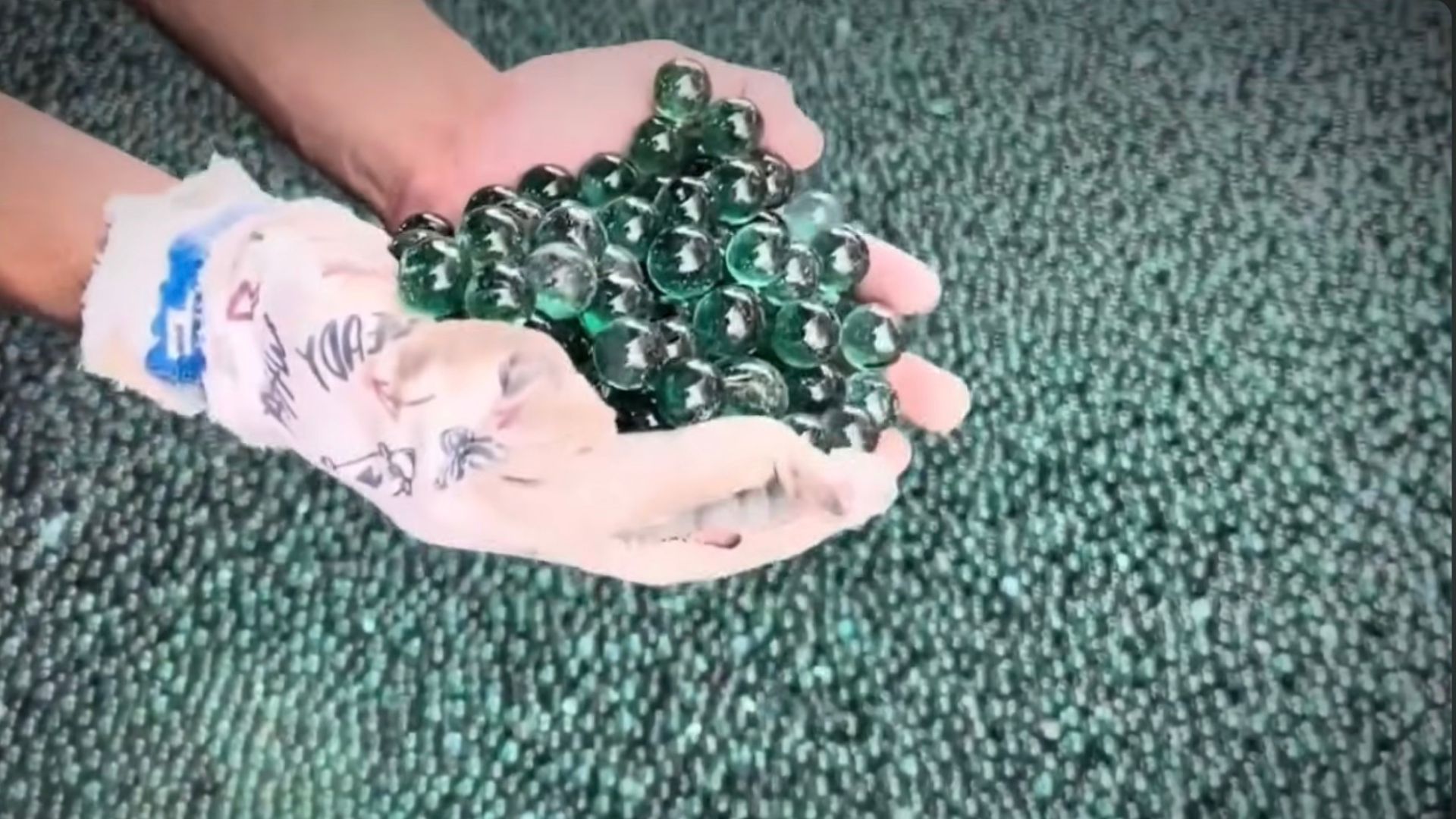
Glass Recycling Movement Nearly 300 Million Dollars Per Year And Transforms Discarded Bottles Into Perfectly Spherical Balls Through An Industrial High-Precision Process
Marbles may seem like simple children’s toys. However, behind these small colorful spheres lies one of the most impressive chains of industrial glass recycling. What starts as broken bottles and sharp waste goes through a rigorous process and is later transformed into perfectly round spheres.
Instead of burying millions of tons of glass in landfills, the industry reuses this material indefinitely, without any loss of quality. Therefore, each marble represents a complete cycle of reuse.
Currently, the sector generates nearly 300 million dollars per year in global revenue. Production is primarily concentrated in China, India, Mexico, Europe, and the United States. Furthermore, large factories maintain continuous production lines that operate 24 hours a day.
-
With 74% of companies facing difficulties in hiring, technicians and engineers in renewable energy are becoming scarce in Brazil and are essential to support the expansion of solar, wind, and green hydrogen projects.

-
Historic bankruptcy of Centauro shocks the market, and the century-old company puts more than 500,000 products, machines, and complete infrastructure up for online auction.

-
New shoe factory in Ceará is expected to create 400 jobs and strengthen the local economy.

-
No one imagined it, but a mixture of sawdust with a mineral that fights fires surprises scientists with a result that changes the course of fire-resistant construction.

To sustain this demand, a single factory needs to melt approximately 4 tons of glass per day. Consequently, billions of marbles are produced annually.
From Collection To Chips: How Recycled Glass Reduces Energy Consumption By Up To 40%
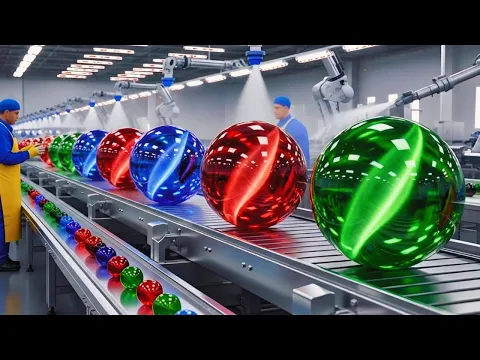

The journey begins at collection points spread across supermarkets, gas stations, and residential areas. At these automatic machines, optical sensors scan each bottle, identify the material, and validate its recycling. Then, the system reimburses the consumer with a small amount, encouraging returns.
After that, industrial trucks transport thousands or even tens of thousands of bottles per trip to the plants. Thus, what was once waste becomes part of a constant industrial flow.
When the glass arrives at the plant, operators immediately activate the cleaning line. First, vibrating conveyors remove sand and dirt. Next, workers manually remove remaining paper and plastic. Concurrently, high-power magnetic systems extract metal caps and microscopic fragments.
This step is crucial, as any metal in the furnace can damage the melting system.
After cleaning, the glass moves to high-speed hammer mills. In seconds, the bottles turn into millions of shiny fragments known as glass cullet.
Since the glass has been melted before, the cullet melts faster than virgin raw material. Thus, the process reduces energy consumption by up to 40%.
Next, laser sensors and industrial cameras analyze each fragment. The system identifies green, brown, and clear glass, as well as detects contaminants like ceramics. Compressed air jets separate the materials accurately, processing tens of thousands of pieces per minute.
Furnaces At 1000ºC, 4 Drops Per Second, And Perfectly Shaped 1.7 Cm Spheres

After sorting, the factory mixes the recycled glass with silica sand, sodium carbonate, and limestone. Operators weigh each component with millimeter precision, as any alteration can compromise hardness, transparency, or shaping.
Each batch weighs approximately 40 kg and enters the furnace at average intervals of 20 minutes. The furnace maintains a constant temperature of about 1000ºC. However, the surrounding environment can reach around 1650ºC, requiring fire-resistant clothing.
Inside the furnace, the glass softens, combines, and transforms into glowing liquid mass. At the base, the material flows through a controlled orifice to the cutting system.
Two mechanical blades operate at extremely high speeds and divide the flow into individual drops. The system produces about 4 drops per second, or approximately 240 drops per minute. Each drop measures about 1.7 cm in diameter.
Soon after, the drops enter rotating spiral shafts approximately 1.5 m long. The constant rotation makes each drop spin while cooling. Thus, gravity and motion distribute the glass evenly and create a perfect sphere.
Thanks to this mechanical balance, the production line exceeds 1 million glass marbles per day.
Colors, Patterns, And Handcrafted Finishing
While the glass is still hot, operators add metal oxides directly into the furnace. This way, they create distinct color flows within the transparent base.
In special lines, artisans apply glass frits or heated colored rods to form patterns like cat’s eye or wavy stripes. As the colors do not fully mix, each marble develops a unique design.
After forming, the spheres fall into 250-liter steel drums. They cool naturally for about 24 hours, avoiding thermal shock.
Afterward, workers weigh each batch, adjust the volume accurately, and mechanically sew the packages to ensure safe transportation.
Meanwhile, artisans still produce special marbles manually. They gather molten glass, apply successive layers, stretch the material to approximately 5 meters in length, and cut decorative segments. Then, they shape each piece individually and finalize the cooling in an annealing furnace.
Industrial Precision And Environmental Impact

The information was disclosed by “Industrial Glass Process Review,” a specialized publication that details the operation of automated glass recycling and marble production lines.
The factories maintain stable temperature, synchronized speed, and controlled repetition of each movement millions of times a day. Therefore, nothing happens by chance. Each step depends on absolute precision.
Thus, industrial waste is transformed into perfect spheres.
Now reflect: what is more impressive, the technology capable of melting 4 tons of glass per day or the amount of glass we discard daily?
Source: I’ll Explain It To You









-

-

-

-

-

23 pessoas reagiram a isso.