





 Portuguese
  English
  Spanish
  4 min of reading
  1 comment


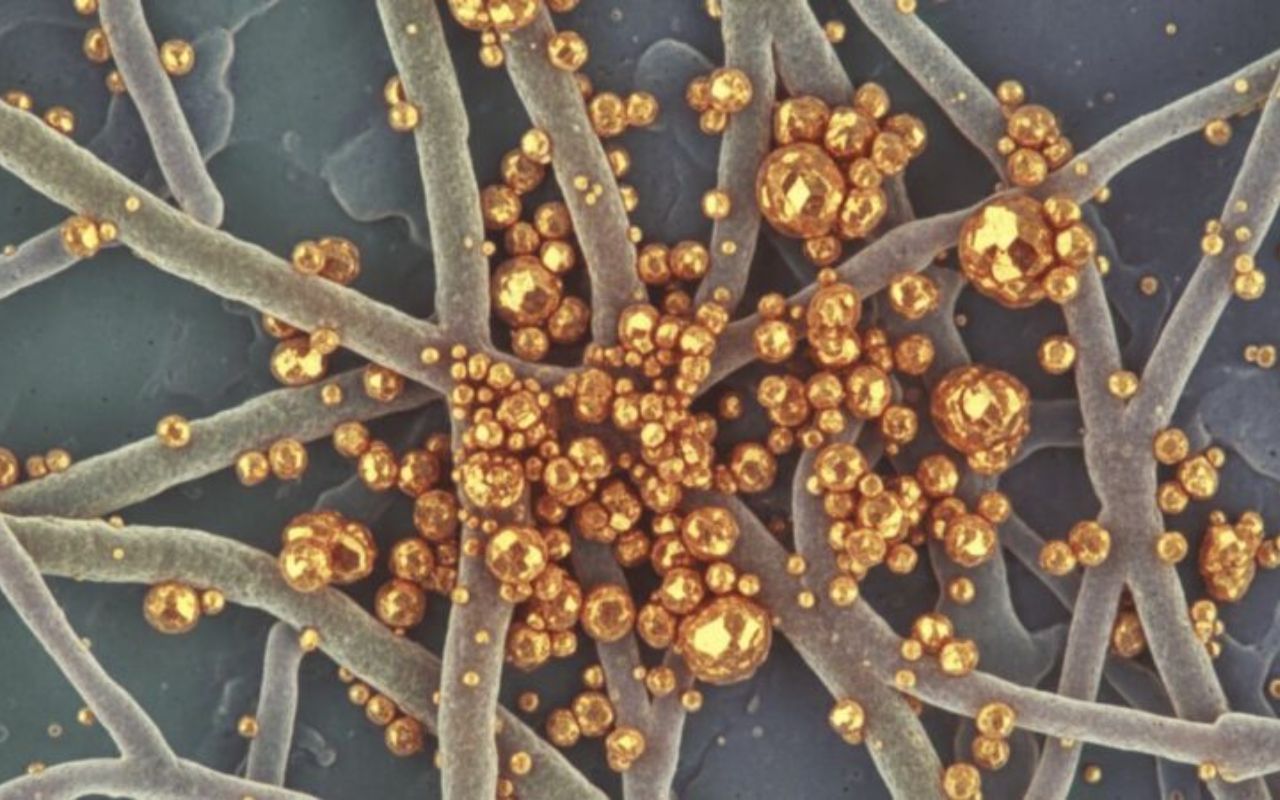


Discovery Involving a Fungus (Fusarium oxysporum) Capable of Producing Gold Draws Attention from Science. Understand How the Biological Process Works, the Tests, and Possible Applications.
A scientific discovery has been piquing curiosity both inside and outside laboratories: researchers have identified a fungus capable of interacting with minerals and generating particles of gold.
The study was conducted by specialists from the Commonwealth Scientific and Industrial Research Organisation (CSIRO) and gained international attention.
The organism studied, Fusarium oxysporum, displayed a rare ability — to convert compounds containing gold ions into microscopic solid structures.
-
Motorola launched the Signature with a gold seal from DxOMark, tying with the iPhone 17 Pro in camera performance, Snapdragon 8 Gen 5 that surpassed 3 million in benchmarks, and a zoom that impresses even at night.

-
Satellites reveal beneath the Sahara a giant river buried for thousands of kilometers: study shows that the largest hot desert on the planet was once traversed by a river system comparable to the largest on Earth.

-
Scientists have captured something never seen in space: newly born stars are creating gigantic rings of light a thousand times larger than the distance between the Earth and the Sun, and this changes everything we knew about stellar birth.

-
Geologists find traces of a continent that disappeared 155 million years ago after separating from Australia and reveal that it did not sink, but broke into fragments scattered across Southeast Asia.

The finding was recently disclosed and broadens the debate about new, cleaner mineral extraction methods.
In addition to its novelty, the discovery raises a practical question: could it be possible to replicate this biological behavior outside of highly controlled scientific environments?
How Was the Gold-Producing Fungus Identified?
The discovery emerged during research on microorganisms present in metal-rich soils.
Scientists were investigating how bacteria and fungi interact with minerals when they observed an unusual behavior.
During tests, Fusarium oxysporum demonstrated the ability to absorb dissolved gold ions and transform them into small solid particles.
This process occurs naturally, without the need for high temperatures or aggressive chemical reagents.
The result caught attention because it suggests that living organisms can actively participate in the so-called biogeochemical cycle of metals — a set of transformations that occur between soil, water, and living beings.
What Happens Within the Biological Process?
The mechanism involves enzymatic reactions promoted by the fungus itself. Upon contacting minerals containing gold, the organism initiates subtle chemical interactions.
First, the metallic compounds present in the environment are altered.
Then, the gold ions undergo a precipitation process, forming solid nanoparticles adhered to the fungal structure.
Although invisible to the naked eye, the phenomenon was confirmed through electron microscopy. The images revealed microscopic deposits of gold associated with fungal colonies.
Why Does Gold Benefit the Fungus?
Researchers noticed an intriguing detail: colonies that accumulated gold exhibited accelerated growth.
The hypothesis is that the metal, even in minimal amounts, may influence metabolic processes or act as protection against environmental stresses.
This fact reinforces that the fungus not only tolerates gold but seemingly adapts positively to its presence.
From Agricultural Villain to Scientific Protagonist
Fusarium oxysporum was already known in agriculture, mainly for causing diseases in various crops. Traditionally, it was seen as a problematic pathogen.
However, new studies have revealed an unexpected facet. In addition to surviving in metal-rich environments, the fungus has demonstrated relevant biotechnological potential.
This shift in perspective illustrates how organisms previously considered harmful may hide valuable applications.
Fungus and Gold: Impacts for Sustainable Mining
The mining industry traditionally relies on intensive and often polluting processes.
The possibility of using a fungus in stages of concentration or recovery of gold opens new alternatives.
In theory, biological techniques could reduce the use of toxic substances and diminish environmental impacts. Therefore, the discovery reinforces the search for more ecological solutions.
Though still far from immediate commercial application, the concept of “green mining” gains momentum with research of this kind.

Is It Possible to Cultivate the Fungus at Home?
The idea of a fungus that produces gold in a domestic environment naturally sparks curiosity. However, specialists raise important caveats.
Although the organism can be cultivated under simple conditions, the process of gold formation requires the presence of suitable minerals and strict control of environmental variables.
Additionally, Fusarium oxysporum can be detrimental to plants and, in rare situations, pose biological risks.
Thus, any experiment should consider biosafety standards. Despite the excitement, researchers emphasize that the phenomenon occurs on a microscopic scale.
There is currently no evidence of gold production in economically relevant quantities.
Another point is that the behavior depends on specific laboratory conditions. Outside this environment, results can vary significantly.
Therefore, the discovery should be seen as a promising scientific advance, but still in the experimental phase.
What Does the Discovery of the Fungus That Produces Gold Represent for the Future?
The study expands understanding of how fungi interact with precious metals. Moreover, it suggests new research avenues in biotechnology, geology, and sustainability.
In future scenarios, living organisms could assist in the recovery of gold and other metals off Earth.
Meanwhile, the discovery reinforces a central message of modern science: nature still holds surprising mechanisms capable of transforming traditional concepts about mineral resources.
Source: Aventuras na História








Interesting discovery indeed! Nature mechanism is still a largely unexplored territory for humans!