





 Portuguese
  English
  Spanish
  4 min of reading
  0 comments


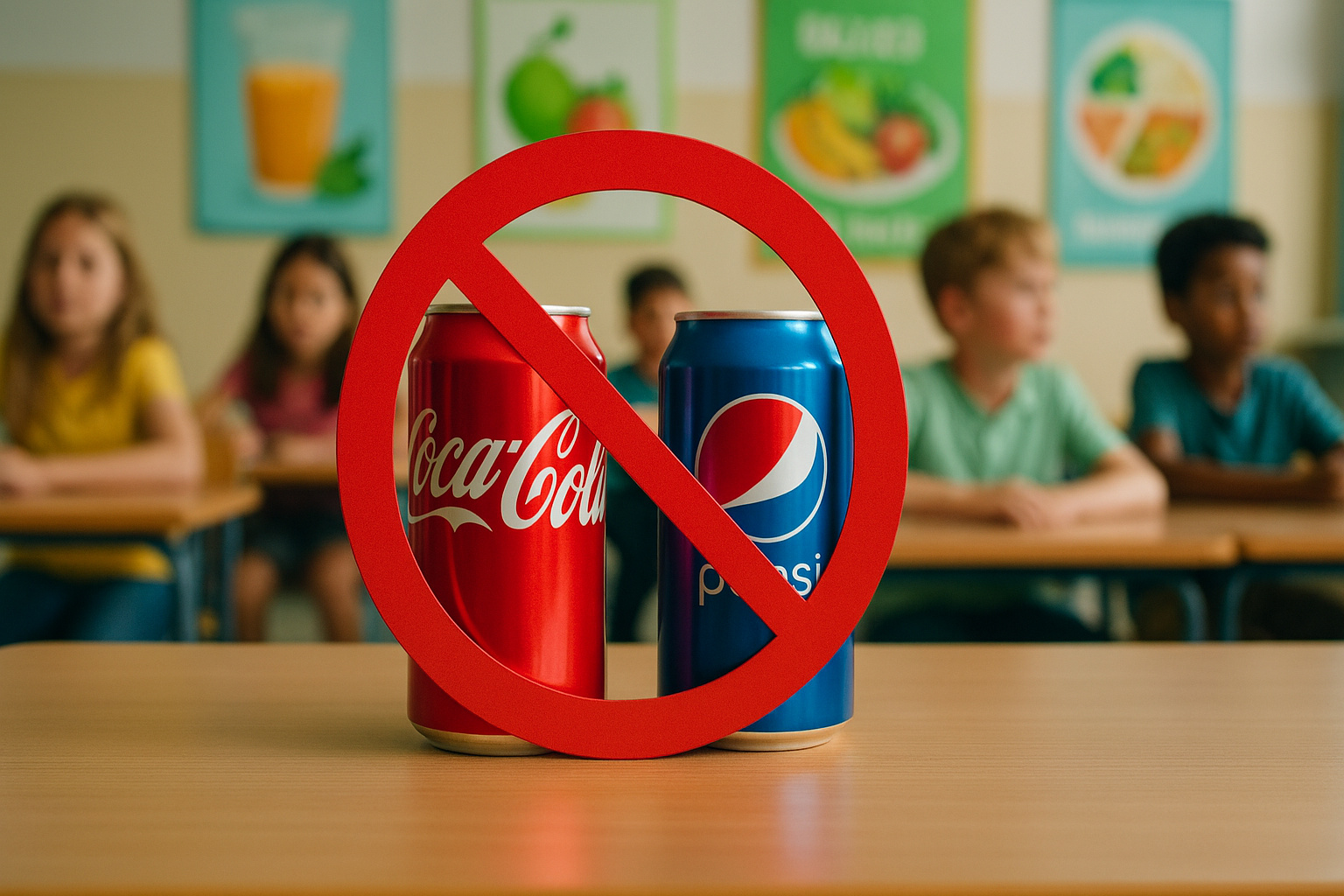
Mexico Bans Coca-Cola, Pepsi, and Ultra-Processed Foods from Schools; Radical Law Seeks to Curb Childhood Obesity That Affects Over 30% of Children.
An unprecedented step in combating childhood obesity has taken even global beverage giants by surprise: the Mexican government has prohibited the sale and advertising of soft drinks and ultra-processed foods in all educational institutions across the country. The determination went into effect on March 29, 2025 and is part of the program “Vive Saludable, Vive Feliz”, forming part of the update of the General Education Law. In practice, Coca-Cola, Pepsi, snacks, candies, and other ultra-processed foods have been banned from the school environment.
The measure is drastic, but it responds to an alarming statistic: more than one-third of school-aged Mexican children are overweight or obese, according to official statistics.
Childhood Obesity: The Number One Enemy of Public Health
Mexico is already identified by international organizations as one of the countries with the highest rates of overweight and diabetes in the world.
-
Historic bankruptcy of Centauro shocks the market, and the century-old company puts more than 500,000 products, machines, and complete infrastructure up for online auction.

-
New shoe factory in Ceará is expected to create 400 jobs and strengthen the local economy.

-
No one imagined it, but a mixture of sawdust with a mineral that fights fires surprises scientists with a result that changes the course of fire-resistant construction.

-
From empty land to a high-end house, wooden construction uses a lightweight system, metal structure for the foundation, ventilated ceramic cladding, and special windows to create an efficient and comfortable living space throughout the year.


The high consumption of sugary beverages, especially soft drinks, is considered one of the main causes.
According to public health studies, ultra-processed foods account for up to 40% of the calories consumed daily by Mexican children and adolescents.


This scenario led the government to declare obesity a silent epidemic, responsible for increasing cases of cardiovascular diseases and reducing life expectancy.
The decision to tackle the problem at its roots—removing soft drinks from schools—is seen as a direct protective strategy for millions of children.
Coca-Cola and Pepsi Out of Schools
The measure directly impacts global brands. Mexico is one of the largest consumer markets for soft drinks in the world, especially for Coca-Cola and Pepsi, which have been part of the cultural everyday life of the country for decades.
With the ban, these companies not only lose their presence inside schools, but they are also prohibited from conducting advertising campaigns aimed at the school environment, one of the most strategic spaces to build consumer loyalty from an early age.
According to experts, this change could profoundly alter the consumption patterns of future generations.
How the Prohibition Works in Mexican Schools
The law is clear:
- Prohibited sale of soft drinks, snacks, and ultra-processed foods in school canteens and snack bars.
- Advertising banned for these products inside and around the institutions.
- Mandatory substitution with healthier options, such as fruits, drinking water, and traditional preparations without excessive sugar and fat.
Enforcement is carried out by the government in partnership with the digital platform “Mi Escuela Saludable”, where parents and teachers can report irregularities. This tool ensures real-time monitoring of compliance with the law.
Mexico Copies Brazilian Model
Interestingly, the Mexican measure was inspired by experiences in Brazil, where several states had already limited the sale of ultra-processed foods in public schools.
Now, with the national adoption in Mexico, experts believe other Latin American countries may follow the same path, transforming the fight against obesity into a regional agenda.
Social and Economic Impacts of the Decision
In the short term, the change primarily affects:
- School canteens, which will have to adapt and reformulate menus.
- Soft drink and ultra-processed food industries, which lose a key market.
- Families, who may feel an immediate increase in costs but gain in health in the long term.
Economists highlight that the measure may cause a drop in soft drink sales, but it could also open up space for new markets for healthy foods, boosting local agriculture and small suppliers.
Criticism and Resistance from the Industry
As expected, the decision generated strong resistance. Beverage and food industry associations argue that the ban infringes on freedom of choice and may impact jobs linked to the production chain.
Some critics also question whether the measure will be sufficient to reduce obesity, as consumption outside of schools remains permitted.
Despite this, health experts argue that the school environment is strategic, as it directly influences the eating habits of millions of children in formation.
An Example for the World?
The Mexican decision is not isolated. Countries like Chile and Brazil have already advanced similar legislation, although on a smaller scale.
The difference now is that Mexico becomes one of the largest consumer markets confronting global giants like Coca-Cola and Pepsi head-on.
International health organizations are closely monitoring the results. If childhood obesity rates begin to decline in the coming years, the measure may inspire other governments to adopt similar radical policies.
Goodbye, Coca-Cola and Pepsi in Mexican Schools — A Milestone Against Childhood Obesity
The prohibition of soft drinks and ultra-processed foods in Mexican schools is more than just a law: it is a symbol of cultural change.
By removing powerful brands like Coca-Cola and Pepsi from school corridors, the government sends a clear message: the health of children is prioritized over the profits of the industry.
If the expected impact is confirmed, Mexico may be remembered as the country that led a food revolution in Latin America, confronting the obesity epidemic with a bold and historic measure.










Seja o primeiro a reagir!