





 Portuguese
  English
  Spanish
  4 min of reading
  0 comments


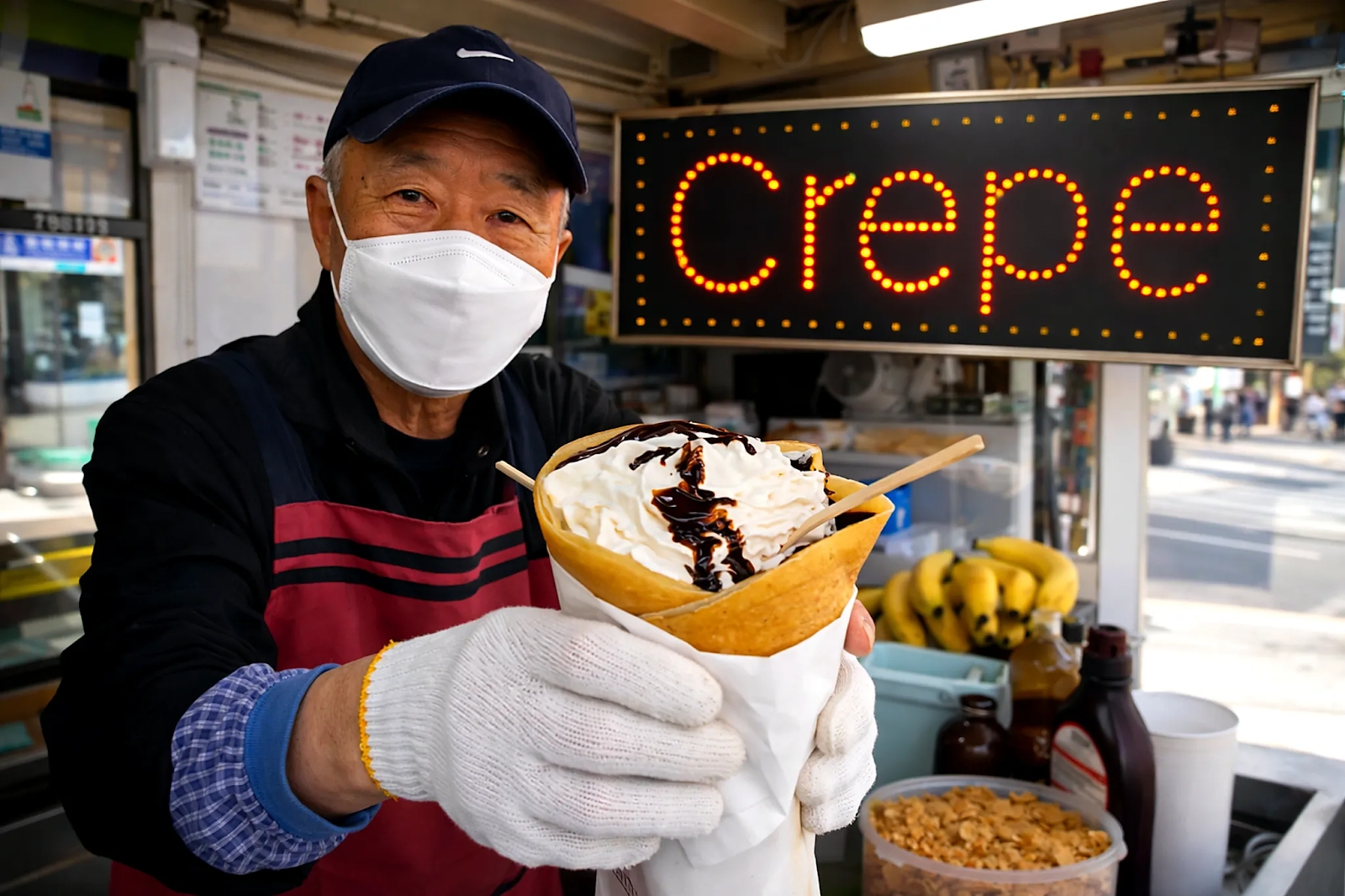
Every day he opens the small crepe kiosk and puts into practice a routine that resembles a micro artisanal factory. There are 300 crepes a day, prepared with love, but with a clear logic of large-scale production.
The space is small, yet organized like a lean workstation. The metal countertop concentrates ingredients, tools, and assembly area. In the center, the heated circular plate serves as the production core.
What impresses is not just the volume. It’s the method. Each step is repeated with a fixed pattern, controlled timing, and short movements. The kiosk ceases to be just a sales point and starts to operate as a continuous line.
-
Friends have been building a small “town” for 30 years to grow old together, with compact houses, a common area, nature surrounding it, and a collective life project designed for friendship, coexistence, and simplicity.

-
This small town in Germany created its own currency 24 years ago, today it circulates millions per year, is accepted in over 300 stores, and the German government allowed all of this to happen under one condition.

-
Curitiba is shrinking and is expected to lose 97,000 residents by 2050, while inland cities in Paraná such as Sarandi, Araucária, and Toledo are experiencing accelerated growth that is changing the entire state’s map.

-
Tourists were poisoned on Everest in a million-dollar fraud scheme involving helicopters that diverted over $19 million and shocked international authorities.


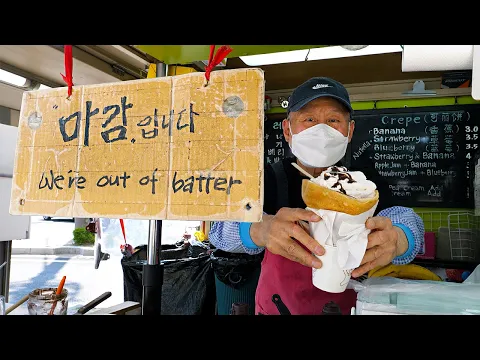

Crepe Kiosk Operates with Functional Layout and Linear Production Flow
The internal layout of the kiosk reveals organization designed to reduce movement. The container with liquid batter remains within direct reach of the plate. Squeeze bottles with cream are lined up beside it. Bowls with fruits and utensils occupy fixed positions.
This arrangement creates a linear flow. First, the batter is poured. Next, it is spread out. Then, it’s removed, filled, and folded. Each action happens on the same physical axis, avoiding unnecessary movements.
The constant repetition eliminates variations. The amount of batter applied always appears similar, ensuring uniform thickness in the crepes.
This pattern reduces waste, prevents rework, and maintains visual consistency in the final product.
Simple Metal Circular Plate Is the Main Asset of the Kiosk
The heated metal circular plate is the main asset of the kiosk. It remains in continuous operation throughout the entire production period.
When pouring the liquid batter onto the hot surface, he uses a spatula in the shape of a squeegee to spread it in a circular motion. The thin layer begins to change color almost immediately.
The control of thickness is critical. Too thick a batter would compromise cooking time. Too thin a batter could tear when folded. The balance ensures flexibility and structural integrity.
Between each cycle, the surface is cleaned with a scraper or cloth. This keeps thermal transfer stable and reduces the buildup of residue.
Filling Standardization Maintains Structural Stability of the Crepes
After the disc is removed from the plate, the assembly phase begins. The still-warm crepe receives thick cream applied from squeeze bottles.
The lines of cream are concentrated in the center. Next, visible pieces of fruit are manually distributed. When necessary, a small spatula adjusts the distribution.
This centralization of the filling is not random. It facilitates the next step of folding and prevents side leaks.
The result is a structurally stable crepe, capable of being handled without excessive deformation.
Manual Folding Works as the Final Step of Compacting the Unit
The shaping occurs in a standardized sequence. First, a side fold. Then, an opposite fold. Finally, rolling until forming a compact cone.
The pressure applied is controlled manually. Excessive force would compromise the integrity of the thin batter. Insufficient pressure would affect the firmness of the structure.
This step works as the final compacting of the unit. The filling remains protected inside, and the shape facilitates immediate transport.
The gesture is repeated dozens of times. Producing 300 crepes requires physical endurance and continuous coordination of arms and wrists.
Operational Rhythm Transforms the Crepe Kiosk into a Micro Productive System
The constant heat from the plate warms the internal environment of the kiosk. Even so, the grandfather maintains a bent posture and an uninterrupted sequence of movements.
Pouring, spreading, releasing, filling, and folding. The cycle repeats without prolonged interruption. When one crepe comes out, another is already in formation.
The visible wear on the spatulas and the metal surface confirms intensive use. It is not occasional preparation, but a consolidated routine.
What seemed to be just a simple kiosk reveals a micro productive system based on standardization, continuous flow, and precise manual control.
At the end of the day, the 300 crepes sold represent more than just volume. They reveal how counter organization, thermal control of the plate, and technical repetition transform a compact space into a high-turnover operation.
Do you have your own business? Do you see this crepe kiosk as a small artisanal industry? Leave your comment and share with those who are microentrepreneurs or dream of having their own business.










-

2 pessoas reagiram a isso.