





 Portuguese
  English
  Spanish
  6 min of reading
  0 comments


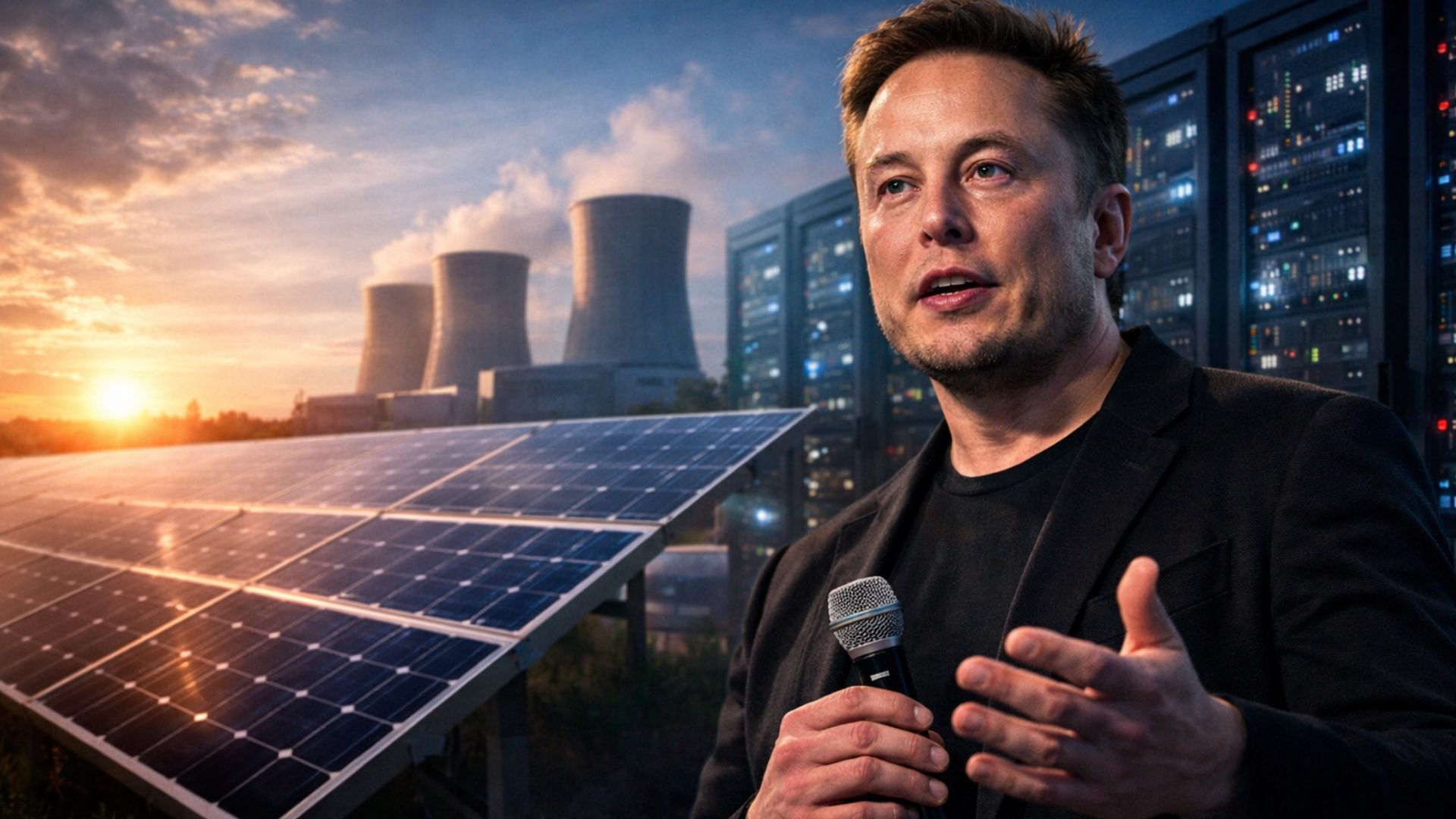
Understand How Tesla’s Industrial Expansion in Solar Energy Can Strengthen Data Centers, Boost Clean Technology, and Redefine Global Manufacturing Capacity with Relevant Economic and Environmental Impacts
Tesla is preparing a strategic move that could alter the balance of the global solar energy market in the coming years. The company signals interest in significantly expanding its manufacturing capacity for solar solutions, linking this expansion to clean technology projects primarily aimed at providing energy for high-performance data centers.
According to an article published by Investing.com on February 14, the plan, which involves the installation of 100 GW, gained visibility after analyses by international financial institutions that see potential impacts not only environmentally but also economically and geopolitically.
Context Behind Tesla’s Initiative in Solar Energy
The accelerated growth of global electricity consumption, driven by artificial intelligence, cloud computing, and the digitalization of services, demands new reliable and sustainable energy sources.
-
Seagri’s headquarters invests in solar energy with Neoenergia Coelba and promises to cut electricity costs, highlighting a strategic advance in sustainability and energy efficiency within state public administration.
-
Solar Pyramid draws attention by converting solar energy into million-dollar savings and repositioning the City Hall of Curitiba as an example of innovation, sustainability, and intelligent use of public resources.
-
Europe records strong euro economy with solar energy in March and sparks curiosity about which country leads growth that redefines the energy market and reduces costs.
-
Piauí reaches a historic milestone in energy transition: State records nearly 160,000 households powered by solar energy and leads growth in the Northeast.

In this context, the company’s strategy emerges as a direct response to the need for large-scale clean generation, combined with intelligent electricity storage and management systems. The goal is not just to produce solar panels, but to integrate production, distribution, and final use in a coordinated manner.
Industry studies indicate that the combination of renewable generation and productive control can redefine entire industrial chains. The advancement also strengthens the company’s energy arm, which already operates with batteries and domestic and industrial storage systems. By expanding its presence in the solar industry, the company aims to reduce dependence on external suppliers and increase its technological autonomy in an increasingly competitive global landscape.
Tesla’s Industrial Expansion and the New Map of Global Solar Energy
The planned production expansion by Tesla is not limited to building new factories. It involves creating an integrated ecosystem capable of meeting complex, large-scale energy demands. In the solar energy market, this type of move represents a structural change, shifting the focus from merely installing panels to taking full control of the production chain.
The International Energy Agency has highlighted in its recent reports that solar generation is among the renewable sources that are growing the fastest in installed capacity worldwide. Technological advancements have reduced costs and improved the efficiency of photovoltaic modules, making investment more accessible for companies and governments. In this scenario, those who control production and distribution tend to gain a lasting competitive advantage.
Moreover, industrial expansion allows for quicker responses to demand fluctuations. Instead of relying on suppliers spread globally, the company can adjust its production according to market needs. This production flexibility is seen by analysts as one of the main strategic differentiators for the coming decade.


Manufacturing Capacity and Technological Autonomy in Strategic Focus
By heavily investing in manufacturing capacity, Tesla seeks to strengthen its technological independence and reduce logistical risks. The pandemic and international trade tensions have highlighted the fragility of excessively fragmented supply chains. Producing internally means greater predictability in costs, timelines, and quality, as well as protecting intellectual property.
This move also allows for continuous innovation. When research and production go hand in hand, the speed of development tends to increase. The company can test new materials, enhance energy efficiency, and adjust industrial processes more quickly. This is particularly relevant in clean technology, a sector where technical advances can drastically alter product competitiveness.
Another relevant point is scale control. By increasing production capacity, the company can negotiate better raw material supply contracts and reduce unit costs. This economies of scale directly impact the viability of large solar projects, expanding access to markets that were previously considered financially challenging.
Data Centers and the Race for High-Reliability Clean Energy
The exponential growth of data centers has transformed global energy consumption. These structures operate continuously and require a stable electricity supply, increasing pressure on traditional networks. The search for solar energy combined with storage systems emerges as a strategic alternative to ensure energy security and reduce carbon emissions.
Technology companies have been investing in renewable sources to meet environmental goals and reduce long-term operational costs. In this context, Tesla’s proposal to integrate solar production and storage creates an attractive solution for digital infrastructure operators. The combination of self-generation and smart batteries allows for greater autonomy and less dependence on conventional networks.
Furthermore, the advancement of artificial intelligence and cloud computing is likely to further increase electrical demand. Studies from international consultancies indicate that energy consumption by processing centers could grow consistently over the next decade. Offering large-scale solar solutions positions the company as a strategic supplier for this new energy scenario.

Clean Technology as a Vector for Economic and Environmental Value
Investment in clean technology has ceased to be merely an environmental decision and has come to represent a relevant financial strategy. Market analysis institutions point out that companies with a strong focus on renewables tend to attract greater interest from institutional investors, especially in a context of public policies aimed at decarbonization.
The expansion of solar energy also aligns with global emission reduction targets set by international agreements. Governments in various countries have created tax incentives and financing programs for sustainable projects, increasing the economic viability of industrial investments in this sector. This convergence between public and private interest favors large-scale initiatives.
For Tesla, strengthening the energy segment increases revenue sources and diversifies its portfolio beyond the automotive sector. The synergy between electric vehicles, batteries, and solar production creates an integrated ecosystem that can generate long-term competitive advantages. Sustainability, in this context, also becomes a market differentiation tool.
Geopolitics, Innovation, and the Repositioning of Energy Infrastructure
The decision to expand solar production also has a strong geopolitical component. Energy security has become a central theme for governments and companies after recent crises that highlighted external dependencies. Producing energy locally and from renewable sources reduces vulnerabilities and strengthens national and corporate economies.
The expanded manufacturing capacity allows not only to meet traditional markets but also to explore specialized applications. Analysts point out that a significant portion of this production can be directed to innovative projects in advanced energy infrastructure, including autonomous generation systems for critical operations. This includes everything from isolated industrial installations to high-demand digital structures.
The strategic repositioning also influences competitors and suppliers. When a large company invests in its own production, the entire industrial ecosystem tends to adapt. New partnerships emerge, technologies improve, and market standards evolve. The result is a collective acceleration of technological and energy development.
What This Move by Tesla Represents for the Energy Future
The advancement of Tesla in solar energy indicates a structural transformation in how energy and technology connect. The increase in manufacturing capacity combined with clean technology and support for data centers shows that the energy future depends not only on generation but on intelligent integration of production, storage, and consumption.
This move demonstrates that sustainability and innovation go hand in hand. The pursuit of renewable solutions has shifted from being a trend to being a strategic necessity in light of digital growth and global environmental goals. Companies that manage to align productive efficiency with environmental responsibility are likely to occupy leadership positions in the market.
For the technology sector, the scenario reveals a paradigm shift. Renewable energy is no longer just an ecological alternative but an essential infrastructure for the digital economy. The initiative emphasizes the importance of investments in innovation and shows how large-scale solar production can redefine industrial and energy standards in the coming years.










Seja o primeiro a reagir!