





 Portuguese
  English
  Spanish
  3 min of reading
  0 comments


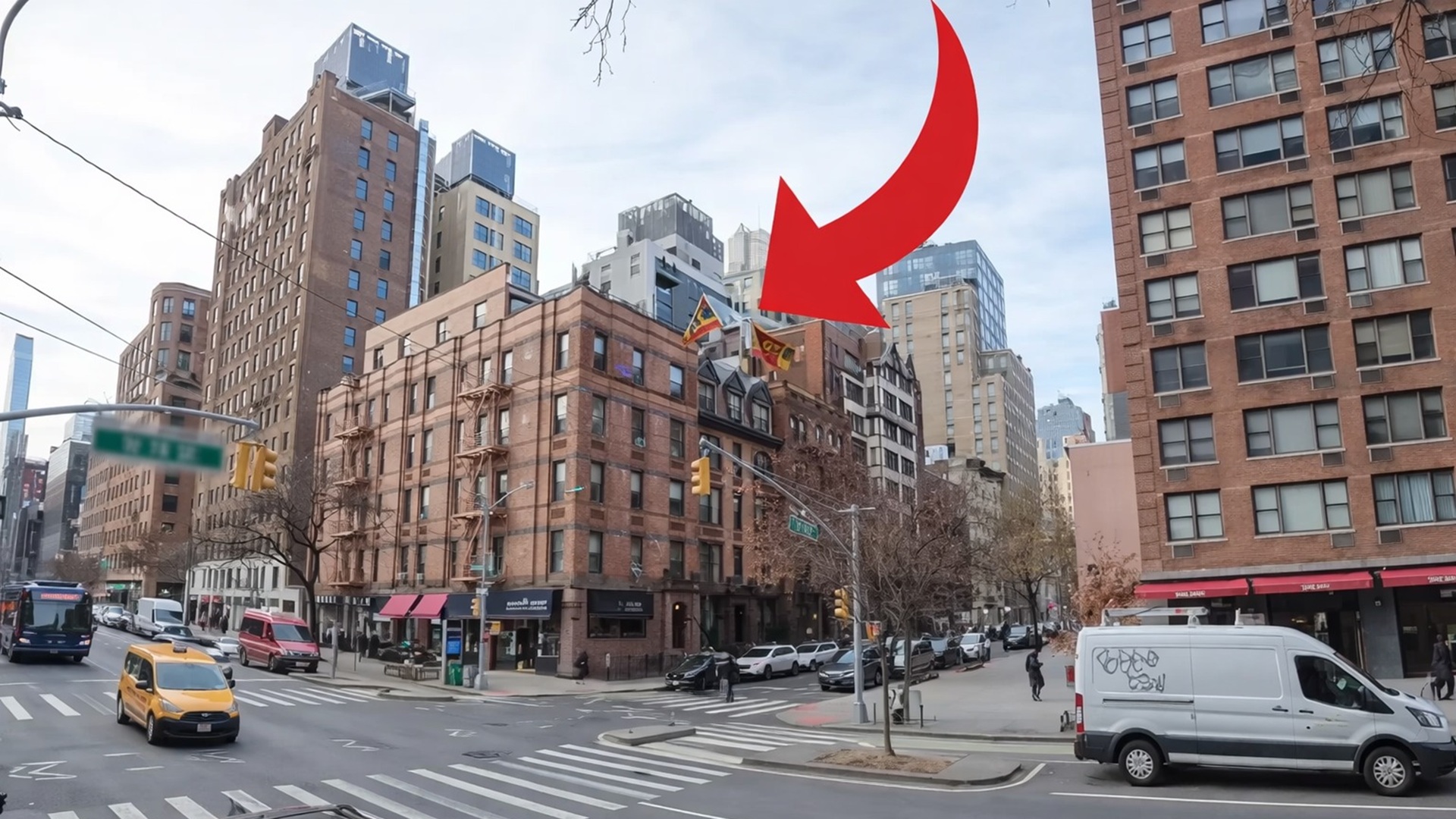
Architecting at the Top of a Skyscraper in New York, an American Invested US$ 200,000 to Build His Own Home on the Roof, Challenging the City’s Rules and Creating a Unique and Inspiring Work.
An American built his own US$ 200,000 home atop a skyscraper in New York after purchasing, for over 150 thousand dollars, an old 1926 janitor’s apartment with building rights that allowed for the legal vertical expansion of the structure.
American Built His Own US$ 200,000 Home on Top of Skyscraper in New York
At the end of the 1980s, architect Andrew Tesoro had the idea of transporting a trailer by helicopter to the roof of a building in Manhattan. He had visited a mobile home priced at US$ 19,999 and considered buying it to execute the plan.
According to him, what attracted him was not the trailer, but the light, the outdoor space, and the possibility of creating something airy in a city he considers to be permanently crammed upon itself.
-
Friends have been building a small “town” for 30 years to grow old together, with compact houses, a common area, nature surrounding it, and a collective life project designed for friendship, coexistence, and simplicity.

-
This small town in Germany created its own currency 24 years ago, today it circulates millions per year, is accepted in over 300 stores, and the German government allowed all of this to happen under one condition.

-
Curitiba is shrinking and is expected to lose 97,000 residents by 2050, while inland cities in Paraná such as Sarandi, Araucária, and Toledo are experiencing accelerated growth that is changing the entire state’s map.

-
Tourists were poisoned on Everest in a million-dollar fraud scheme involving helicopters that diverted over $19 million and shocked international authorities.


Years later, he found a viable roof. The building, constructed in 1926, had a small janitor’s apartment on the top floor. Tesoro acquired the studio for over 150 thousand dollars, while similar units were being sold for 50 thousand or 60 thousand dollars.
The purchase strained the budget, but it confirmed a crucial detail: the property maintained building rights. This allowed for the legal vertical expansion of the structure, making the project of his own home viable.
Transformation of the Roof into a Multilevel Wood Cabin
The original skylight was converted into the opening for a staircase. Walls were removed. A large window with a park view was installed. Over time, the space evolved into a multilevel wood cabin.
The construction began to include bedrooms, a combined living room, and a top floor with windows facing all four directions. The roof received copper covering, chosen for its design to last a century.
He stated that the material matched New York. The structure was not polished. The main staircase still technically remains a temporary construction staircase, as the budget ran out before the final completion.
For years, he prepared outdoor barbecues instead of installing a complete kitchen. One of the faucets was improvised with parts purchased at a hardware store and duct tape.
Zoning and Possibility of Building Above the Tenth Floor
Building on a skyscraper in New York is complex but possible. According to Tesoro, it would still be feasible today, as long as development rights are maintained and legal parameters are respected.
He describes the city’s zoning resolution as a kind of bible. In his words, it is a dense, technical, and often confusing document that requires strict attention.
Even so, he claims there is room for creativity when the limits are observed. The project was erected above the 10th floor, where he has lived for 28 years.
During this time, he raised a child and consolidated his life above the city. The initiative to build his own home was not primarily focused on the property’s value.
Inspiration from the Pantheon in Rome and Integration of the Water Tower
The architect’s design thinking is inspired by the Pantheon in Rome, especially in how light passes through the oculus. He emphasizes the importance of opening and light circulation throughout the day.
He speaks less about technical precision and more about how the rooms connect. For him, in smaller spaces, the opening may be more relevant than strict privacy.
The building’s water tower, responsible for supplying the entire block, was kept exposed. He considers it a sculptural piece and part of the city’s identity.
The cabin at the top of the skyscraper reflects the way he wanted to live in New York. The construction occurred without the use of a helicopter, unlike the initial fantasy he had at the end of the 1980s.
Over time, the project solidified as his own home high above the city. He claims that homes don’t need to be too perfect, just as people are not.










-

-

-

5 pessoas reagiram a isso.