





 Portuguese
  English
  Spanish
  5 min of reading
  0 comments


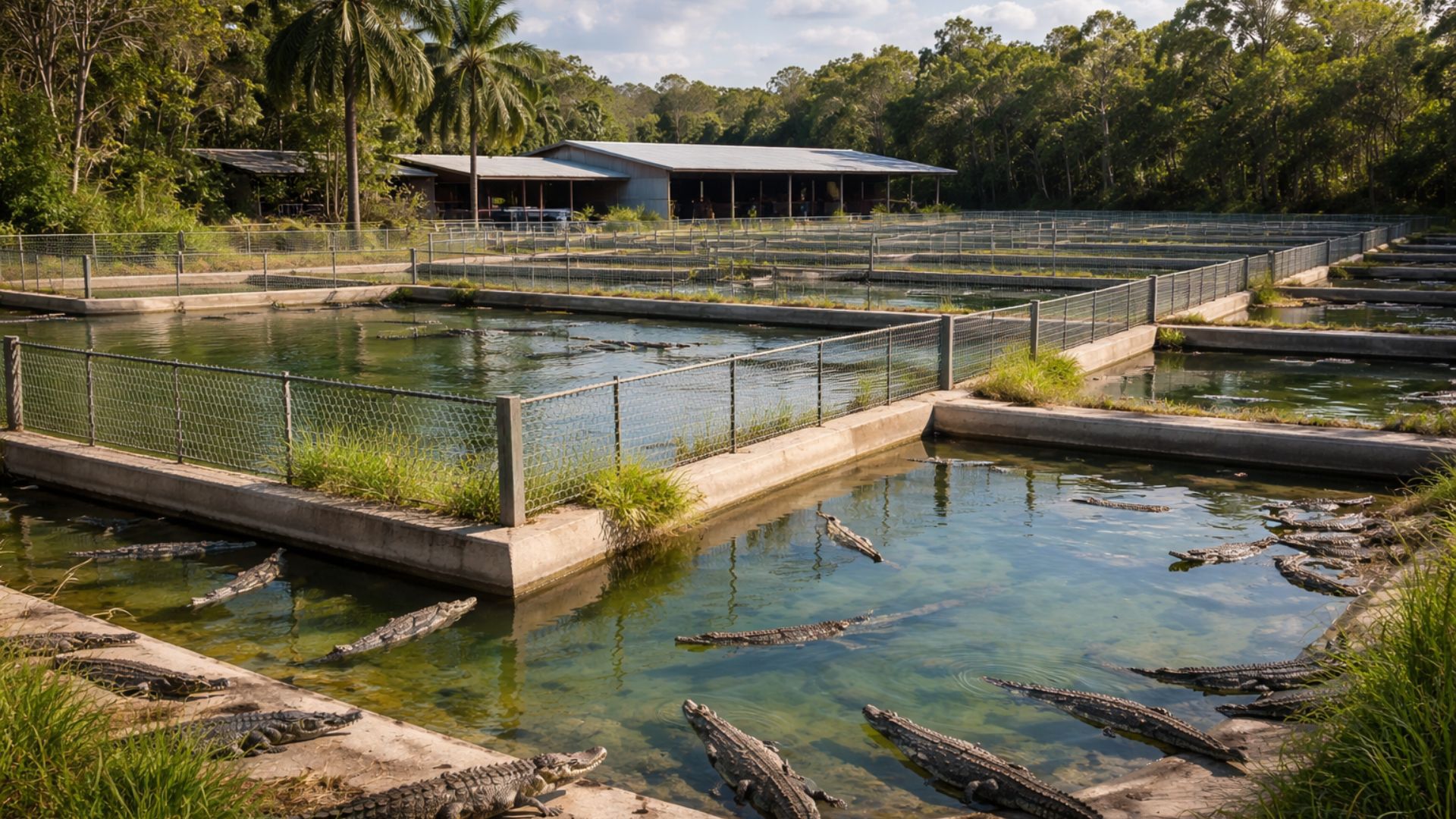
Discrete Production in Northern Australia Transforms Legally Collected Eggs Into Exotic Meat and High-Value Leather Through Controlled Breeding, Artificial Incubation, and Stringent Management, Connecting Environmental Conservation, International Market, and Luxury Consumption.
In isolated farms in northern Australia, breeders keep crocodiles in controlled systems that supply two distinct markets: that of exotic meat and that of leather intended for high-value products.
The production model described in the documentary follows the animal from the egg to the final processing, focusing on standardization, loss reduction, and meeting specific commercial requirements.
The operation takes place far from urban centers and outside the tourist circuit, which contributes to the activity remaining largely invisible to the public.
-
The sugar-energy sector advances with agricultural technology, but agricultural productivity still raises concerns.

-
The eggshell that almost everyone throws away is made up of about 95% calcium carbonate and can help enrich the soil when crushed, slowly releasing nutrients and being reused in home gardens and vegetable patches.

-
This farm in the United States does not use sunlight, does not use soil, and produces 500 times more food per square meter than traditional agriculture: the secret lies in 42,000 LEDs, hydroponics, and a system that recycles even the heat from the lamps.
-
The water that almost everyone throws away after cooking potatoes carries nutrients released during the preparation and can be reused to help in the development of plants when used correctly at the base of gardens and pots, at no additional cost and without changing the routine.


The beginning of the production chain does not involve direct capture of adult animals.
According to the content presented, breeding starts with the collection of eggs from natural nests, carried out by authorized farmers and under rules imposed by the government.
The justification presented is to avoid negative impacts on wild populations and maintain a minimum environmental balance, while ensuring raw material for the economic activity.
Luxury Market Drives Commercial Breeding
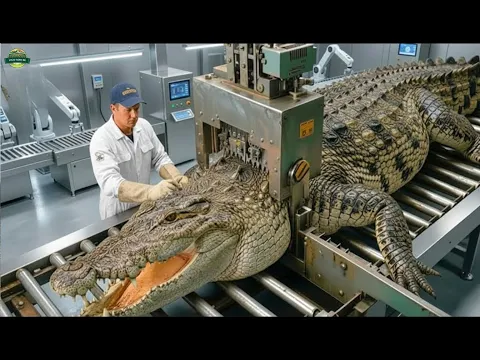

The expansion of crocodile farming is not attributed to cultural or experimental factors but to market demand.
The documentary points out that there is commercial interest in both meat and leather, although the latter accounts for the majority of the financial value involved.
Bags, boots, and other accessories made from crocodile skin can reach high prices in the international market, which directly influences how the animals are raised.
In nature, crocodiles often show scars from territorial disputes, attacks, and environmental interactions.
For the leather industry, these marks reduce the value of the final product.
For this reason, according to the material, the farming environment aims to minimize conflicts between animals and avoid situations that could damage the skin, creating conditions considered more predictable from a production standpoint.
Egg Collection and Government Oversight
Crocodile nests are described as camouflaged structures in flooded areas, made up of mud, roots, and dense vegetation.
The documentary mentions that each nest can contain dozens of eggs, usually between 40 and 60.
The removal of this material, however, would not be unrestricted.
According to the narrative, only authorized producers can carry out the collection, following rules established by Australian government agencies.
State control is presented as a mechanism to prevent the uncontrolled exploitation of the species.

Although the documentary does not detail official numbers or technical criteria, it maintains that the activity is regulated and that the collection occurs within defined limits to not compromise the natural reproduction of crocodiles in the wild.
Artificial Incubation and Development Control
After collection, the eggs are taken to incubators where factors such as temperature, humidity, and ventilation are continuously monitored.
The documentary highlights that temperature has a direct influence on the sex of the hatchlings, allowing producers to adjust the ratio of males and females according to the farm’s planning.
This initial control is presented as part of a broader strategy for production predictability.
From birth, the animals become part of a system that seeks to reduce uncertainties and align biological development with market demands, according to the approach shown in the video.
Hatchling Management and Conflict Prevention
The newly hatched hatchlings are described as small and fragile, but the documentary emphasizes that the species’ typical aggressive behavior emerges quickly.
To deal with this, the reported producers adopt separation of animals by size, avoiding interaction between individuals that differ significantly in size.
This practice is associated with reducing attacks and episodes of cannibalism, common when crocodiles of different sizes share the same space.
Additionally, monitoring growth is presented as constant, with regular measurements and adjustments to diet, rest, and water quality used in the tanks.
Protein Feeding and Leather Formation
The diet of crocodiles on farms is described as rich in protein, consisting of items such as chicken, fish, and by-products from the food industry.
According to the documentary, the choice of food takes into account not only weight gain but also the formation of muscle and skin.
The apparently immobile behavior of the animals in the tanks is contextualized as part of their metabolism.
According to the explanation presented, this period of low activity corresponds to the conversion of ingested food into body tissue, a process considered essential to meet industry standards.
Slaughter at the Ideal Point and Sanitary Requirements
The documentary states that slaughter does not occur randomly.
There is, according to the narrative, a considered ideal interval, usually between two and four years of age, during which the meat would be suitable for consumption and the leather would reach maximum value.
Slaughtering before or after this period could compromise the quality of the obtained products.
Before slaughter, a fasting period is mentioned, described as a measure to reduce contamination risks during processing.
The procedure is presented as regulated and subject to animal welfare standards, although the documentary does not detail which agencies oversee this stage or which specific protocols are adopted.
Meat Processing and Leather Valuation

After slaughter, the utilization of the animal follows distinct paths.
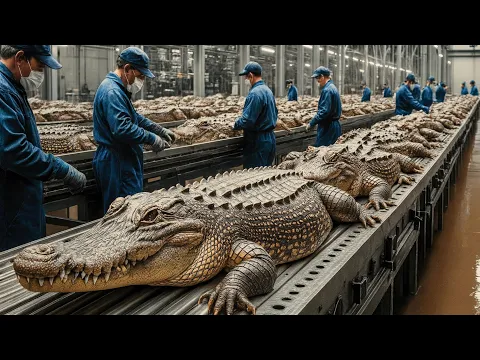
The meat is intended for consumption, described in the documentary as lean and with a mild flavor, with characteristics that make it attractive to restaurants and for export.
The leather, in turn, receives special attention throughout the entire process.
The removal of the skin is done carefully to avoid cuts or damages that would reduce its commercial value.
Each skin undergoes visual evaluation, considering factors such as scale pattern and absence of marks.
According to the material presented, the degree of control exercised during breeding directly influences the outcome of this stage.
Controlled Breeding and Environmental Discourse
The farms are depicted as organized environments, with control of light, temperature, and water flow, measures which, according to the producers shown, help reduce animal stress.
The documentary associates these practices with better production outcomes, both in terms of growth and leather quality.
Besides the economic aspect, farming is related, in the presented discourse, to species conservation.
The video claims that in the past, illegal hunting drastically reduced crocodile populations and that controlled management contributed to the recovery and monitoring of these animals.
This view is presented as part of the justification for maintaining the activity.
Throughout the entire chain, the documentary describes crocodile farming as a system that integrates biology, planning, and market.
The intention is to show how an animal historically associated with the wild becomes part of a productive structure aimed at consumption and luxury, under specific rules and declared oversight.
In this context, what kind of debate does this activity still raise about the boundaries between conservation, economic exploitation, and final consumption?








Seja o primeiro a reagir!