





 Portuguese
  English
  Spanish
  4 min of reading
  16 comments


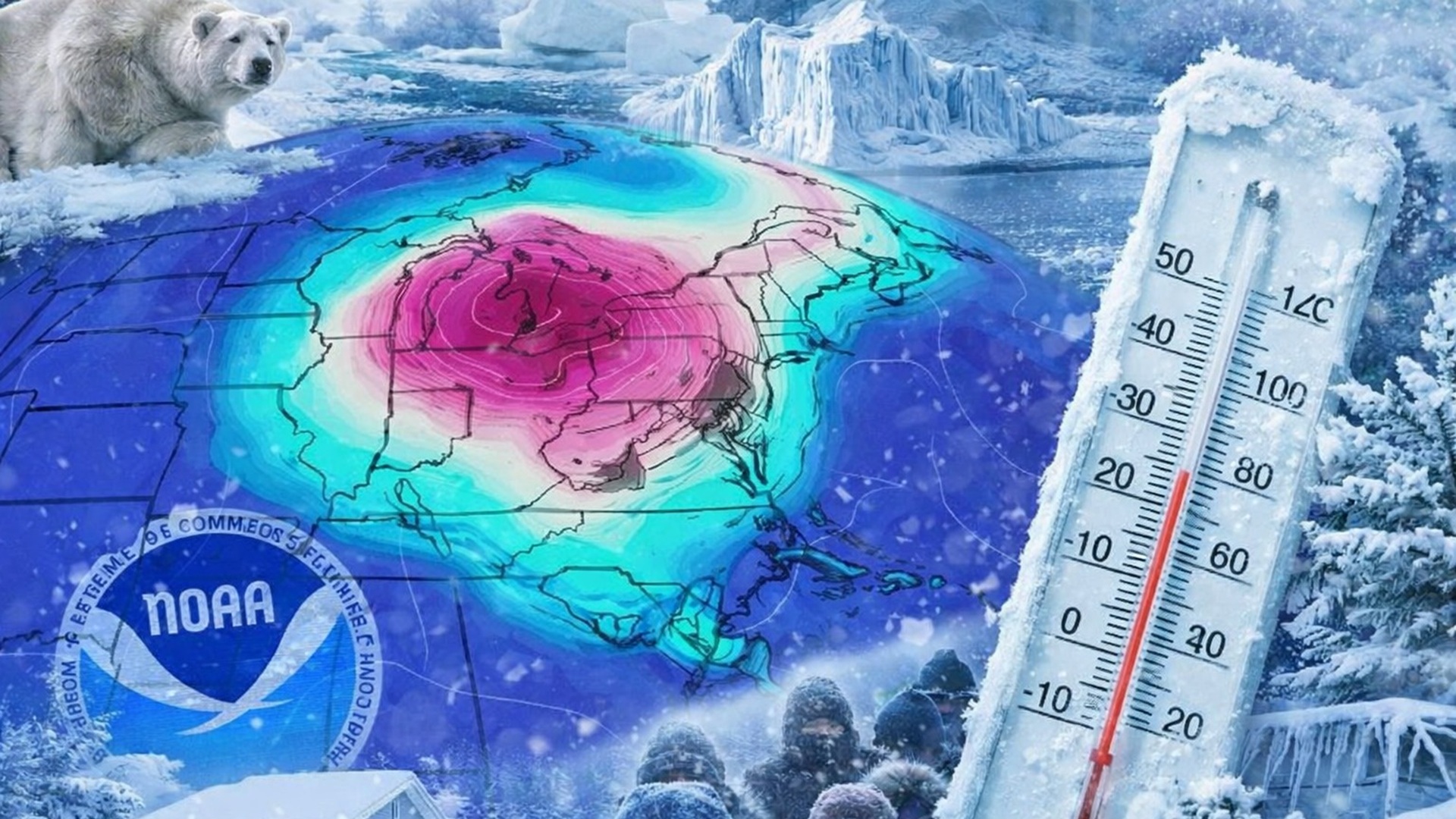


NOAA Informs That Lake Erie Reached 95% Ice Cover After Accelerated Advance From 5% to 51% in a Few Days During Successive Arctic Cold Spells in 2026, With Anticipated Impacts on Maritime Transport, Category 3 Storms in the Northeast, and Continuous Monitoring in the Great Lakes
Between January 17 and February 11, 2026, an Arctic cold wave led Lake Erie to 95% ice cover, increased the Great Lakes from 5% to 51% in days, and prompted NOAA to warn about economic and social impacts.
What Happened Between January and February 2026
The cold wave hit the United States between January 17 and February 11, 2026. The event was associated with the movement of extremely cold air from the Arctic to mid-latitudes, following disturbances in the polar vortex.
For the first time in seven years, temperatures dropped to below zero in some states. Some regions faced the harshest winter in over a decade, according to the report presented.
-
Motorola launched the Signature with a gold seal from DxOMark, tying with the iPhone 17 Pro in camera performance, Snapdragon 8 Gen 5 that surpassed 3 million in benchmarks, and a zoom that impresses even at night.

-
Satellites reveal beneath the Sahara a giant river buried for thousands of kilometers: study shows that the largest hot desert on the planet was once traversed by a river system comparable to the largest on Earth.

-
Scientists have captured something never seen in space: newly born stars are creating gigantic rings of light a thousand times larger than the distance between the Earth and the Sun, and this changes everything we knew about stellar birth.

-
Geologists find traces of a continent that disappeared 155 million years ago after separating from Australia and reveal that it did not sink, but broke into fragments scattered across Southeast Asia.

The phenomenon did not occur just once in 2026. The country had already experienced this type of event more than once in the same year, raising concerns about new episodes and their cumulative effects.
January is historically the coldest month of winter in the U.S. Still, many residents were unprepared for the intensity and duration of the cold recorded during those weeks.
Ice Cover in the Great Lakes and NOAA’s Warning
The National Oceanic and Atmospheric Administration confirmed that a region was significantly impacted. In the Great Lakes, the combined levels of ice cover jumped from 5% to 51% in a matter of days.
Lake Erie reached 95% ice cover, a figure considered significant for the period. The rapid expansion of ice cover altered the regional landscape and reignited discussions about impacts on transportation and the economy.
According to NOAA, February is the month of snowstorms in the Northeast U.S., with most reaching category 3 or higher.
The accelerated cooling of the Atlantic Ocean increased the likelihood of more significant snowfall conditions.
Physical scientist James Kessler from NOAA’s Great Lakes Environmental Research Laboratory stated that the amount of ice on a specific day is not the main metric for seasonal assessment.
He pointed out that the most important metrics are the seasonal average, the duration of the season, and the annual maximum, usually observed between mid and late February.

Atmospheric Causes and Relation to the Polar Vortex
The event was associated with a sudden stratospheric warming. This type of disturbance can weaken the polar vortex and allow the frozen air from the Arctic to shift to lower latitudes.
Experts pointed out that climate change plays a role in these sudden stratospheric warmings, which alter atmospheric behavior and favor episodes of intense cold in densely populated areas.
Despite debates about possible atmospheric interventions, the material indicates that nothing would have prevented the advance of the cold air in this episode. The result was the formation of landscapes described as picturesque, yet dangerous.
The combination of extremely cold air and cooled waters favored the rapid expansion of ice cover. The significant increase in just a few days illustrates the sensitivity of the Great Lakes to abrupt temperature changes.
Economic and Social Impacts on Neighboring Communities
If Arctic cold waves continue, neighboring communities to the Great Lakes are likely to be affected. Commercial maritime transport, essential for the regional economy, may suffer interruptions and delays.
High ice cover makes navigation difficult and may require special operations. This affects logistical chains that rely on lake routes for cargo movement during winter.
Some sectors may see a rise in tourism linked to winter recreational activities. Still, prolonged freezing temperatures are unfavorable for public health and urban routines.
Extreme cold increases health risks, especially for vulnerable populations. Emergency power and heating systems become essential during periods of sharp temperature drops.
Energy demand tends to grow during prolonged cold spells. The pressure on infrastructure may intensify if new snowstorms occur in conjunction with the increased ice cover.
Outlook for February and the Rest of the Season
Data suggests that February concentrates much of the snowstorms in the Northeast U.S. With the Atlantic Ocean cooling more rapidly than normal, the trend is for favorable conditions to maintain snow.
The annual peak of ice cover usually occurs between mid and late February. Thus, the 95% observed on Lake Erie may still evolve within the expected seasonal dynamics.
Although a single day’s figure does not determine long-term climate trends, the leap from 5% to 51% in the Great Lakes in days demonstrates the rapidity of changes.
The repetition of the phenomenon in 2026 reinforces the need for continuous monitoring. Experts assess seasonal averages, duration of the season, and annual maxima to understand the true extent of the event.
Ice cover remains a central indicator of the impact of the cold wave. Its evolution in the coming weeks will be decisive for measuring effects on the economy, health, and regional infrastructure.
The episode between January 17 and February 11, 2026 highlights how atmospheric disturbances can rapidly transform the climate scenario. Ice cover has become a visible symbol of an event that affected communities, transport, and energy planning.
Even with landscapes considered beautiful by some residents, the risk associated with the expansion of ice and extreme temperatures keeps authorities on alert. Ice cover remains in the spotlight as winter advances in the United States.








Não sou cientista. Mas o aquecimento global, é gelado?
já deixou a porta da geladeira e o congelador aberta? o que aconteceu? virou um bloco de gelo, é isso que está acontecendo, só que pior, o vórtice diminui a velocidade e o frio vai descer e piorar a cada ano, caso lembrem disso no próximo.
Parece que Trump está certo. O efeito estufa não existe.
mas é muita ignorância, sem o efeito estufa não existiria vida humana na Terra.
Se fica desse jeito com “AQUECIMENTO GLOBAL”, imagina sem… Os “eco terroristas” sumiram….
O Professor e Verdadeiro CLIMATOLOGISTA Ricardo Felício SEMPRE TEVE RAZÃO.